Santa Cruz de Tenerife, Spain
Ports
Home • Ports • Europe • Spain • Santa Cruz de Tenerife
See all 3 tours in Santa Cruz de Tenerife
About Santa Cruz de Tenerife
Santa Cruz de Tenerife is the island's main harbour city, a civic waterfront on the northeast shore with Plaza de España, the auditorium and a tight older core a short walk from the usual cruise quays. This is not Los Cristianos, the resort and ferry harbour on the south coast, which has its own page. Teide is a mountain day, and La Laguna is a nearer historic town if the hours are generous. The light is Atlantic and often windy, and a first visit can stay in Santa Cruz without circling the island. Leave time for the walk back to the pier in use.
Santa Cruz de Tenerife is the island's main harbour city, a civic waterfront on the northeast shore with Plaza de España at its centre, the auditorium of the late twentieth century on the water, and a tight older core of streets a short walk from the usual cruise quays. It is a working capital as well as a visitor landing, and the harbour has long been the island's front door, looking out to an open Atlantic and up to a steep volcanic hinterland.
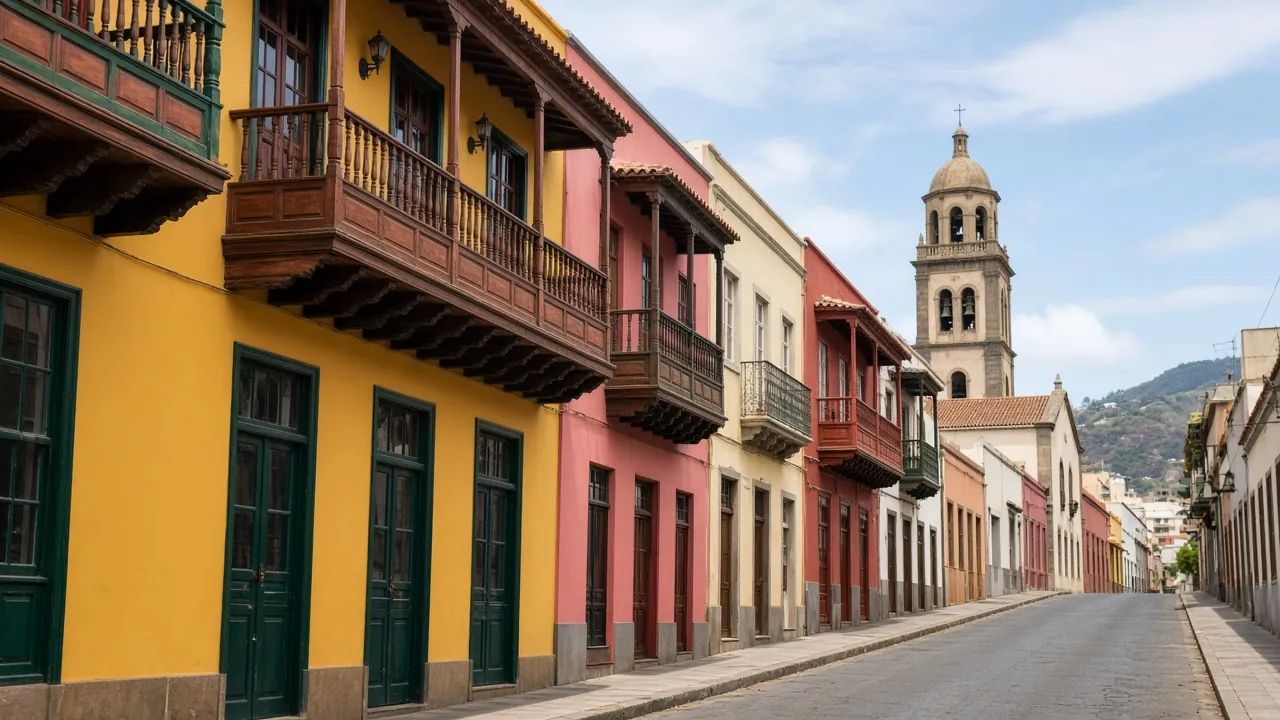
Ships typically berth at the city quays, often close enough that the plaza, the market at Nuestra Señora de África and the first streets of the centre can begin on foot. This is not Los Cristianos, the resort and ferry harbour on the south coast, which has its own page. A call here is a Santa Cruz day first. La Laguna, the older university town just inland, is a nearer historic addition if the hours are generous, a short ride rather than a crossing of the island. Teide, the high volcanic peak at the centre of Tenerife, is a mountain day of its own, with weather and a last-return time that have to be taken seriously, and it should not be treated as a short taxi from this quay.
The light is Atlantic and often windy. The palm-lined waterfront and the shade of the older streets are the natural first circuit. The Palmetum, a later botanical garden of palms on a hill above the harbour, is a close, quieter visit if you want an hour off the main square. In midsummer the sun is strong; a hat and an early start for any climb are more useful than a long list.
Food is Canarian: wrinkled potatoes with mojo, fish, and the island's cheeses and wines. Spanish is the language of the streets; English is common around the harbour and the main visitor sites, thinner once you leave them. The market is a good way of seeing the city at work, not only on display.
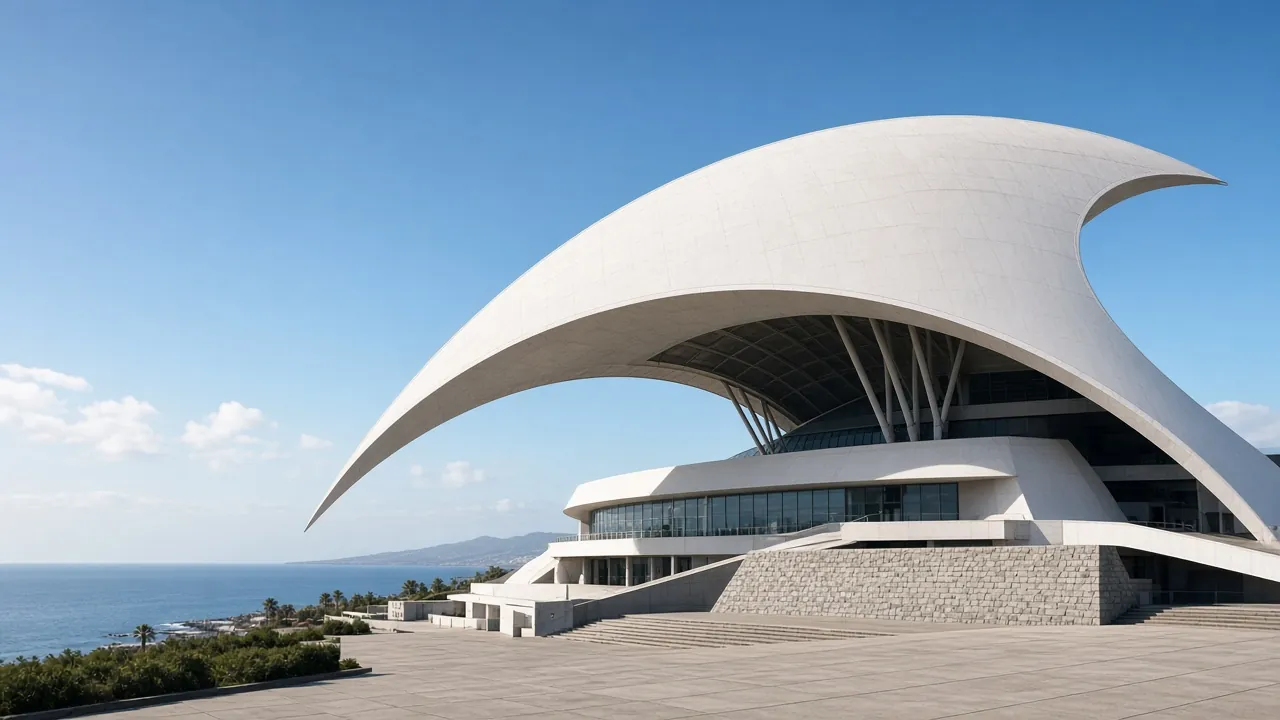
The Auditorio de Tenerife, the white, wave-like concert hall on the water, is a close landmark of the modern harbour and a good point from which to turn back toward the plaza. García Sanabria Park, a little inland from the centre, is a shaded civic garden if you want an hour off the waterfront without leaving the city. Leave time for the walk back to the pier in use. A day that holds to Santa Cruz, with perhaps La Laguna and a clear last return, will have seen the harbour city that ships actually call at, without trying to collect the south coast or the summit on the same clock.
Port landmarks