Split, Croatia
Ports
Home • Ports • Europe • Croatia • Split
About Split
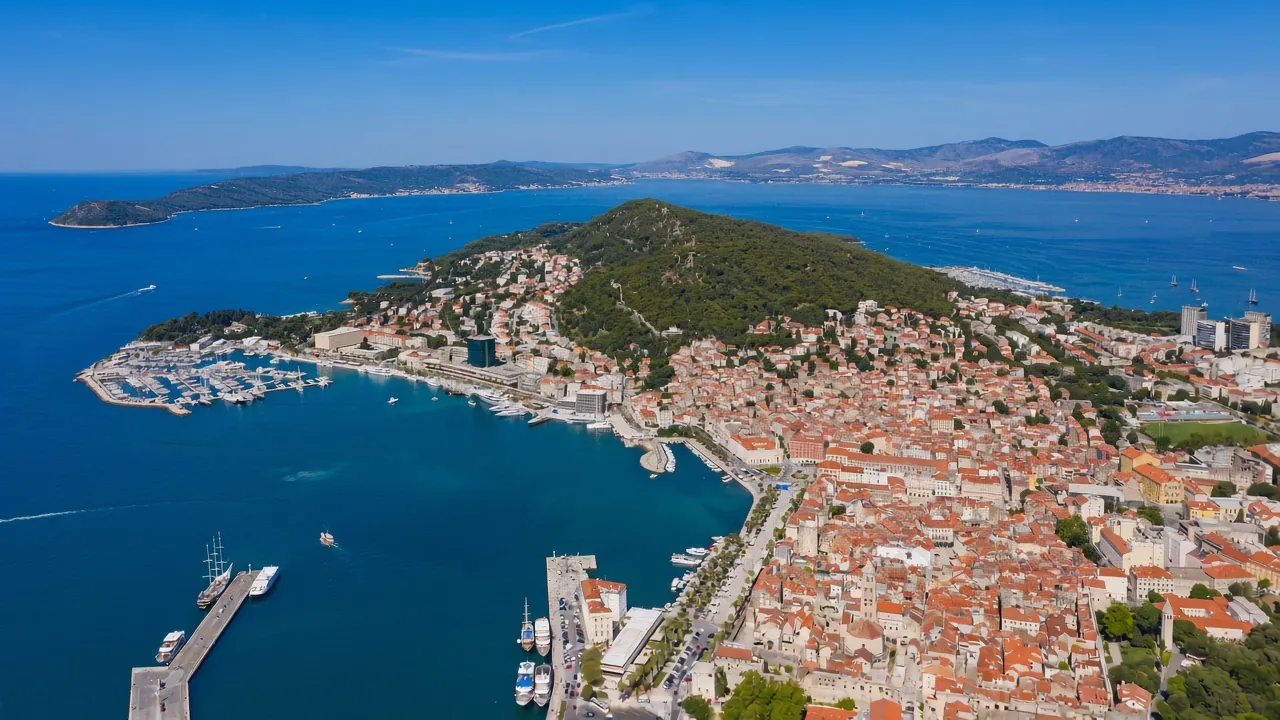
Split is a compact Adriatic city built in and around Diocletian's Palace, a lived-in Roman complex of courtyards and stone streets that open onto the harbour. The peristyle, the Cathedral of Saint Domnius and the bell tower sit at the heart of the old town; along the water, the Riva is the city's promenade. Marjan hill gives a wider view over the red roofs and the sea. Cruise ships berth immediately in front of this waterfront, close enough that many passengers walk ashore onto the Riva and into the palace.
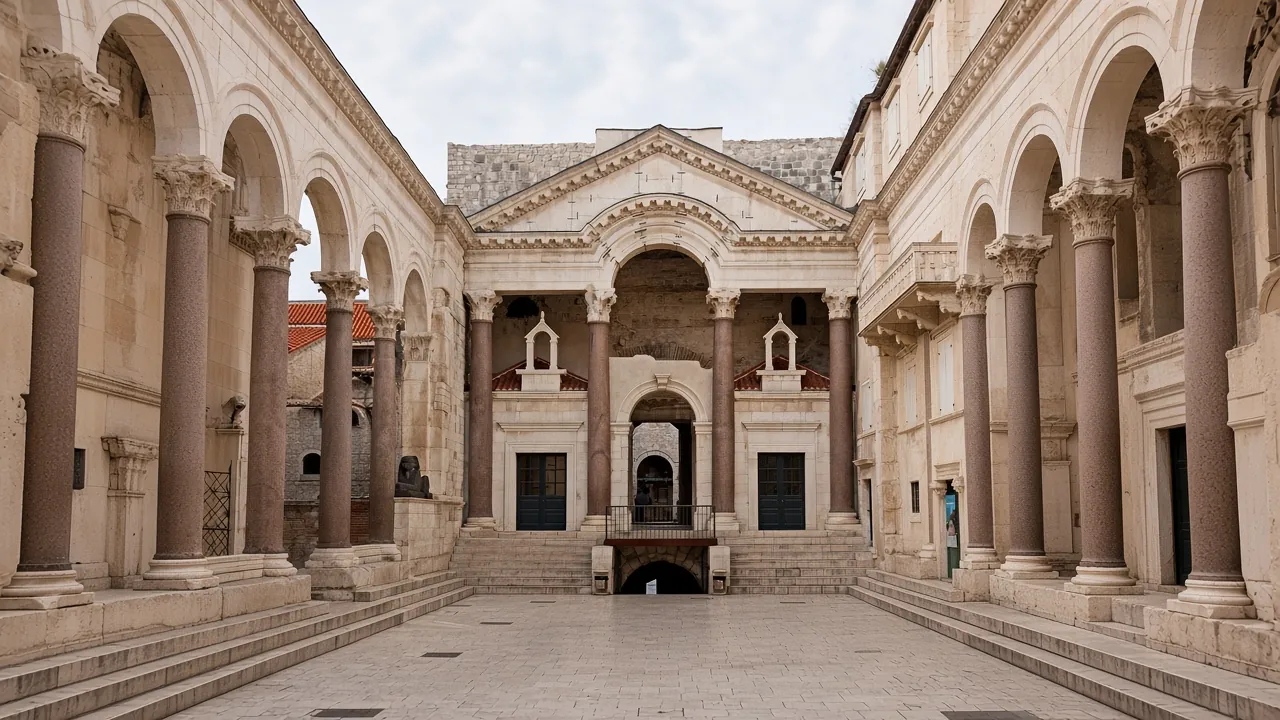
The heart of the old town is the peristyle, the ceremonial courtyard at the centre of Diocletian's Palace, a lived-in space of stone, cafés and passages into the surrounding streets.
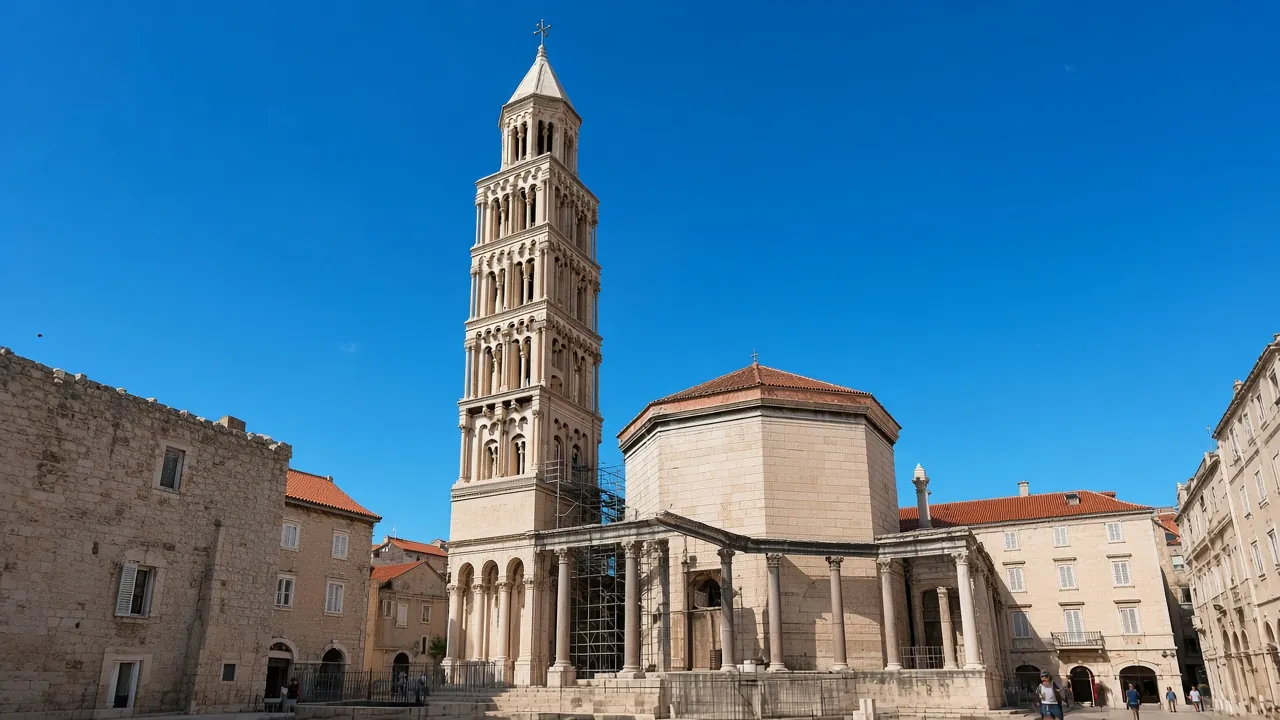
The Cathedral of Saint Domnius stands just off the peristyle. The octagonal church was the emperor's mausoleum; beside it rises the tall Romanesque-Gothic bell tower that dominates the skyline from the harbour. Climbing the tower, if it is open and if you have the legs for a tight stone stair, gives a clear view over the red roofs and the bays; even from the pavement the pairing of tower and octagon is the image that tells you you are in Split. The peristyle itself is the place to pause: it is compact, still used as a public square, and it shows the Roman fabric more clearly than a long march through every side street.
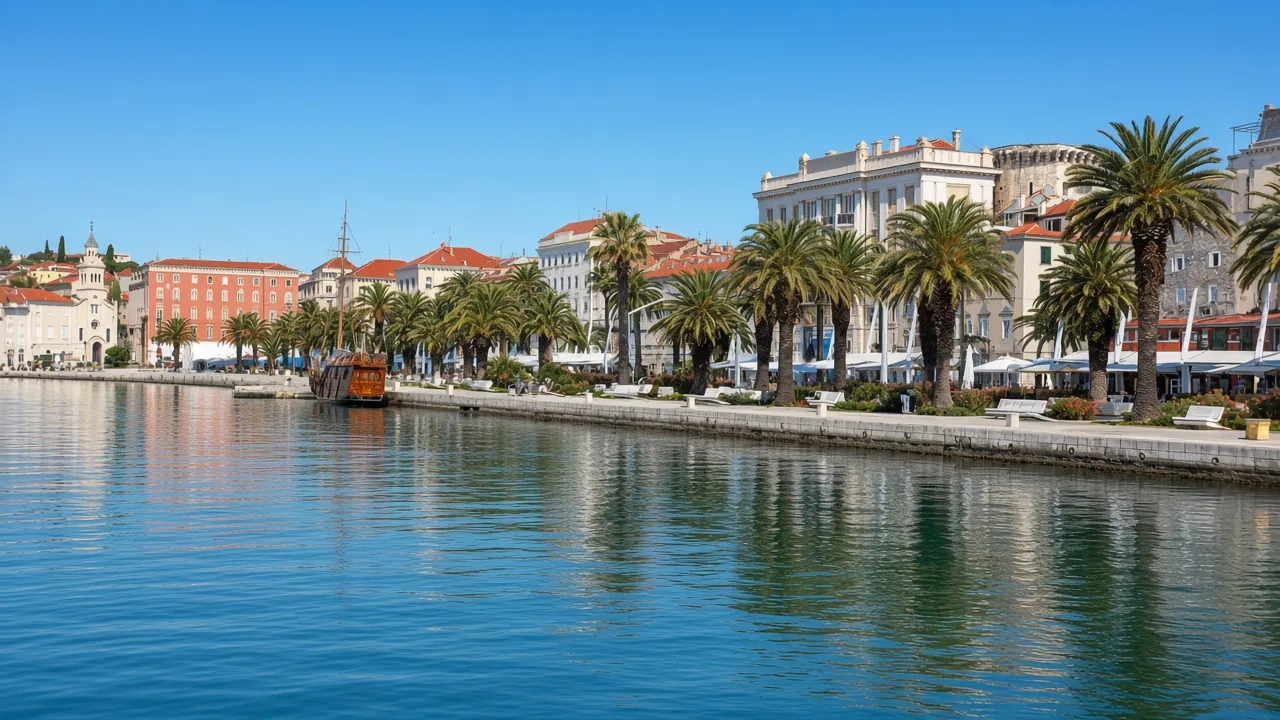
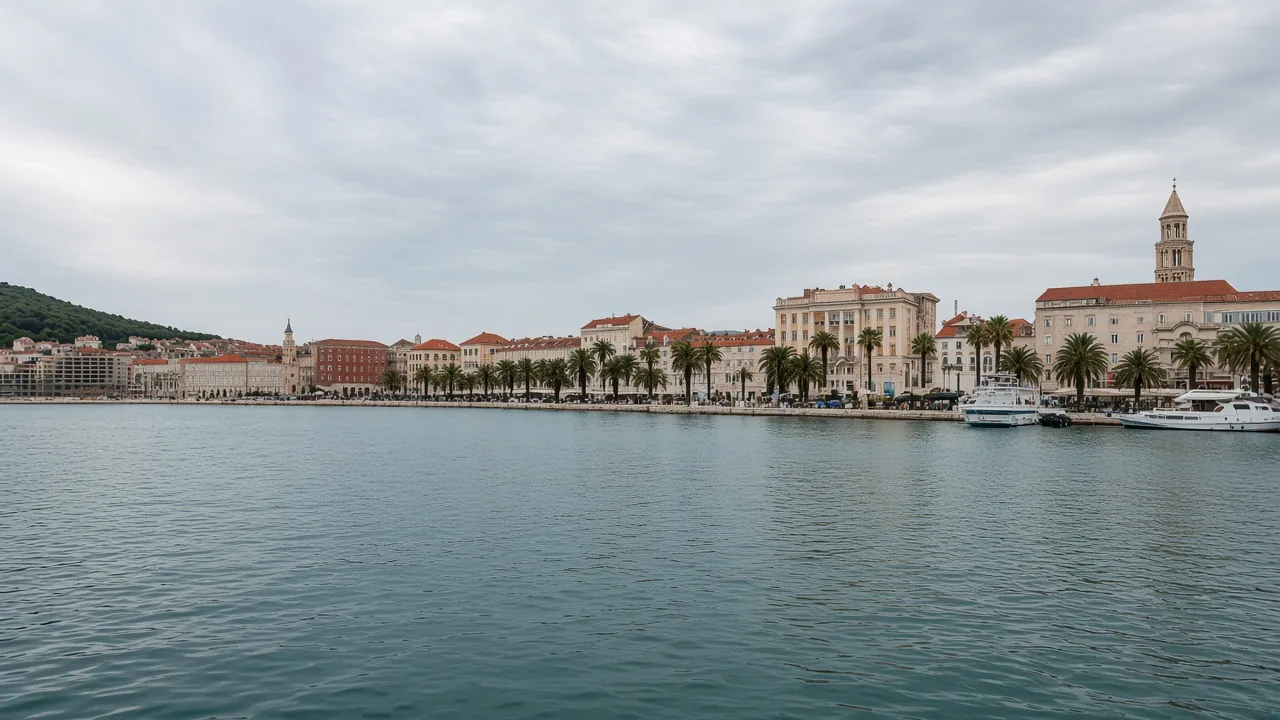
Along the harbour, the Riva is the city's promenade: a stone quay, a line of tall palms, and pale historic palaces facing the water. It is the natural way to arrive and to return, and it is also a pleasant place to eat or simply to sit and watch the harbour. From the water the same front reads as a continuous facade, with the cathedral tower rising behind the palms. You do not need a long excursion to understand the setting; a slow walk along the Riva and into the palace is already a full, coherent morning.
If you want a wider view, Marjan hill rises just west of the centre. From the paths and lookouts on the hillside you see the packed red roofs of the old town, the harbour bays and the islands beyond. It is a steeper, greener outing than the palace streets, and it will take a clear block of time, including the walk there and back. On a short call it is a good addition only if you have already seen the peristyle and the waterfront and still have a comfortable margin before all aboard.
A practical first visit is a walk from the berth along the Riva into the palace, time in the peristyle and at the cathedral, and a return along the same front, with Marjan only if the schedule is generous. This is one of the easiest walking ports on the Adriatic; the risk is not distance but lingering too long and forgetting that you still have to be at the gangway. Casual food is plentiful on the Riva and in the streets of the palace. The currency is the euro; cards are widely accepted. The stone underfoot is worn and can be slippery, and midday sun on the quay is strong, so shoes and water still matter even when the ship is so close. Leave a small but real margin for the walk back: the harbour is right there, and that is exactly why it is easy to cut too fine.
Port landmarks
Shore Excursions
- Split's Secrets - Private Walking Tour with Marjan Hill – 2 h 30 min
- Private Tour: Explore Split and Trogir from Zadar – 7 h
- Blue Cave & 5 Island Hopping Tour – 10 h
- Half-Day Guided Rafting Adventure on the Cetina River from Omiš – 3 h 30 min
- Private Authentic Dalmatian Heritage & Culinary Experience – 3 h 30 min
- Private Istria Coastal & Hilltop Towns Private Tour – 5 h
- Private Hvar Pakleni Islands + Secrets Of Brac + Solta Tour – 10 h
- Private Boat Tour from Split to Vis, Blue Cave, Stiniva and Blue Lagoon – 10 h
- Private luxury boat tour skippered by a local expert - fully customizable – 8 h
- Private Cooking Experience on Hvar Island – 3 h
- Private and Traditional Culinary Experience on the Island of Hvar – 3 h 30 min
- Evening Private Tour of Split and Blind Date with Wine – 2 h 30 min
- Maslinica Sunset Private Boat Ride – 3 h
- Private Split Walking Tour, Mountain Quad And Wine Adventure – 5 h 30 min
- Private Half-Day Boat Tour to Hula Hula & Laganini Beach Bars – 5 h
- Private Blue Lagoon Charter from Split - 50 Shades of Blue – 7 h
- Private Plitvice Lakes - from Split to Rovinj – 10 h
- 5 Island Private Boat Tour to Blue Cave, Budikovac, Hvar & Pakleni Island – 10 h
- Wine Lover's Tour - Sip and Savor Your Way Through the Wines of Hvar – 5 h 30 min
- Wine Tasting on the Island of Hvar – 3 h
- Private Full-Day Boat Tour Around Brač Island from Split – 10 h
- Out to Sea - Split Boat Party with Blue Lagoon Swim Stop – 6 h
- Krka Waterfalls Wanderers Day Tour From Trogir – 9 h
- Half-Day Cetina River Canyoning Adventure for All Skill Levels – 4 h
- Red Rocks, Hvar and Pakleni Islands Private Boat Tour – 10 h
- Extreme Advanced Canyoning on Cetina River – 4 h
- Private Sea Excursion: Secrets of Brac & Solta From Split – 7 h
- Private Half Day Boat Tour to Šolta Island – 5 h
- Hvar & 3 Islands Tour – 9 h
- Split: Half-Day Snorkeling Tour to Blue Lagoon, Čiovo and Trogir Island – 5 h 30 min
- Private Walking Tour of Split, Salona & Trogir with Storytelling – 6 h
- Exploring Dubrovnik City Walls from Split – 10 h
- Wine Tour on Hvar with Traditional Dinner – 6 h
- Half-Day Private Boat Tour from Split to Brač – Golden Horn Beach – 5 h
- Half-Day Sea and River Kayaking with Snorkeling to the Adriatic – 3 h
- Private Split & Trogir: Wine Tasting & Vineyard with Sea View – 5 h
- Private Highlights of Split – 2 h
- Split Food Tour: Burek, Ćevapi & Rakija – 3 h
- Half-Day Private Boat Tour from Split to Blue Lagoon – 5 h
- Small Group Hidden Gems of Hvar Tour – 4 h