Seville, Spain
Ports
Home • Ports • Europe • Spain • Seville
About Seville
Seville is a river city, and ships that can sail up the Guadalquivir berth at Muelle de las Delicias, within walking distance of the cathedral, the Giralda and the old streets of Santa Cruz. Not every call sold as Seville comes this far upriver: many larger ships remain at Cádiz, about an hour and a half away, and this page is the Delicias pier, not that Atlantic harbour. When the ship is actually here, the historic centre can begin on foot. The Alcázar, Triana and a long lunch belong to the same compact city. Leave time for the walk back along the river to the quay.
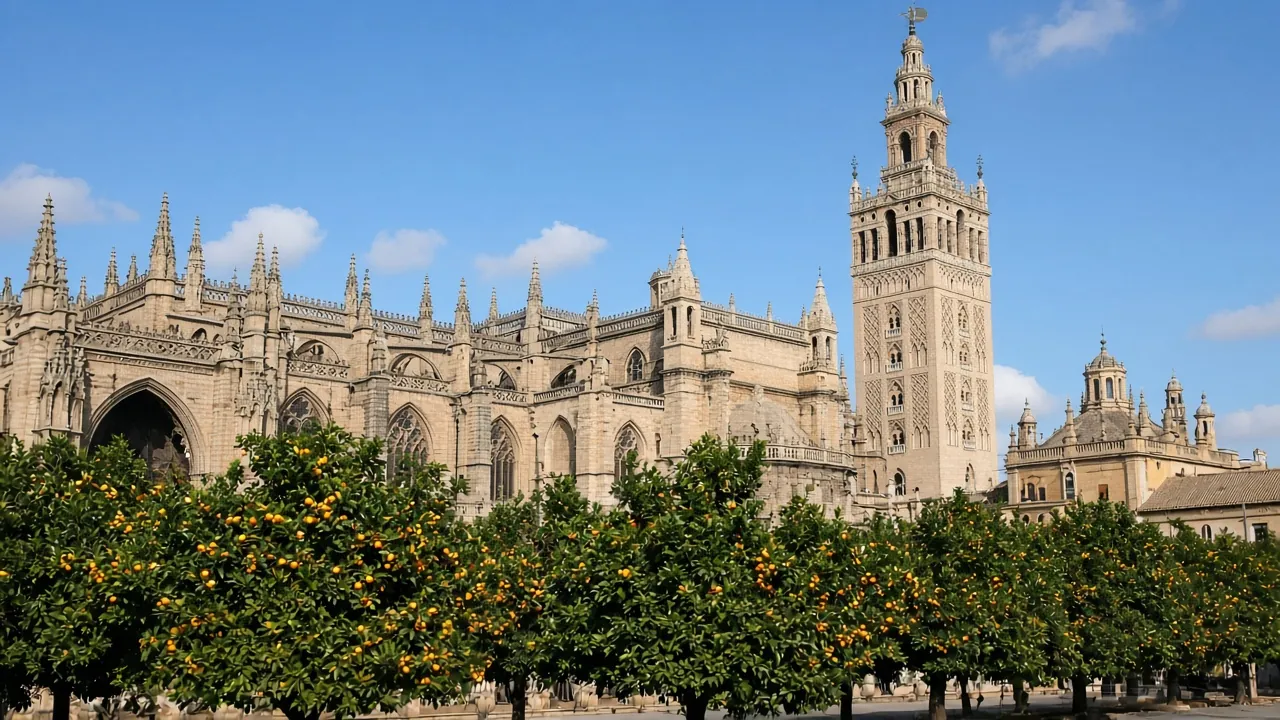
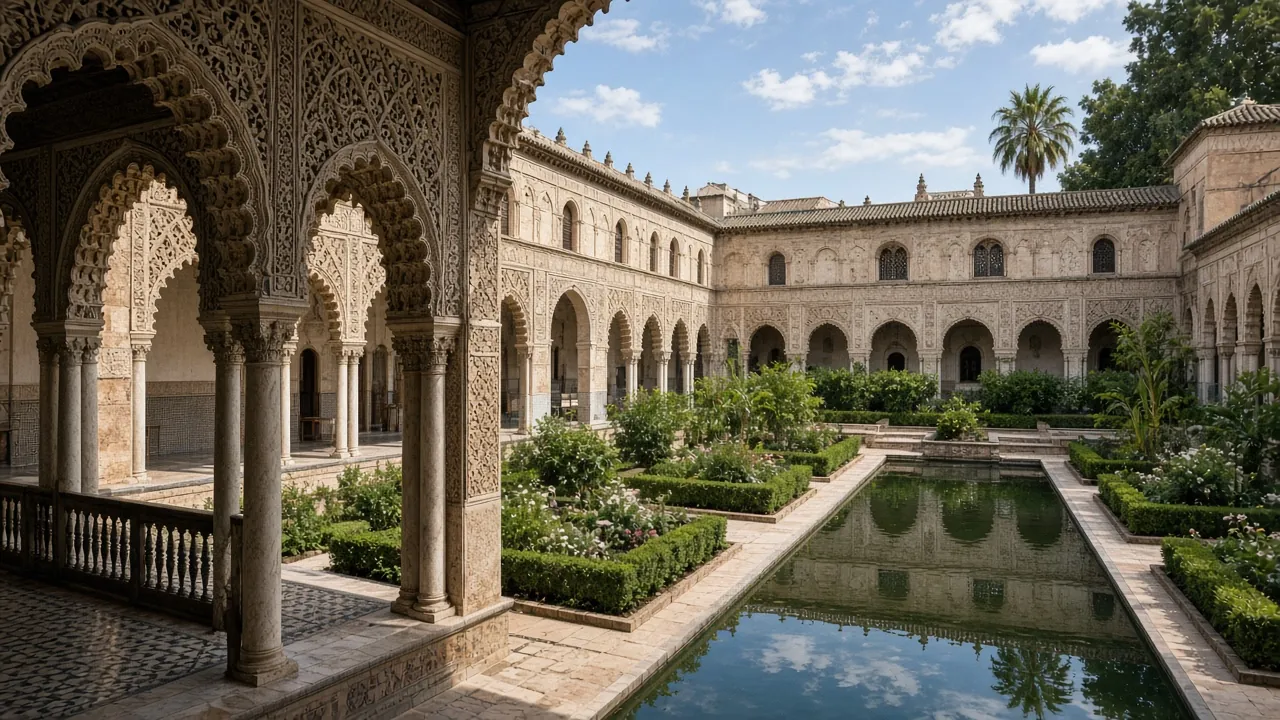
Seville is a river city, set on a great bend of the Guadalquivir, with a cathedral that was once a mosque, a minaret that became the Giralda, and a royal palace, the Alcázar, of courtyards and gardens next door. The old Jewish quarter of Santa Cruz is a tight maze of lanes behind those monuments; across the river, Triana has its own character, of ceramics, older working streets and tables along the water. This is one of the great inland cities of Andalusia, and it is reachable by ship only when the vessel can make the long, locked passage up the river.
Ships that can do so berth at Muelle de las Delicias, on the river close to María Luisa Park and within walking distance of the historic centre. This page is that pier. Not every call sold as Seville comes this far upriver. Many larger ships remain at Cádiz, about an hour and a half away by road, and that Atlantic harbour has its own page. If your ship is at Cádiz, this is a long outing, not a walk-off; if your ship is actually at Las Delicias, the cathedral, the Giralda and Santa Cruz can begin on foot.
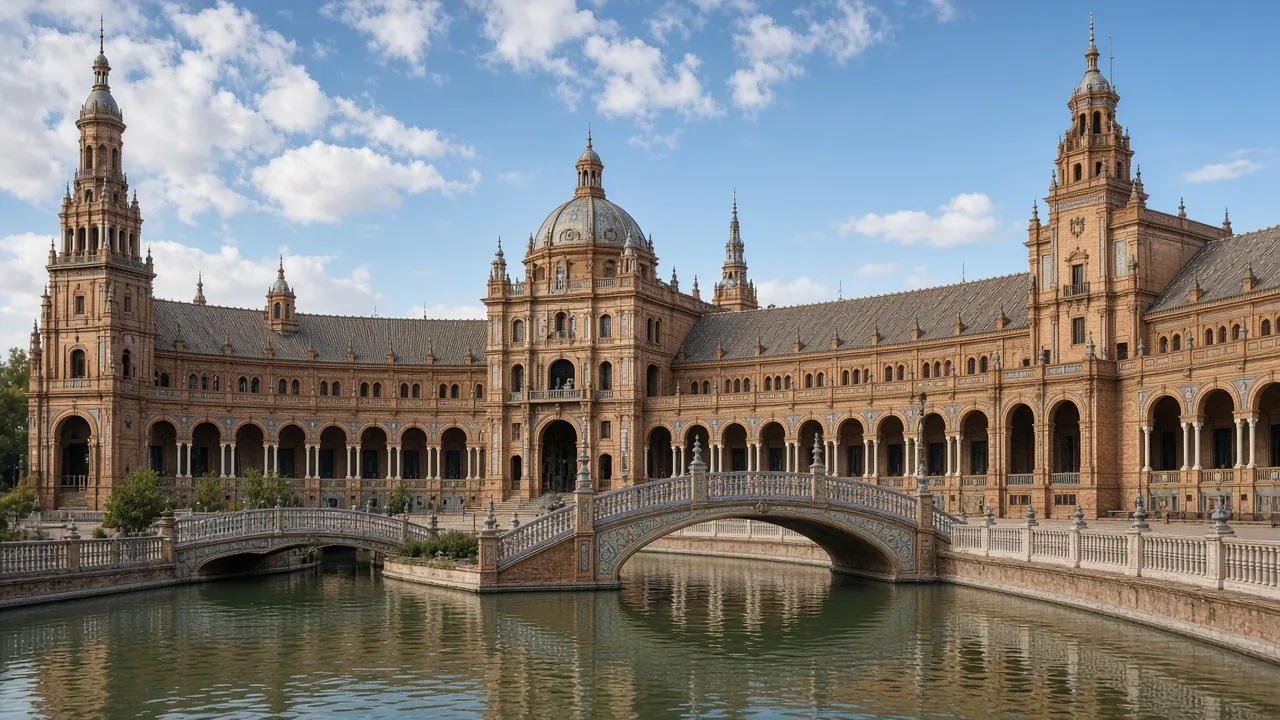
A first day in Seville can stay with those monuments, a walk through the park, and a crossing into Triana, without trying to add Córdoba or Granada on the same clock. The Metropol Parasol, in the Encarnación square, and the Archive of the Indies are closer additions if you want a later, more open hour. The heat in summer is serious; the shade of the courtyards and an early start are part of the plan, not a luxury.
Food is Andalusian and of the city: tapas, fried fish, gazpacho or salmorejo when the season is right, and the sherries of the nearby coast. Spanish is the language of the streets; English is widely used around the main monuments, more thinly in ordinary bars a street or two back. The river light is softer than the open Atlantic, and the evenings can be long.
Leave time for the walk back along the river to Las Delicias, or, if you have come from Cádiz, for the road back to that harbour. A day that holds to the historic centre, with a clear last return to the quay your ship is actually using, will have seen Seville as a river city, not as a name on a distant itinerary.
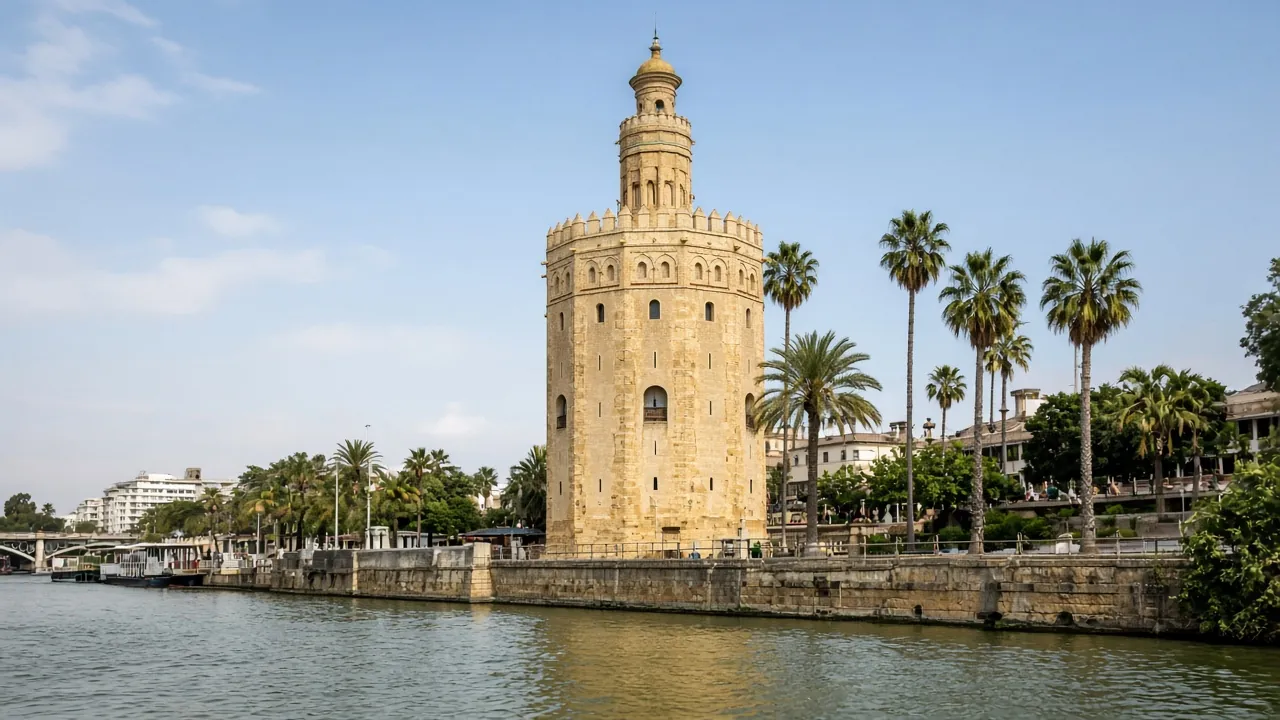
Port landmarks
Shore Excursions
- Private Tour or Shore Excursion: A Local Friend In Sevilla – 1 h
- Donana and El Rocio Day Trip From Seville – 10 h
- A Rock Called Gibraltar Small Group Tour from Seville – 10 h
- Gibraltar Day Trip From Seville – 10 h
- Small Group or Private Seville Electric Bike Tour – 2 h
- A City Of Queens, Nuns, Prostitutes + Witches Excursion Small Group/Private – 2 h
- Small Group or Private Panoramic Walking Tour/Shore Excursion - 4 Hours – 4 h
- Small Group or Private Off The Beaten Path Tapas Tour – 3 h
- City Sightseeing Hop On Hop Off Bus Tour Seville – Flexible · valid 24 h
- Private Eating Seville: Tapas, Drinks & Local Flavors Tour – 3 h
- Royal Alcazar of Seville Private Tour – 1 h 30 min
- Seville April Fair Tour – 2 h
- Triana Specialty Tapas Tour – 3 h
- Seville Expert Tour in Private Eco Tuk Tuk – 2 h
- Small Group or Private Horse Riding Excursion from Seville – 3 h
- Holy Week Tour or Shore Excursion – 2 h 30 min
- Shore Excursion: The Ultimate Seville Experience – 5 h
- Small Group or Private Panoramic Walking Tour/Shore Excursion - 2 Hours – 2 h
- Seville City Tour By Kayak – 2 h 15 min
- Flamenco Box Percussion Lesson – 1 h
- Day Trip to Ronda and White Villages from Seville – 10 h
- Seville Express Tour in Private Eco Tuk Tuk – 1 h
- Seville Food Tour: Tapas, Churros & Local Wine – 3 h 30 min
- Caminito Del Rey Hiking Tour From Seville – 10 h
- Cadiz and Jerez Day Trip from Seville – 10 h
- Roman Ruins Of Italica Half-Day Tour – 4 h
- Small Group or Private Triana Tapas Tour – 3 h
- Flamenco Dance Lesson – 1 h
- Oleotourism Half-Day Tour – 4 h
- Brave Bulls Half-Day Tour – 4 h
- Day trip to Cordoba and Mezquita Tour – 10 h
- Seville: Cathedral, La Giralda, Plaza de España & River Cruise – 4 h
- Carmona Half-Day Trip from Seville – 4 h
- Eating Seville: Tapas, Drinks & Local Flavors Tour – 3 h
- Small Group or Private Kayak Tour – 2 h
- Small Group or Private Seville’s Highlights Bike Tour – 2 h
- Aracena Full-Day Tour – 10 h
- Small Group or Private Off The Beaten Path Seville Tour – 2 h
- Seville Stand Up Paddle Surf – 1 h 30 min
- Teatro Flamenco Sevilla: Live the Flamenco Experience – 1 h