Santorini, Greece
Ports
Home • Ports • Europe • Greece • Santorini
See all 163 tours in Santorini
About Santorini
Santorini is a circular volcanic island in the Aegean, known for the white towns of Fira and Oia on the caldera cliff and for views across the sunken crater to the sea. A first visit usually turns on time in those clifftop streets and a realistic plan for getting back down. Cruise ships use Athinios, from which a steep road and buses or taxis climb to Fira; some calls are tendered. Build the ascent, and the return to the tender or the quay, into the day from the start.
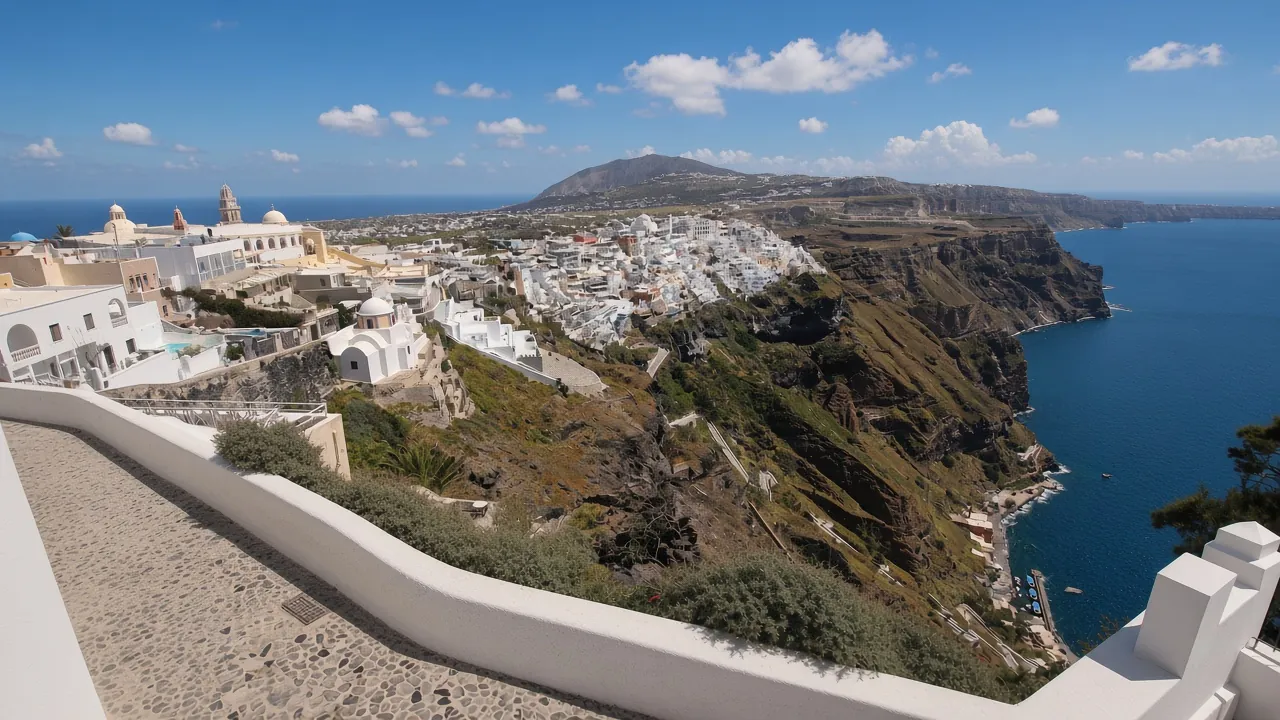
Fira, the island's main town, sits on the lip of the caldera once you are up. From the cliff path you look across the flooded volcanic basin to the dark islets in the middle and to the pale towns strung along the opposite cliffs. It is a compact place of lanes, terraces and church domes, best seen on foot, and it is the natural first stop from Athinios. Midday light is hard and the paths are uneven and often crowded; comfortable shoes and water matter as much as a camera.
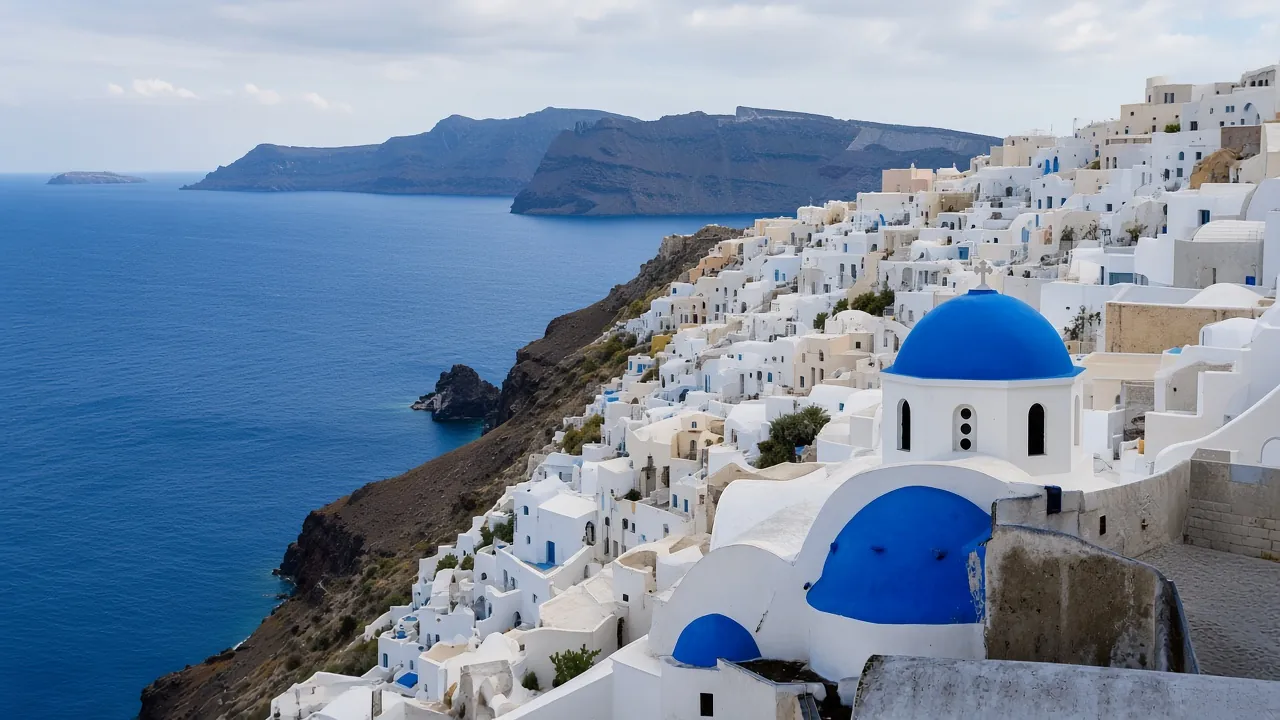
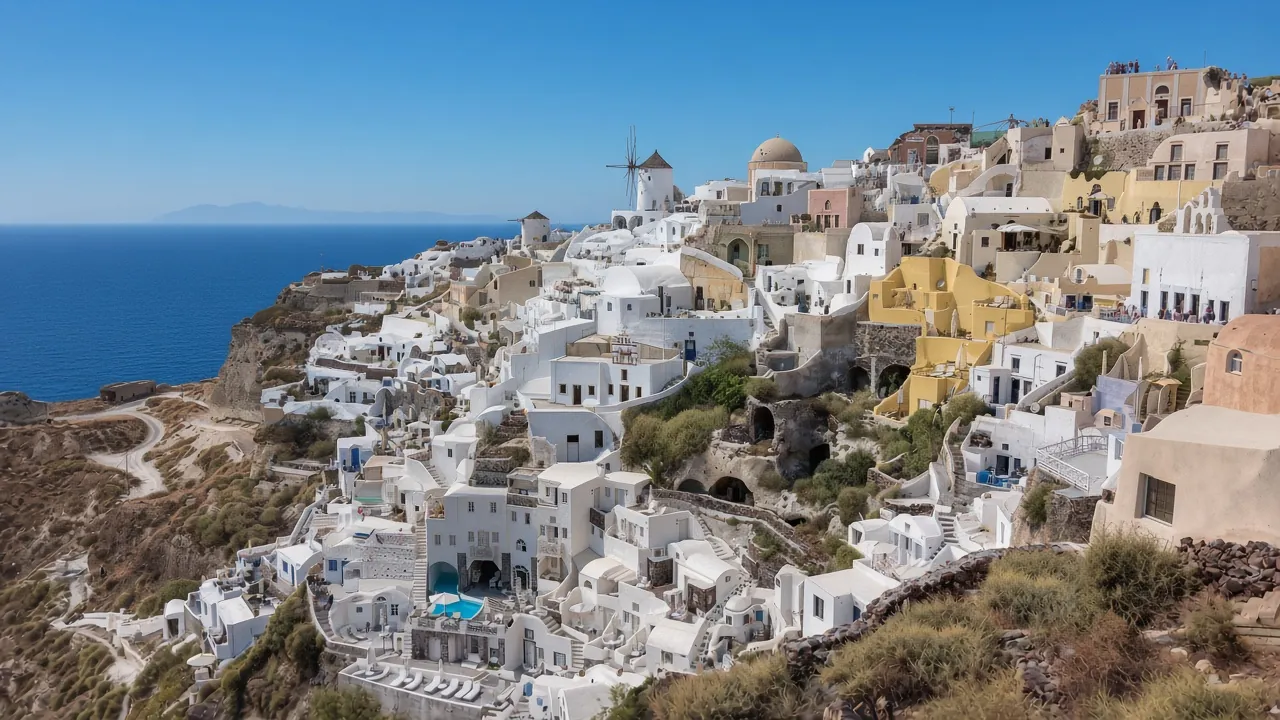
Oia lies at the northern end of the rim, a further ride or a longer walk along the caldera. This is the village of the white cave houses, the blue-domed churches above the drop, and the old windmill on the headland. It is justly famous, and it is also easy to spend longer there than a single port day really allows. If you go, treat Oia as the main outing rather than an add-on after a slow morning in Fira, and watch the time for the return through Fira and down to Athinios. The views of the caldera cliffs, with the terraced houses stepping down toward the water, are just as striking from several points between the two towns if you would rather not go all the way.
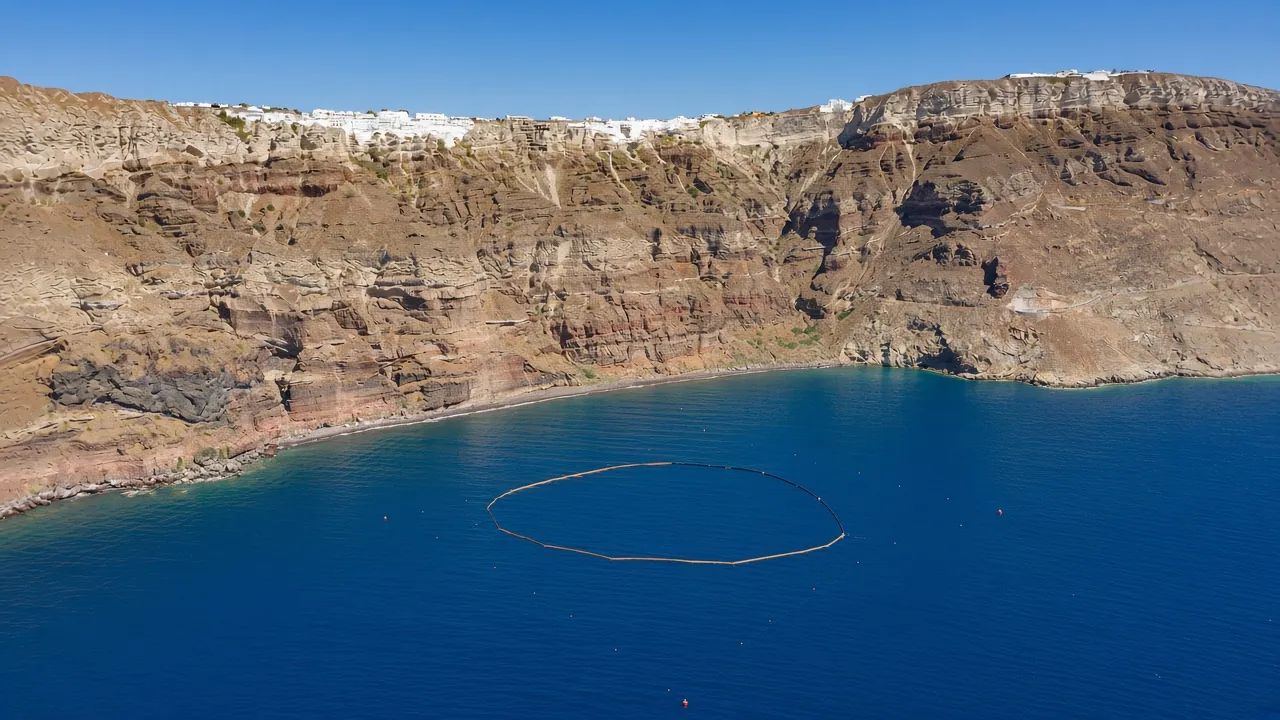
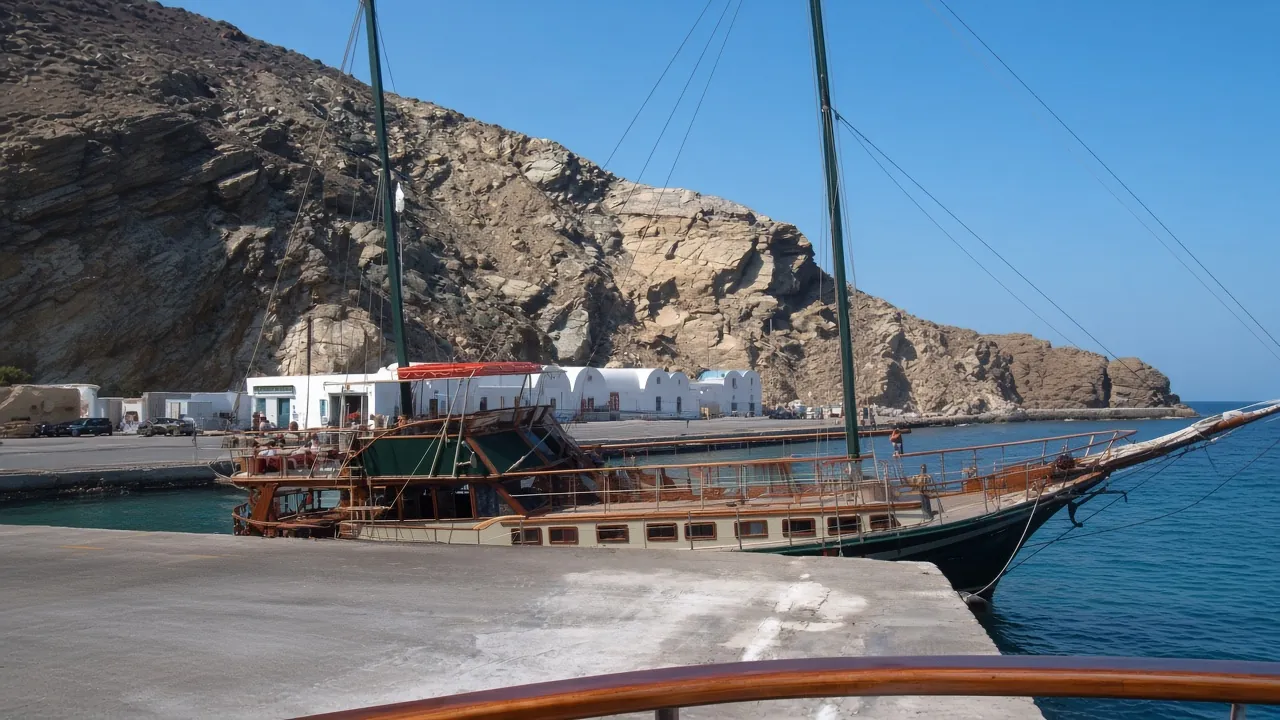
Athinios itself is not a place to linger, but the setting is unmistakable: the harbour cut into the volcanic shore, with the cliffs rising straight behind the quay. Do not confuse this landing with the old port below Fira, where a cable car runs up the face of the cliff. If your ship tenders to Athinios, that cable car will not be waiting at the bottom of your gangway.
A practical first visit is a transfer up to Fira, time on the caldera paths, and, if the clock allows, a focused trip to Oia rather than a rushed circuit of both. Eat in Fira or Oia; options at the port are limited and not the point of the day. The currency is the euro; cards are widely accepted in the main towns, though a little cash is still useful for small purchases and some rides. The sun on the rim is fierce even on a slightly overcast day, and there is little shade on the cliff paths. The one thing not to improvise is the return: the road down to Athinios and the tender operation can both slow down when the island is busy, and missing that last boat is not a minor inconvenience.
Port landmarks
Shore Excursions
- Relaxing Aromatherapy Massage In Imerovigli – 1 h
- Luxury Semi-Private Sunset Sailing Cruise from Ammoudi – 6 h
- Private Caldera Villages Island Tour – 4 h
- Luxury Semi-Private Day Sailing Cruise from Marina of Vlychada – 5 h
- Deluxe Santorini Small-Group Shore Excursion for Cruise Ships – 5 h
- VIP Private Sunset Sailing Cruise from Marina of Vlychada – 5 h
- Santorini Private Wine Tour: 5 Hours, 3 Wineries (Daytime Experience) – 5 h
- Customize Your Perfect Day in Santorini with Private Driver-Guide – 6 h
- Classy Morning Boat Rental With Brand New Boat – 4 h 30 min
- Santorini Flying Dress Photoshoot – 1 h 30 min
- Private Santorini Cooking Class: Eat Like Local with Wine Tasting – 6 h
- Best Of Santorini In A Day – 6 h
- 4 Hours - Explore Santorini By Private Luxury Mercedes Vehicle – 4 h
- 6-Hour Private Shore Excursion in Santorini: Skip the Lines – 6 h
- Private Customizable Santorini Tour with Local Driver-Guide – 6 h
- Santorini: 6hr Small Group Shore Excursion Villages & Wine – 6 h
- Santorini Private Wine Tour: 3 Wineries, 12 Tastings & Caldera Sunset – 5 h
- Private Santorini Instagram Tour – 5 h
- Luxury Semi-Private Sunset Sailing Cruise from Marina of Vlychada – 5 h
- Santorini Morning Sea Kayak Tour with Light Lunch – 4 h
- Santorini Highlights: Full-Day Private Van Tour – 5 h
- Santorini Private Tour from Port or Your Hotel – 5 h
- Santorini Sightseeing Tour and Winery Dining Experience – 5 h
- Santorini Shore Excursion: 5-hour Private Sightseeing Tour – 5 h
- Private Tour: Ancient Akrotiri and Santorini Wineries – 6 h
- Santorini: 6hr Private Tour including Olive Oil, Beer or Wine Tasting – 6 h
- Tailor-Made Santorini Private Tour: Custom Highlights Journey – 4 h 30 min
- Private Highlights of Santorini Tour – 5 h
- Santorini: 4hr Private First Impressions Tour – 4 h
- Private Sunset Sailing Cruise from Ammoudi (Oia) – 6 h
- Santorini’s History & Wine Private Guided Tour – 5 h
- Once in a Lifetime Kleftiko Catamaran Morning Cruise – 6 h 15 min
- Private Hidden Treasures of Santorini Tour – 6 h
- Santorini Highlights & Ancient Akrotiri Tour – 5 h
- Santorini Sightseeing Tour: 4 Hours of Iconic Spots – 4 h
- Private Highlights Of Santorini Tour – 6 h
- Private Wine Tasting Tour in Santorini and Thirassia – 4 h
- Private Tour: Santorini Wine Experts – 4 h
- Private Day Sailing Cruise from Marina of Vlychada – 5 h
- Private Day Sailing Cruise from Bay of Ammoudi - 4 Hours – 4 h