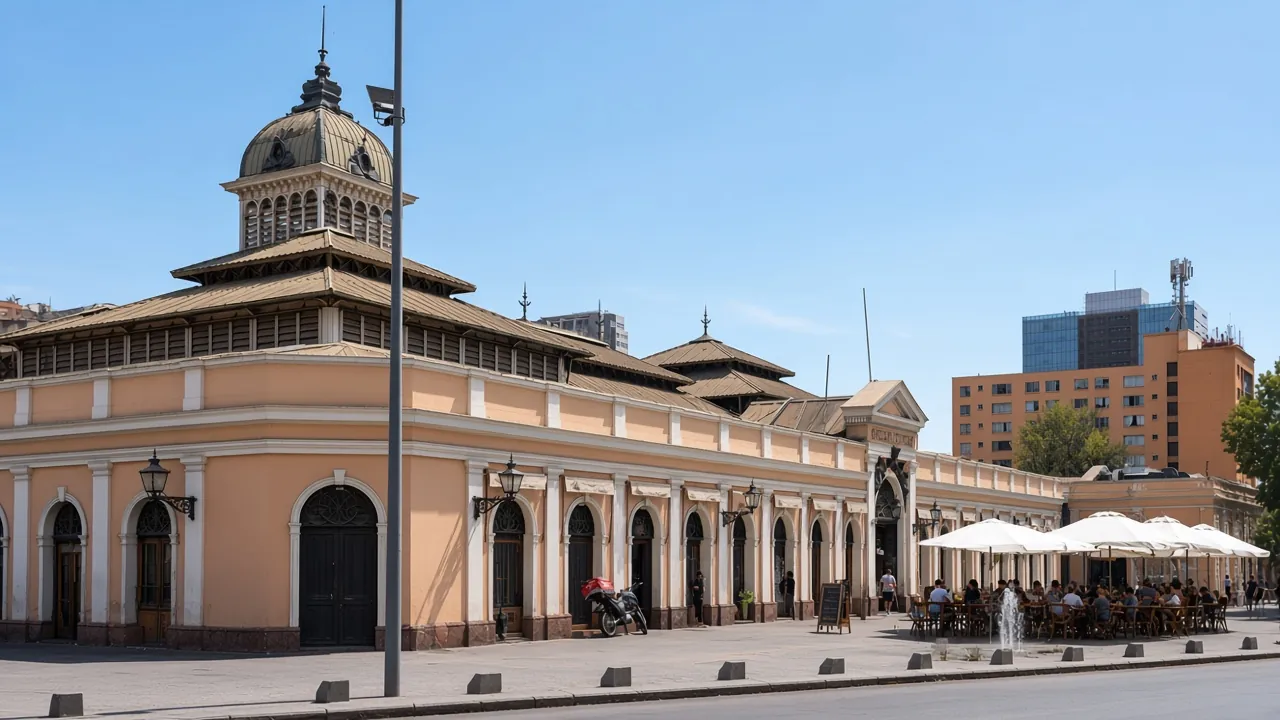
Santiago, Chile
Ports
Home • Ports • America • Chile • Santiago
About Santiago
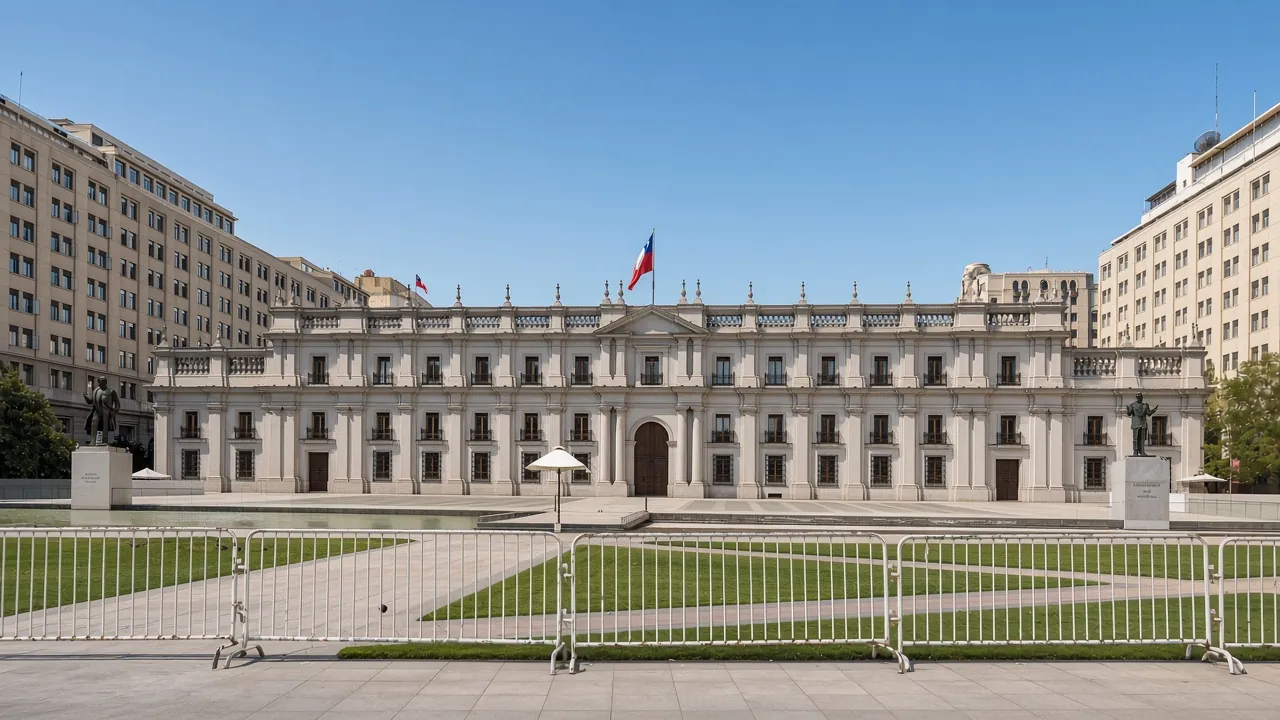
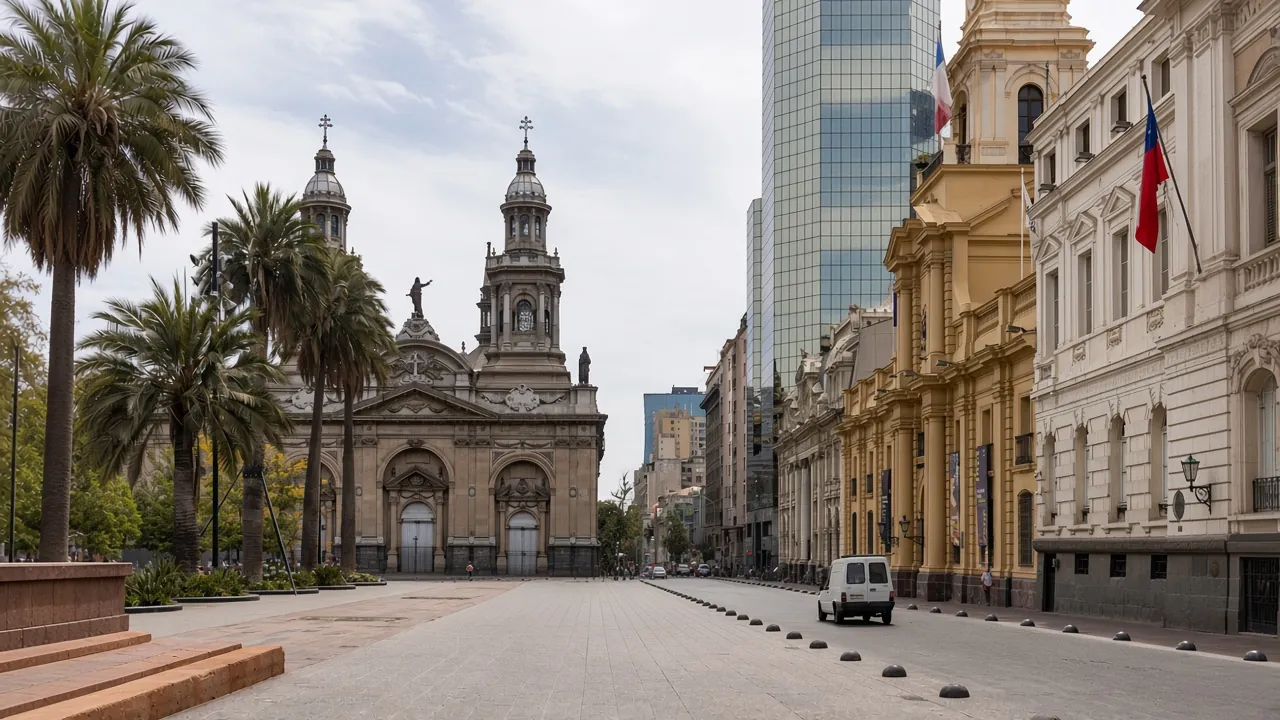
Santiago is Chile's inland capital, set in a broad valley between the Andes and the coastal range, and it is not a harbour. Cruise passengers reach it overland from Valparaíso, about 120 kilometres away, typically an hour and a half to two hours each way, and longer when traffic on the coastal road is heavy. The civic heart is a grid around the Plaza de Armas and the presidential palace of La Moneda, with the hills of Santa Lucía and San Cristóbal giving the first views over a dense, often hazy basin. A first day that tries to see the capital and still return to a ship on the coast needs a conservative timetable; this is a city visit, not a quick add-on after a morning in Valparaíso.
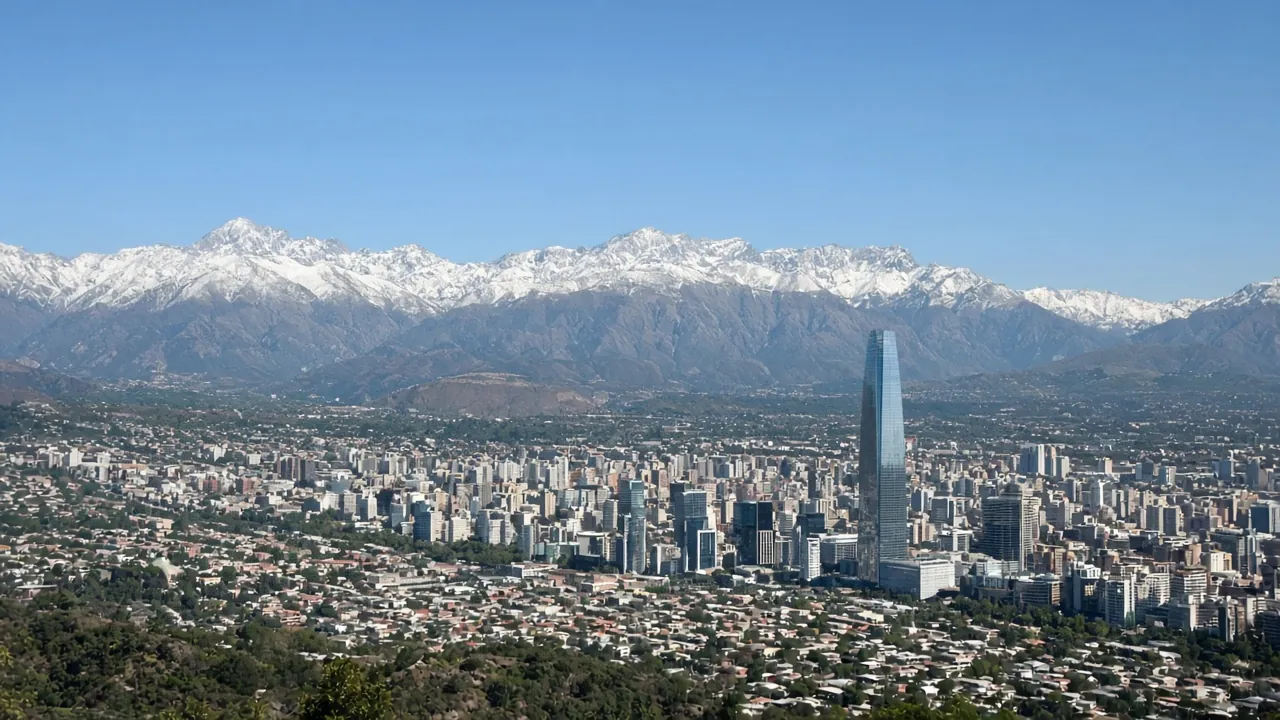
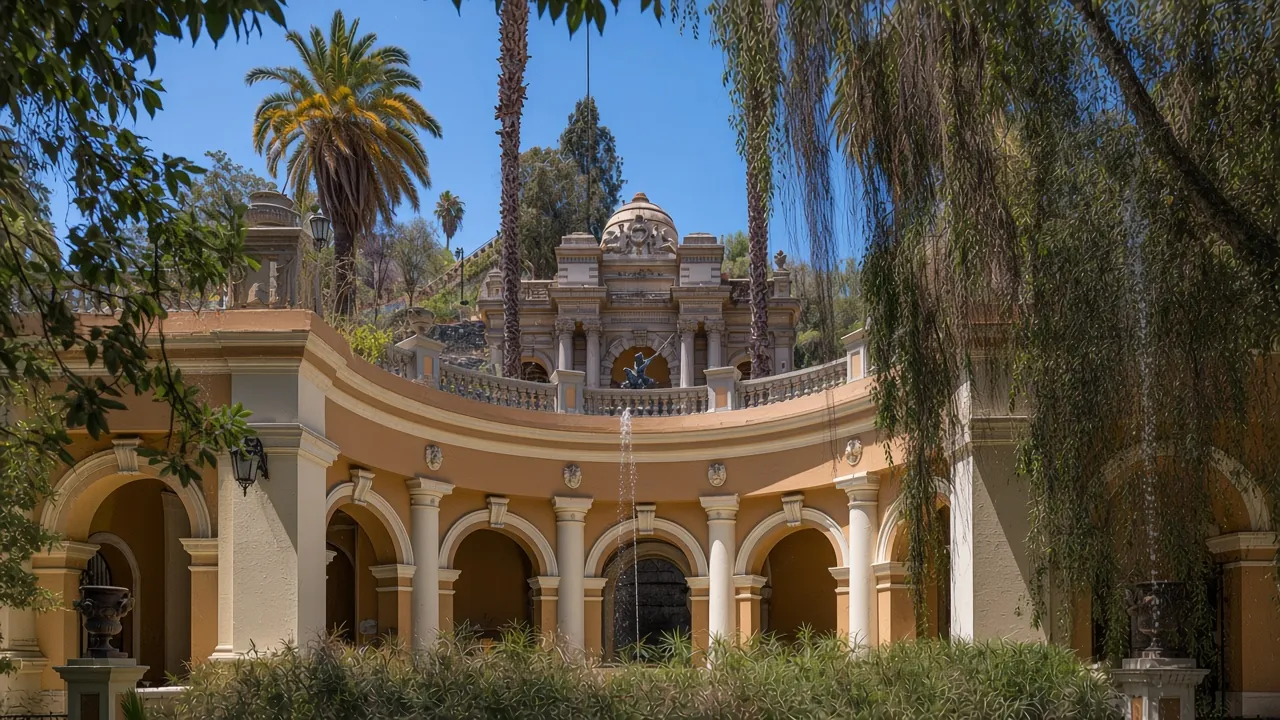
The historic and civic core is the right first walk if you have reached the city with time in hand: the Plaza de Armas, the cathedral, the later streets of a republican capital, and La Moneda, the presidential palace, a few blocks away. Cerro Santa Lucía, a landscaped hill of paths and terraces, is close enough to include on the same circuit and gives a first elevated view. A little farther, Cerro San Cristóbal, in the large metropolitan park of the same name, is a longer climb or funicular ride, with a wider look at the basin and, when the air is clear, at the Andes that stand over the eastern edge of the city. The air is not always clear. Santiago's valley can be hazy, especially in winter, and the mountains may be a presence more than a sharp skyline.
Neighbourhoods such as Lastarria and Bellavista, and a market lunch at the Mercado Central or in a later barrio of restaurants, are the easy way to eat and to feel a city that is much larger than its ceremonial square. The Museum of Pre-Columbian Art and other museums in the centre are serious indoor stops if you want history without a long transfer across town. What you should not try, on a day that still has to return to Valparaíso, is a complete tour of a metropolis of hills, new business districts and far-flung vineyards. The Maipo and Casablanca wine country is a different outing, and it will consume the clock.
Food is one of the capital's pleasures: Chilean cooking, seafood brought up from the coast, a strong café culture, and markets that still matter. Eat in the centre or in a nearby barrio; a formal lunch at the far edge of the city is a poor idea when the road back to the port is still ahead of you.
You will have arrived by road from the coast, not by walking off a ship. That is the fact that organises the day. If the call at Valparaíso is long and a reliable transfer is already arranged, Santiago can be a complete, satisfying visit — a capital, a hill, a meal, and a return that starts earlier than you think you need. If the hours are short, stay in Valparaíso. The two cities are a pair, and they are not a single morning. Build the traffic of the 120-kilometre road into every plan, and do not treat the capital as a footnote you can collect on the way back to the gangway. A first day in Santiago is a day in an inland capital. It is worth doing when the timetable is honest, and it is not worth doing as a sprint.
Port landmarks