Portobelo, Panama
Ports
Home • Ports • America • Panama • Portobelo
About Portobelo
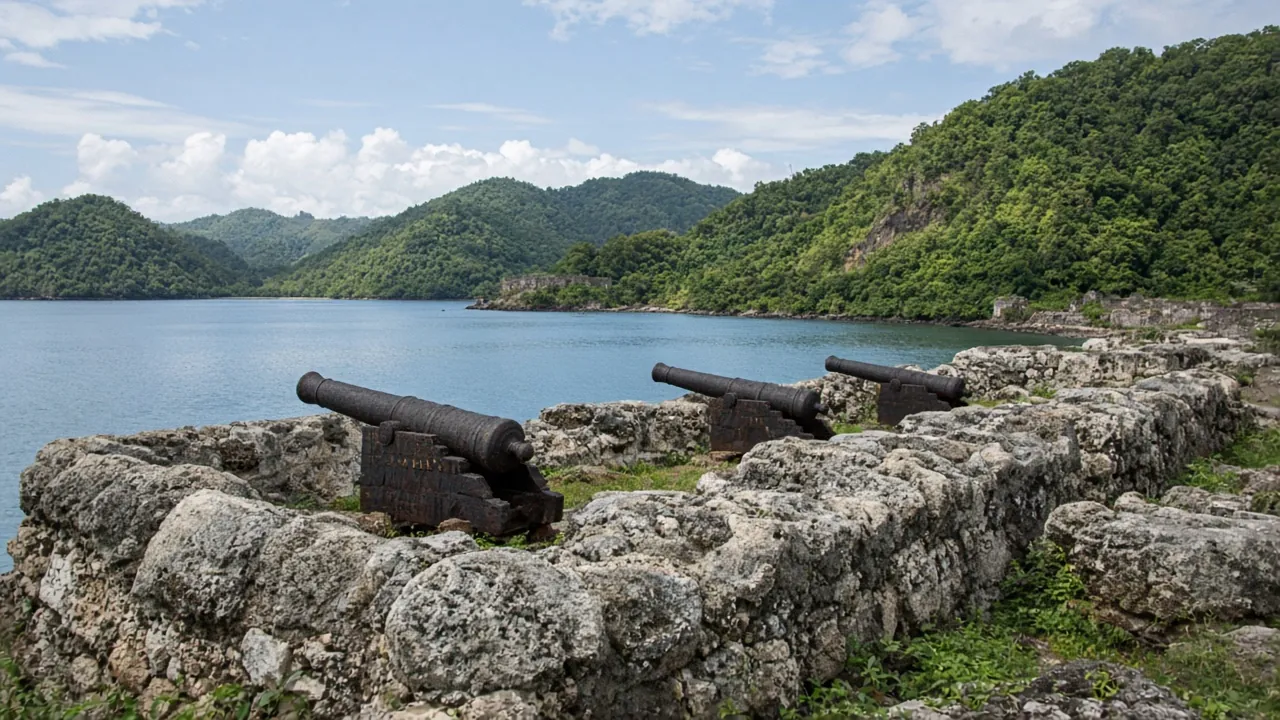
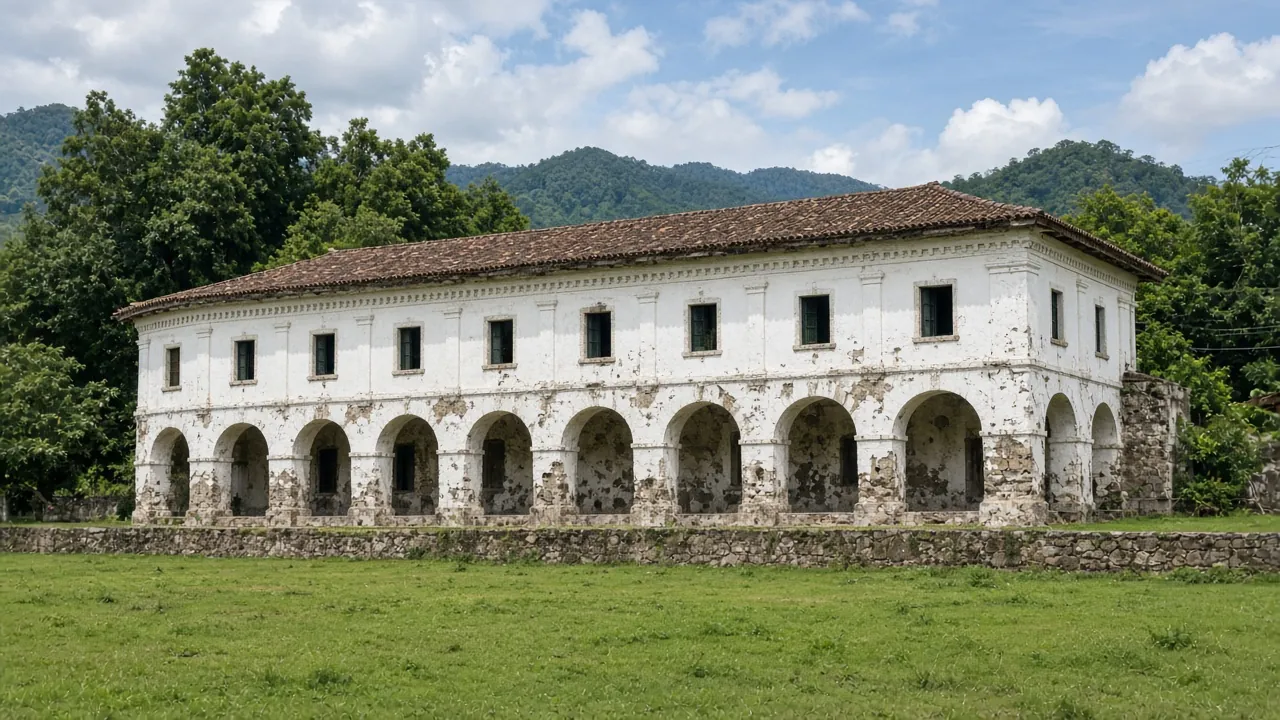
Portobelo is a small bay town on Panama's Caribbean coast, once the treasure port of the Spanish Main and now a quiet place of ruined and restored forts, a customs house, and a compact waterfront. The fortifications, with those at San Lorenzo, are a UNESCO site, and they sit in and around the town rather than at a distance. Ships that call here are usually smaller, and many anchor in the bay and send boats ashore; the last boat back is worth leaving time for. The scale is modest: a church, a square, the walls above the water, and a humid green hinterland. This is not Colón, and it is not Panama City.
Portobelo is a small town on a deep, green bay of Panama's Caribbean coast, once the treasure port of the Spanish Main and now a quiet place of walls, a customs house and a church that still holds a famous figure of the Black Christ. The fortifications here, together with those at San Lorenzo on the Chagres, are a UNESCO site, and they sit in and around the town: San Felipe, San Jerónimo, the harbour batteries, all close enough that the place can be read on foot once you are ashore.
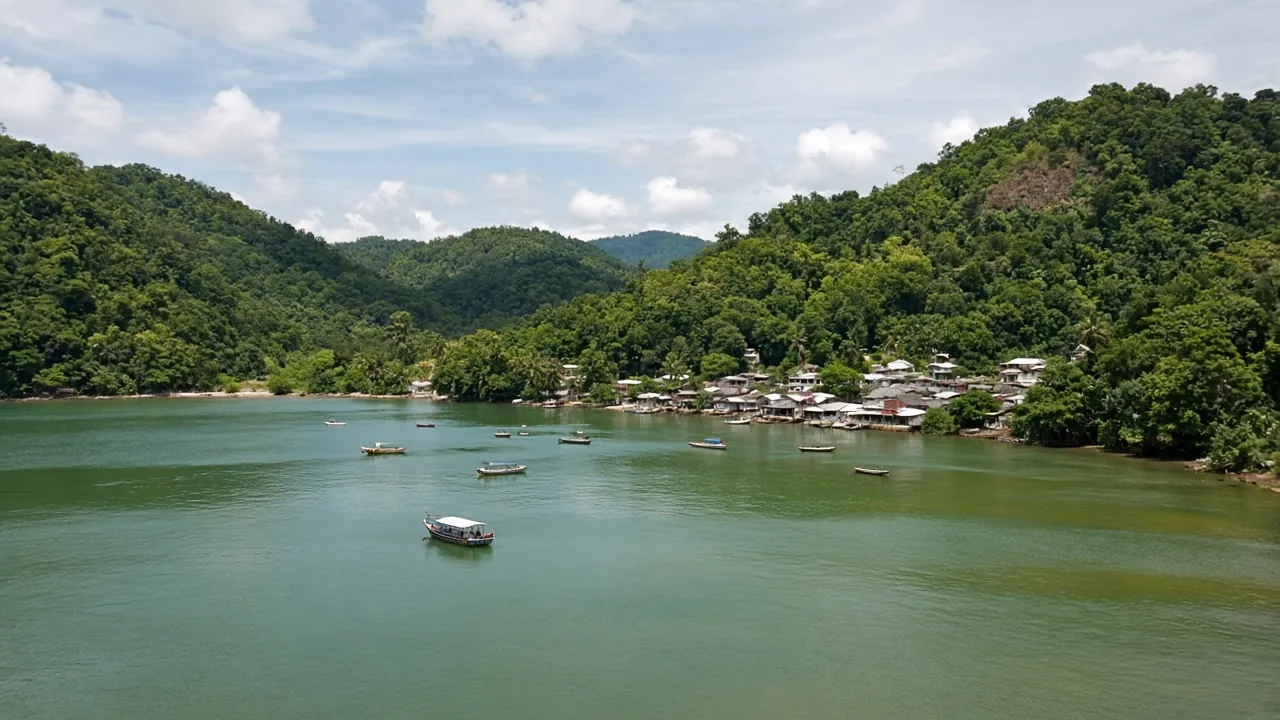
Ships that call are usually smaller. Many anchor in the bay and send boats to a landing near the town; there is no large cruise terminal, and a swell can slow or stop the boats. The last boat back is worth leaving time for. The town itself is modest and humid, with a square, a short waterfront and a pace that has nothing of Panama City about it. This is not Colón, a short way to the west, and it is not the Pacific capital; it is a harbour of its own.
A good day here stays with the forts, the customs house and the bay. The road along the coast is slower than it looks, and a drive that tries to add Colón or the locks will spend itself in a vehicle. San Lorenzo, on its headland at the river mouth, is a beautiful but longer outing and wants a careful watch on the clock. The hinterland is green and close, and the heat is steady.
Food is simple and coastal: fish, coconut rice, plantain, and the kitchens of a small Caribbean town rather than a capital. Spanish is the language of the streets; English is thinner than in the canal terminals. Shade is uneven, and the stone of the forts holds the day's heat.
Portobelo rewards a slower visit. The walls and the water are the point, and a day that walks them without rushing already has the place in hand. Leave a margin for the boat back to the ship, especially if the afternoon wind gets up on the bay.
The bay is the reason the Spanish held the place: a deep, sheltered water under hills, once the Atlantic end of the treasure fairs, later a neglected town that has kept its walls when many larger ports have lost theirs. The church of San Felipe, the customs house on the water, and the ramps and gun platforms of the forts are enough for a first visit without a second destination. Rain can arrive suddenly, and the paths on the walls can be slick. Come back to the landing with time to spare, and treat the boat to the ship as part of the day's design rather than a detail to be settled later.
Port landmarks
Shore Excursions
- Snorkeling and Kayak Adventures in Portobelo Beach – 8 h
- Aguas Claras-Gatun Locks Visitor Center & City Tour in Colón – 5 h
- Panama Canal Visitor Center and City Tour Shared Tour – 5 h 30 min
- Panamanian Geisha Coffee and Chocolate Tasting All Inclusive Tour – 2 h
- Miraflores Canal Locks, Amador Causeway and Biomuseo Private Tour – 5 h
- Caribbean Gems: Portobelo and Grande Island Private Tour – 8 h
- Half Day Adventure to Gamboa Sloth Sanctuary and Monkey Island Wildlife Sig – 6 h
- Exploring Panama La Vieja Hidden Treasures of the Ancient City Private Tour – 3 h
- Private Colon City Tour: Exploring Caribbean Roots, Food, and Culture – 6 h
- Emberá Villages Tour – 6 h
- Embera Tribe Tour and Village Exploration – 6 h
- Gatún Lake Sightseeing and Monkey Tour – 3 h
- Gatun Lake Wildlife Safari Expedition and Miraflores Canal Locks – 5 h
- Private Shopping in the Biggest Duty free Zone of Las Americas in a Day – 7 h
- Monkey Island Gamboa Rainforest Tour – 4 h
- Miraflores Locks Visitor Center and Monkey Island and Nature Private Tour – 4 h
- Chagres River Farm Day Adventure Tour – 8 h
- Panama Canal Visitor Center and City Tour Private Tour – 5 h 30 min
- Panama Canal and City Sightseeing Tour – 8 h
- Colon Shore Excursion: Panama City And Canal Private Tour – 5 h
- Panama Viejo and Casco Antiguo Tour – 4 h
- Horseback Riding, Zipline, and Boat Ride Adventure – 8 h
- Day Tour to Venas Azules Portobelo Beach – 8 h
- City Sightseeing Hop On Hop Off Bus Tour Panama City – Flexible · valid 24 h
- Private Old Canal Zone Tour (Miraflores Locks, Former Bases, and Museum) – 5 h
- Casco Antiguo walking tour and Panama Canal – 4 h