Playa Mantas, Costa Rica
Ports
Home • Ports • America • Costa Rica • Playa Mantas
See all 38 tours in Playa Mantas
About Playa Mantas
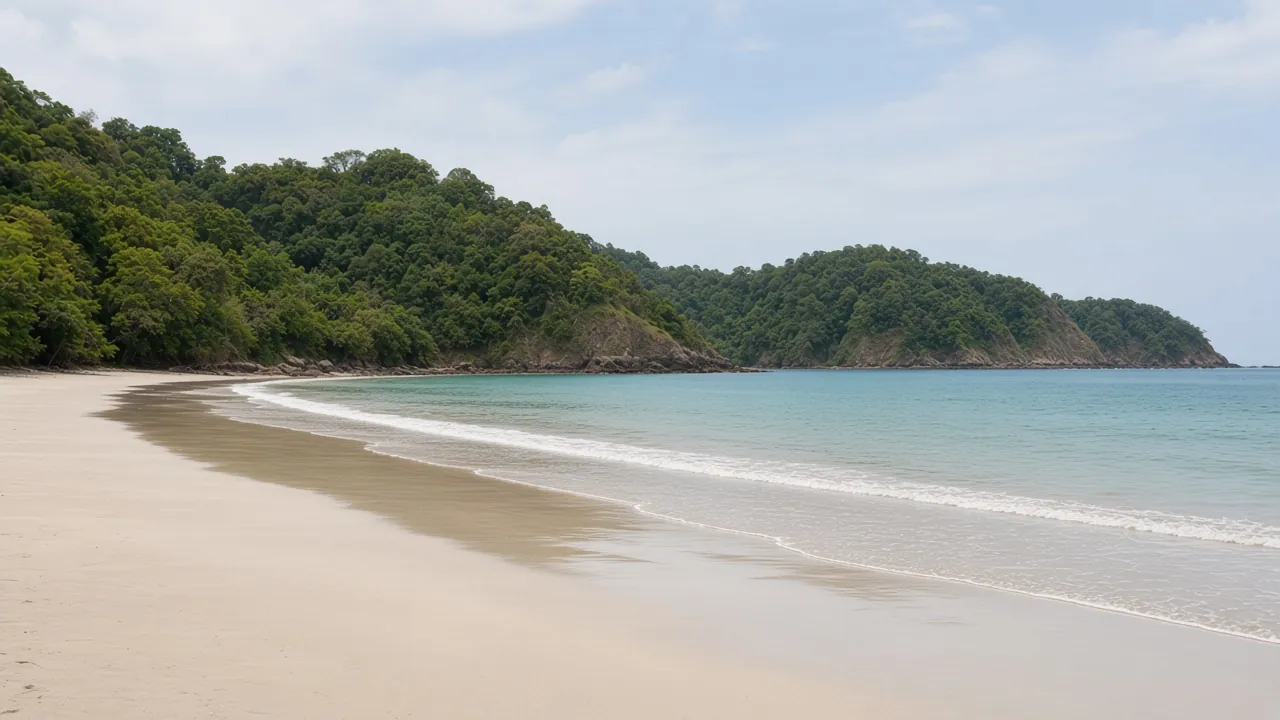
Playa Mantas is a sheltered beach on Costa Rica's Central Pacific coast, in Puntarenas province, tucked between wooded headlands near Punta Leona. The nearest towns are small Herradura and the larger surf town of Jacó, a short drive south; just inland, Carara National Park protects a rare meeting of dry and wet forest, where scarlet macaws are often seen. Cruise ships on this coast typically tender to Los Sueños Marina in Herradura Bay, a short ride from the beach, rather than landing on the sand itself. From the marina a taxi is the usual way to Jacó, the park, or the Tárcoles area.
The beach itself is the reason the name appears on a map: a deep, pale shore between two headlands, backed by trees, and quieter than the busier strands further south. It is a public beach, often reached through the Punta Leona area, and it is at its best as a place to swim and walk rather than as a town. There are no monumental streets here, and no civic square that organises a first visit. The settlement pattern is one of hotels, access roads and forested slopes, with the real towns a short drive away.
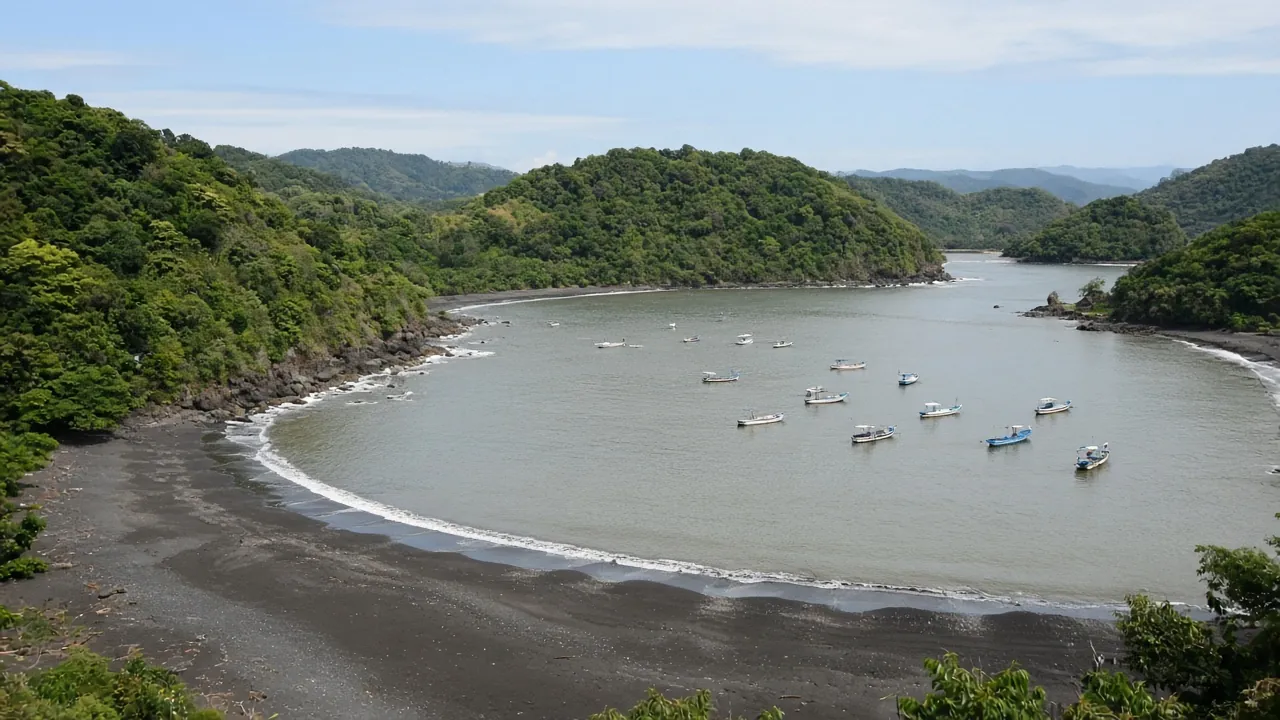
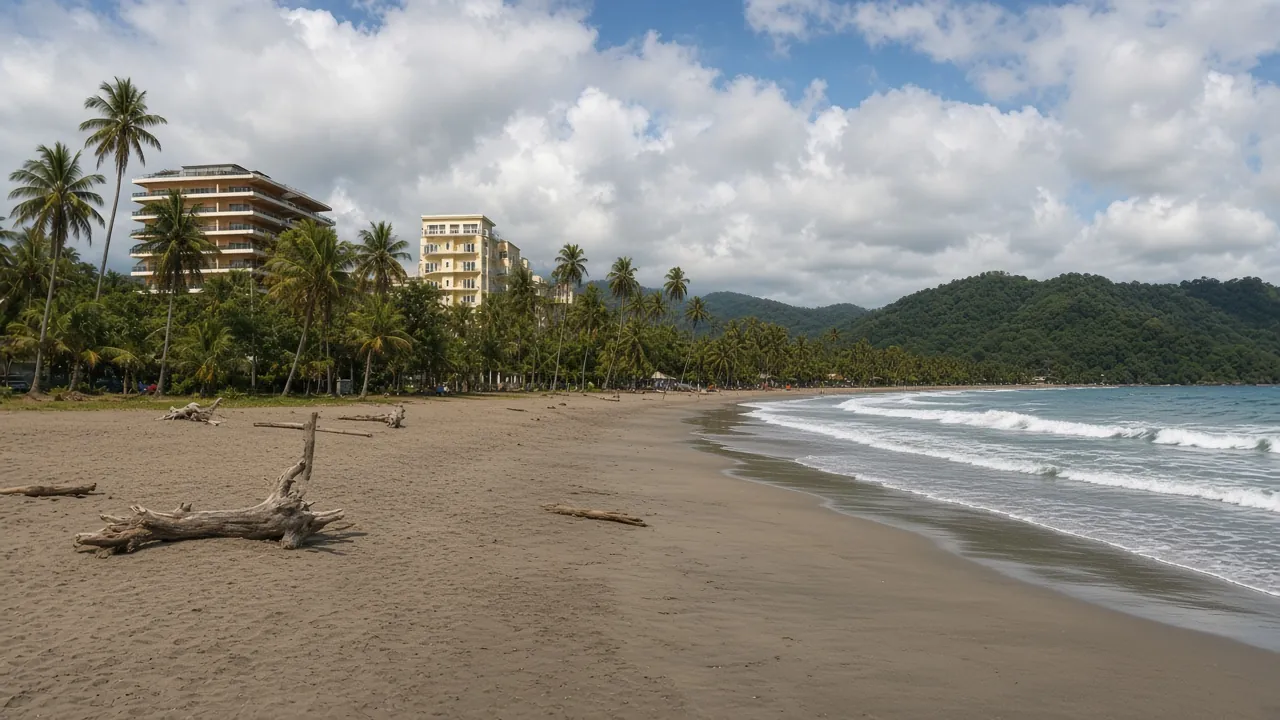
Herradura, the smaller neighbour, sits on a dark-sand bay around the Los Sueños development: a marina village, a beach and a compact service strip. Jacó, further south, is the main town of this stretch of coast, a surf and visitor place with a long black-sand beach, a walkable commercial street and an informal, slightly scruffy energy that is quite different from a marina enclave. Many passengers who want shops, a meal and a sense of a Costa Rican beach town end up in Jacó rather than staying at the landing.
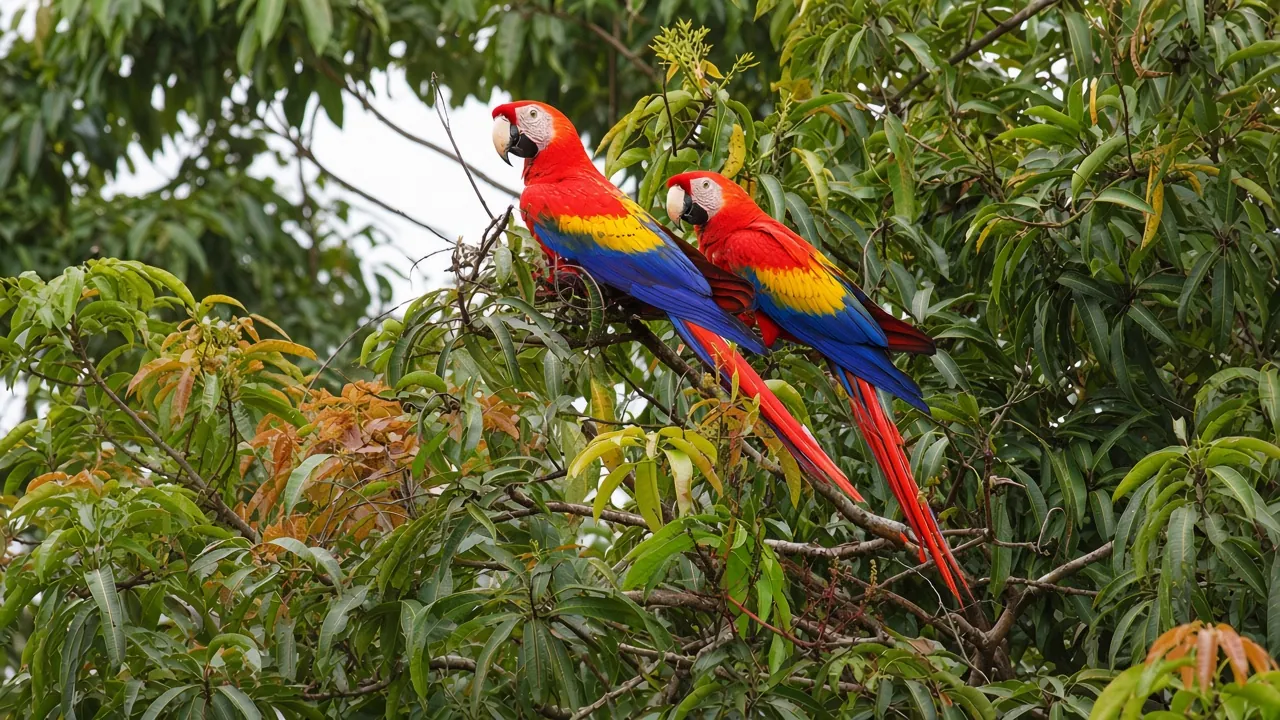
Carara National Park, a short way inland near the Tárcoles River, is the natural counterpart to the shore. It protects a transition between the dry forests of the north-west and the wetter Pacific slope, and it is well known for scarlet macaws as well as for a dense bird list and well-marked trails. The Tárcoles area is also known for American crocodiles in the river; that is a wildlife fact, not an invitation to swim in the estuary. If you go to Carara, go early if you can, take drinking water, and treat it as a forest walk with modest trails rather than a spectacle you can rush.
A practical first day starts at the marina after the tender and then decides between three close options: a few hours at Playa Mantas or Playa Herradura, a taxi to Jacó, or a morning in Carara. San José, the capital, is a long inland drive of around two hours and is not a realistic add-on to a short port call. Build the tender timetable, the taxi rides and the return into the day; the coast road is simple, but it is not a place to cut the landing time fine. Eat simply in Jacó or at the marina village — casual Costa Rican and seafood cooking — and keep the plan smaller than the map suggests.
Port landmarks
Shore Excursions
- Kayaking at Curu Wildlife Refuge - Half Day – 3 h
- Shore Excursion: Isla Tortuga Snorkel from Caldera Pier – 6 h
- Shore Excursion: Rainforest Skywalk & Tarcoles River Cruise – 6 h
- ATV Tour & Chocolate Tasting Tour With Lunch From Caldera – 7 h
- Zip Line Canopy Tour – 2 h
- Chocolate Tour + Zipline Adventure With Lunch From Puntarenas – 7 h
- ATV Tour & Chocolate Tasting Tour With Lunch From Puntarenas – 7 h
- High Ropes Course – 2 h
- Private Tour: Poás Volcano and La Paz Waterfall Gardens – 10 h
- Horseback Riding Tour and Waterfalls – 2 h
- Chocolate Tour + Zipline Adventure With Lunch From Caldera – 7 h
- Scuba Diving at Islas Tortuga – 4 h
- Puntarenas: 18-Zip-Line Adventure Over 11 Waterfalls – 3 h
- Private Tour: Poás Volcano National Park Half Day – 5 h
- Aerial Tram and Zip Line Tour Rainforest Park Jacó – 2 h 30 min
- Horseback Riding & Chocolate Tour With Lunch From Puntarenas – 7 h
- Kayaking at Curu Wildlife Refuge - Full Day – 6 h
- Private Tour: Zipline Canopy & Crocodile Eco Cruise Puntarenas Adventure – 6 h
- Rafting Chorro Class IV-V Private Tour – 4 h
- Savegre Jungle Tubing Class I-II+ Private Trip – 4 h
- ATV 4x4 Mountain Adventure – 2 h
- 5-In-1 Pass: Rainforest Park Jacó Extreme Adventure – 3 h 30 min
- ATV 4x4 Adventure and Ziplining – 5 h
- Canyoning Waterfall Rappelling – 5 h
- Aerial Tram Tour Rainforest Park Jacó – 2 h
- Aerial Tram + High Rope Circuit Jacó – 2 h
- The Extreme Adventurer – 10 h
- Costa Rica Coffee Tour: Discover World-Class Coffee & Culture – 6 h
- Zip Line Canopy + Horseback Riding – 5 h
- Manuel Antonio Shared Eco Adventure In The Tom Cat 70 x 40 ft – 3 h 30 min
- Rafting - Savegre ¾ Day Private Trip – 6 h
- Puntarenas Shore Excursion: 18-Zip-Line Adventure Over 11 Waterfalls – 6 h
- Puntarenas: 3-in-1 Mangrove Boat Tour, Macaws & Shopping – 6 h 30 min
- Snorkeling at Islas Tortuga – 3 h 30 min
- The Explorer – 4 h
- Rafting - Naranjo River Private Trip – 3 h 30 min
- Horseback Riding & Chocolate Tour With Lunch From Caldera – 7 h
- Shore Excursion: Puntarenas Highlights 6 in 1 – 6 h