Muscat, Oman
Ports
Home • Ports • Asia • Oman • Muscat
About Muscat
Muscat gathers along a string of coves and pale hills, a capital that still feels like several harbours rather than one tight grid. The usual cruise landing is Port Sultan Qaboos at Mutrah, where the corniche and the covered souq begin a short walk or a brief taxi from the gate. Old Muscat, with its palaces and twin forts, sits in the next bay; the Grand Mosque is a longer ride and needs a plan for dress and opening hours. The light here is hard and pale, the waterfront low-rise and faced in stone. A day on the Mutrah shore, with time for the souq and that neighbouring palace bay, is a solid way to meet the city.
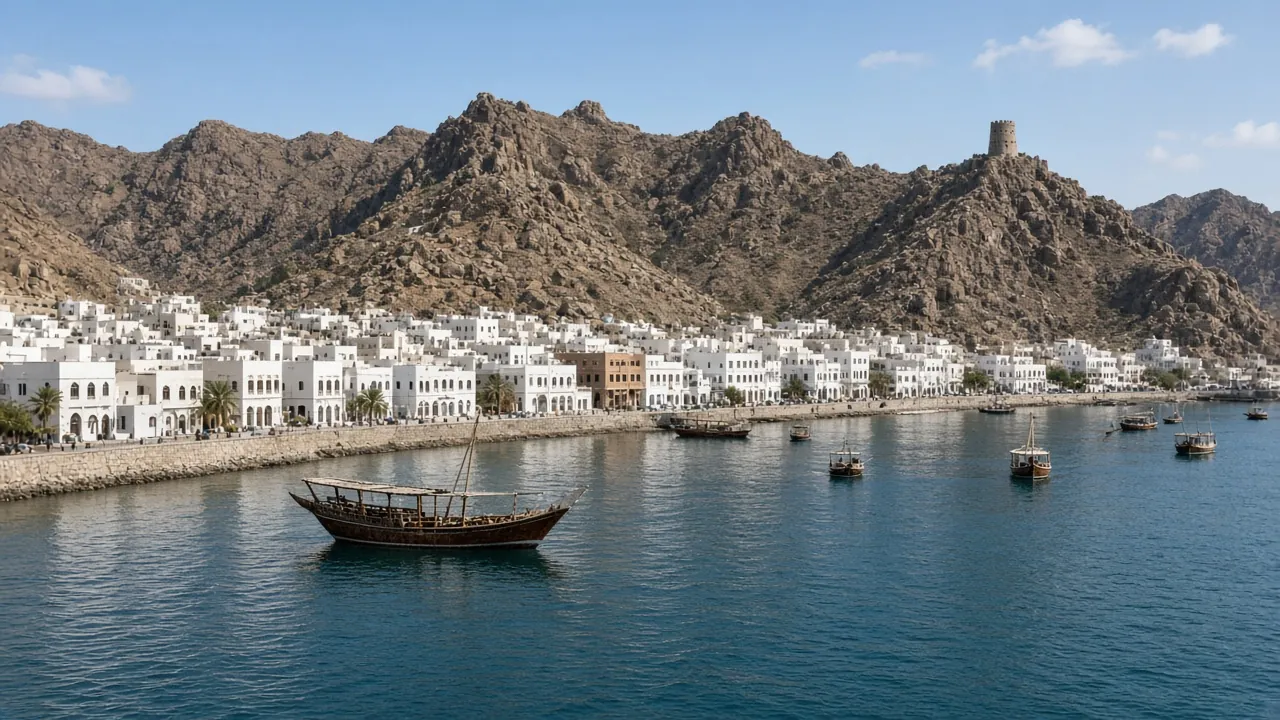
Muscat is a capital of coves. Pale hills come down to a string of bays, and the city has grown as a sequence of harbours and palaces rather than as a single tight grid. The cruise landing is usually Port Sultan Qaboos, at Mutrah, where a corniche of white buildings and a covered souq still give the waterfront a civic face. From the gate it is a short walk or a brief taxi to the souq and the harbour road; the promenade itself is the easiest first hour, with the water on one side and the hills close behind.
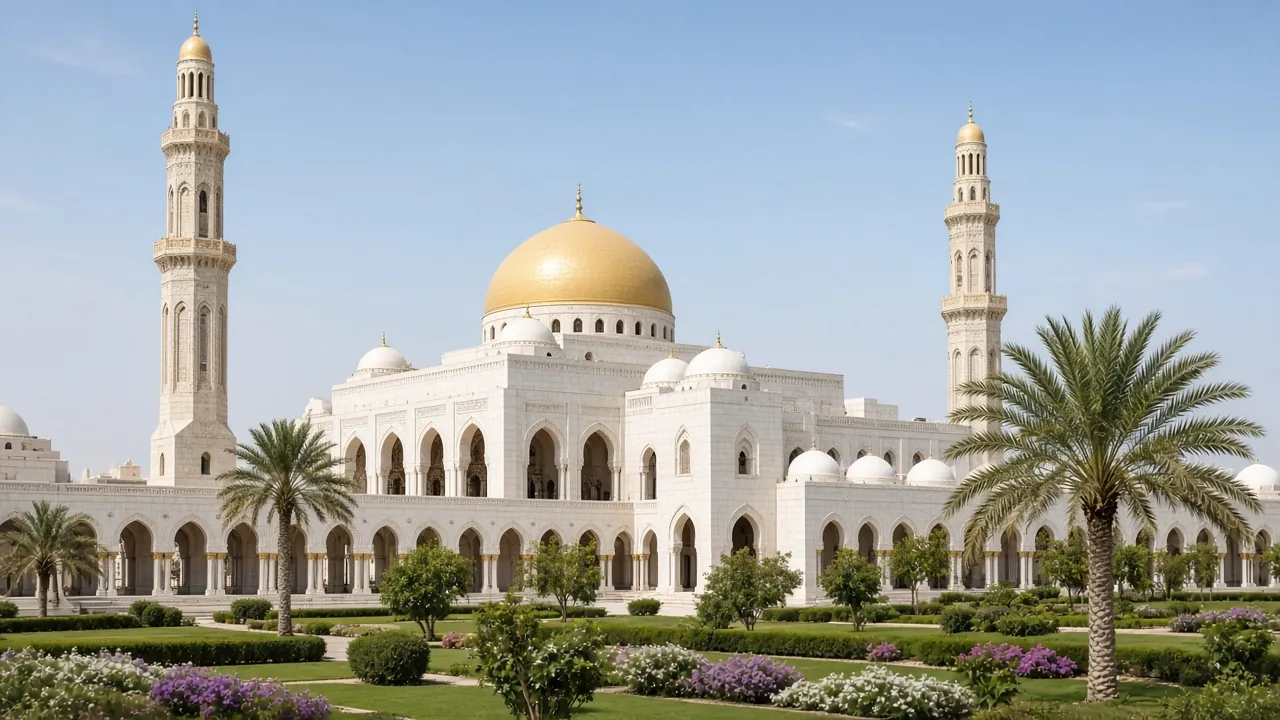
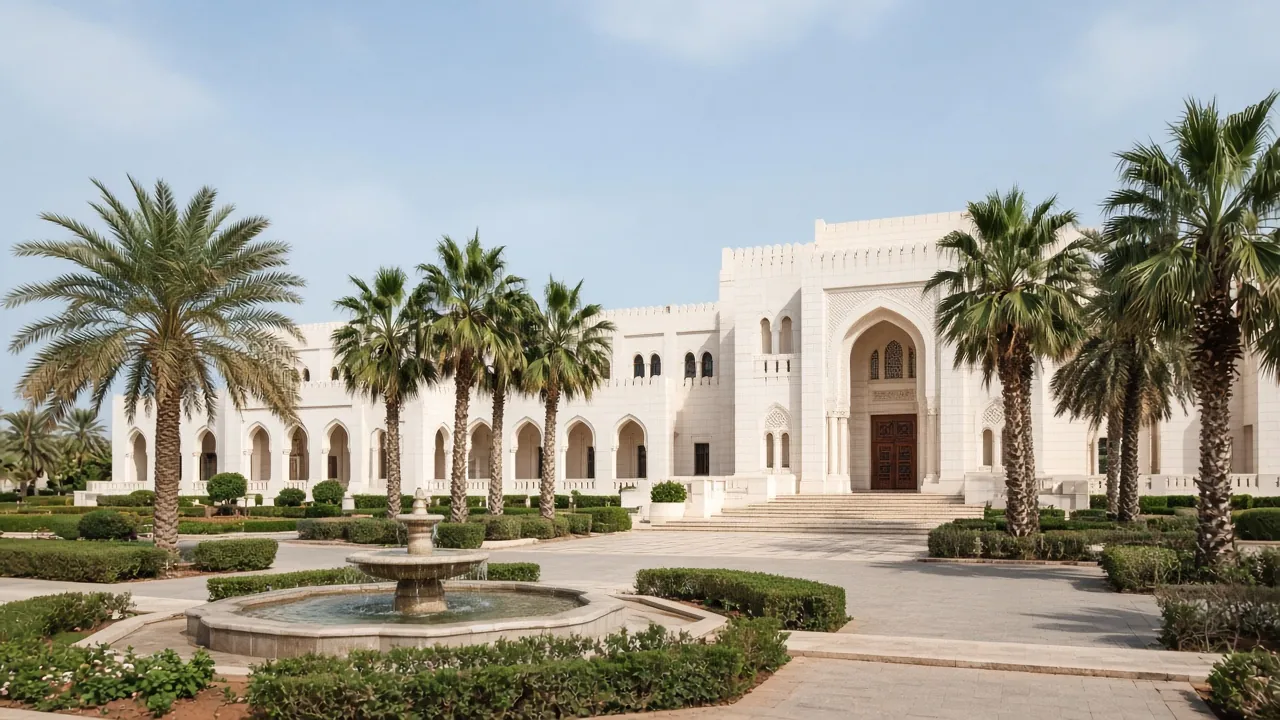
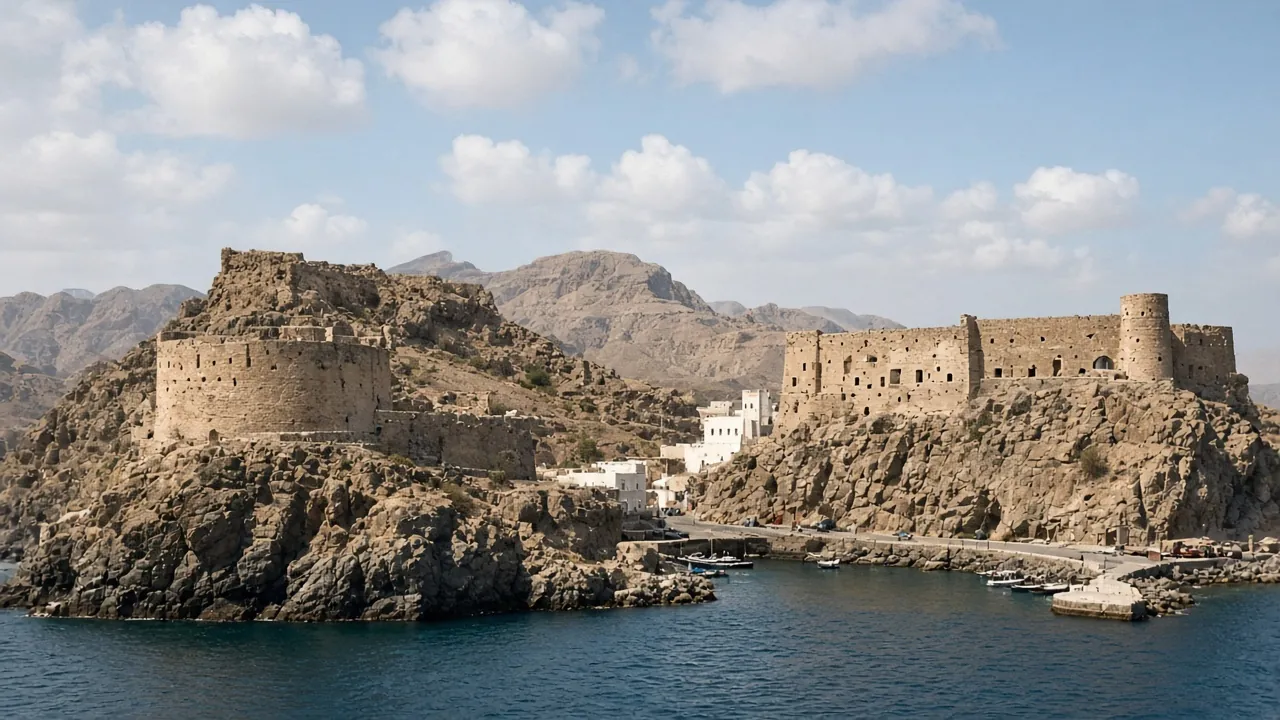
Old Muscat lies in the next bay, a small, formal ensemble of palaces, walls and the twin forts of Jalali and Mirani above a tight harbour. It is close enough to combine with Mutrah, and it is worth the short ride if you want the older ceremonial city rather than only the market. The Sultan Qaboos Grand Mosque, inland of these coves, is a different outing: a larger building, a dress code, and opening hours that do not always match a late tender or a short call. Check the hours before you set off, and treat the drive as part of the morning rather than an afterthought.
The city is low-rise by law in many of its historic stretches, and the light is hard and pale. The afternoon can be very hot, and the corniche offers more breeze than the inner streets. Taxis are the usual way between bays; distances that look small are still easier on four wheels than on foot in the heat, except along the Mutrah waterfront itself. The last return to Port Sultan Qaboos belongs in the same plan as the morning's ride out.
Muscat's kitchens are Omani and wider-gulf: grilled fish, rice, dates, and halwa, with plenty of places along the corniche and in the souq that will feed you well without ceremony. English is widely used in the harbour and the visitor economy; Arabic is the language of the city. The old souq is a working market as well as a visitor path, and it rewards a slower walk more than a shopping sprint.
Do not try to add Nizwa or the interior on the same day as a careful look at Mutrah and the palace bay. Those are a different Oman, a longer road, and they need their own morning. A harbour day that stays with the waterfront, the souq and one neighbouring cove already has the capital's proper shape. The ship will still be in Mutrah when you come back, and the corniche is a pleasant last stretch if you have left the time.
Port landmarks
Shore Excursions
- Dolphin Watching & Snorkeling – 2 h
- Dolphin Delight: Excursion for Watching Dolphins (Shared Group Tour) – 2 h
- Dolphin Watching Tour – 2 h
- Desert and Oasis: Full Day Wahiba Sands & Wadi Bani Khalid Tour – 9 h
- Celebration at Boat in Muscat – 2 h
- Ultimate Fishing Experience: Private Game Fishing Charter – 4 h
- Muscat: Omani Dhow Sunset & Coastal Cruise – 2 h
- Private Tour: Snorkeling in Bandar Khairan – 3 h
- Essence of Muscat: Full Day City Tour – 7 h
- Coastal And Sunset Tour In Muscat – 2 h
- Dolphin Watching & Snorkeling – 3 h
- A World Above The Mountains – 8 h
- Muscat: Dolphin Watching & Coastal Sightseeing – 2 h
- Al Hamra & Jebel Shams - Muscat, Oman – 9 h
- Sunset & Sunrise Trip On The Boat – 1 h
- Explore Wadi Shab & Bimmah Sinkhole: Full Day Private Tour – 8 h
- Romantic Sunset with BBQ Dinner at Island – 2 h
- Full Moon Hike In Al Jabal Al Akhdar – 2 h
- Private Dhow Excursion with Snorkeling Activity – 2 h
- Nakhal - Muscat, Oman – 9 h
- Muscat City Tour - Oman – 9 h
- Discover Scuba Diving Experience – 2 h
- Daymaniyat Islands Snorkeling & Dolphin Watching – 6 h
- Sunset Dhow Cruise Along Muscat's Coastline (Shared Group) – 2 h
- Muscat Highlights: Half Day City Sightseeing – 5 h
- Magnificent Muscat: Half-Day Private City Tour – 4 h
- Island Hopping in Bandar Al Kairan Excursion – 4 h
- Cultural and Scenic Wonders: Nizwa & Jebel Akhdar Full Day Tour – 9 h
- Heritage and Heights: Full Day Misfah, Al Hamra & Jebel Shams Tour – 10 h
- Forts of Oman Full Day Private Tour – 9 h
- Full Day Safari Wahiba Sands, Muscat – 8 h
- Snorkeling and Dolphin Watching Muscat – 3 h
- Golden Hour Cruise: Sunset & Muscat Coastline Tour (Shared Group Tour) – 2 h
- Game Fishing – 4 h
- Muscat: Dolphin Watching & Snorkeling Trip – 3 h
- Culinary Tour - Oman – 9 h
- Discover Bandar Khairan: Island Hopping Expedition – 5 h
- Private Boat Trip to Daymaniyat Islands – 5 h
- Dimaniyat Island Snorkeling Expedition (Shared Group Tour) – 6 h
- Dolphin Watching in Muscat – 2 h