Marigot, St Martin St Maarten
Ports
Home • Ports • Caribbean • St Martin St Maarten • Marigot
About Marigot
Marigot is the capital of French Saint Martin, a compact lagoon town of a waterfront market, Fort Louis on its hill and a later marina shore. Some smaller ships and yachts come in here; many large cruise ships instead dock at Philipsburg on the Dutch side of the island, a different harbour and a border crossing away. This page is Marigot, not Philipsburg and not Marigot Bay on Saint Lucia. A first visit can stay with the waterfront, the fort and a long lunch on the French side. Leave time for the return to this lagoon, and for the border if you have gone across to the Dutch side.
Marigot is the capital of French Saint Martin, a compact lagoon town on the island's western side, with a waterfront market, Fort Louis on its hill and a later marina shore. The island is divided between France and the Netherlands, and the border is an everyday fact rather than a distant one. The French side has a quieter, more administrative character than Philipsburg, the Dutch capital on the southern shore, where many of the large cruise ships actually dock.
Some smaller ships and yachts come in at Marigot; many large cruise ships instead berth at Philipsburg, a different harbour and a border crossing away. This page is Marigot, not Philipsburg, and not Marigot Bay on Saint Lucia, which is a different cove on a different island. If your ship is at Philipsburg, Marigot is an outing across the island, with a border to recross on the way back. If your ship has actually come in here, the day belongs to this lagoon: the market, the climb to Fort Louis, and a long lunch on the French waterfront.
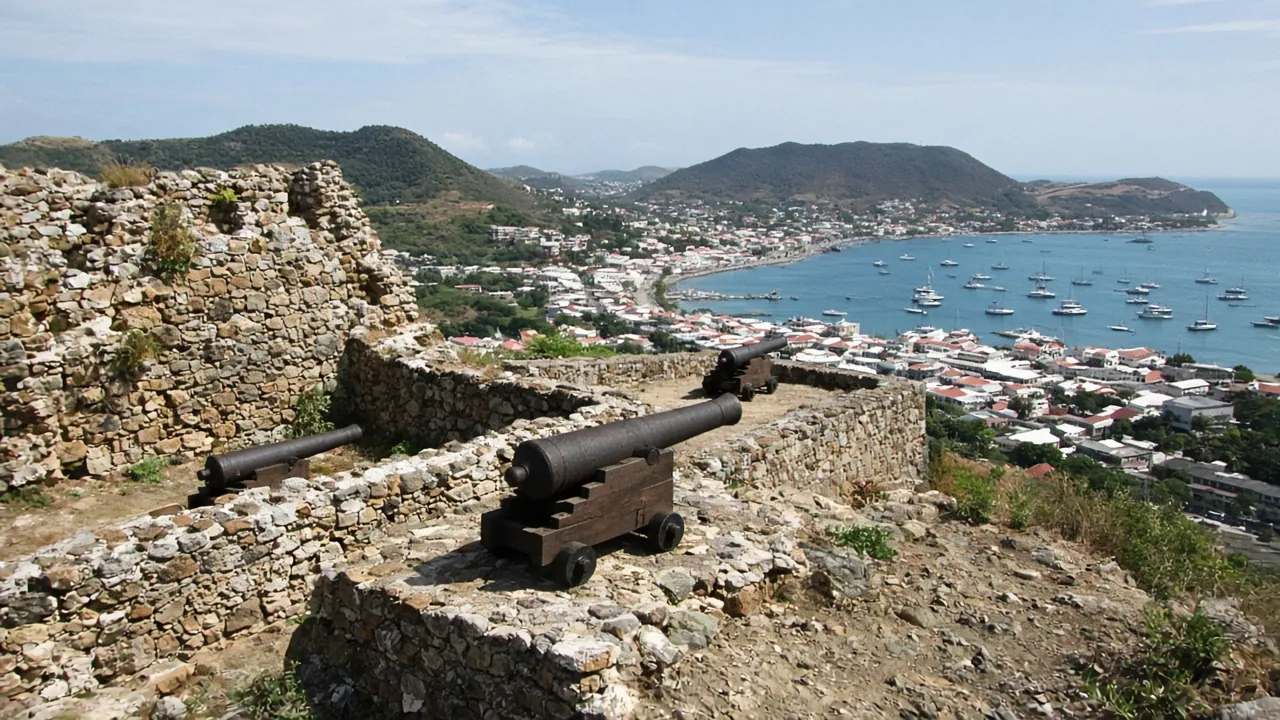
The views from the fort look over the lagoon and across toward the Dutch side. The marina and the streets behind the waterfront are easy to walk, and a first visit can stay on this side without crossing the border at all. If you do go to Philipsburg or to a beach on the other side, leave time for traffic and for the crossing, and come back to this lagoon, not to a Dutch pier that is not your ship.
Food is French Caribbean and of a small capital: fish, pastries, and tables along the water that can fill a long afternoon. French is the language of this side of the island; English is widely understood around the harbour and the market, and Dutch and English are more common once you cross to the other side. The light is bright, the lagoon is usually calm, and the heat is steady.
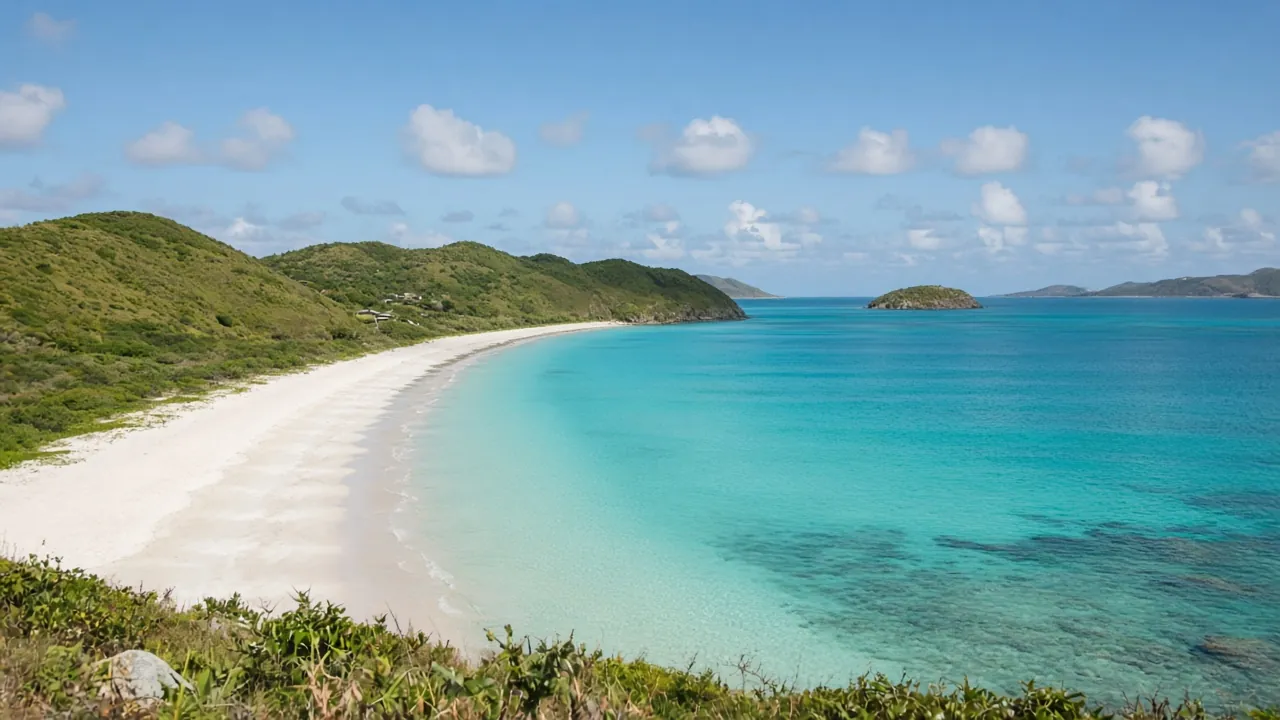
The open-air market by the waterfront, when it is running, is the liveliest civic hour in the town, and a slow walk there is a better use of a short call than a cross-island dash. Beaches on the French side, including those toward the west, are nearer than the better-known Dutch beaches if you want a swim and still mean to end the day in Marigot. Leave time for the return to this lagoon, and for the border if you have gone across to the Dutch side. A day that holds to Marigot itself, with perhaps the fort and a clear last return, will have seen the French capital properly, without confusing it with the larger cruise docks at Philipsburg.
Port landmarks
Shore Excursions
- Family Deluxe St. Maarten Tour – 6 h
- Random Wind Catamaran Sail – 5 h
- St. Maarten 6-Pack Island Tour – 5 h
- Full Day Caribbean Pirates Sailboat Charter From Marigot – 8 h
- Fabulous French & Dutch Tour – 4 h
- Maho and Orient Beach Bum Tour in St. Maarten – 5 h
- St Maarten Flying Dutchman Zipline & Sky Explorer Adventure – 3 h
- St. Maarten Best Island Tour – 6 h
- St. Maarten VIP Private Airport Pick Up And Taxi Services – 45 min
- St Maarten Sky Explorer - Chair Lift With 360 Views Adventure – 3 h
- St. Maarten Dinner And Nightlife Round Trip Transportation – 3 h 30 min
- Rainforest Adventures: Sky Explorer and Flying Dutchman – 3 h 30 min
- Megga Tour - Half-Day St. Maarten Sightseeing Tour – 3 h
- Do It Your Way (Private Customized Tour) – 6 h
- Sky Explorer & Schooner Ride Rainforest Adventures St Maartin – 3 h
- Adventure Island Sightseeing Tour with Maho Beach Plane Spotting – 5 h
- Extreme Plane-Spotting at Maho Beach – 4 h
- St. Maarten Island Highlights Tour with Beaches, Views & Maho Beach – 5 h
- Best Prime Tour - Half-Day Sightseeing Tour with Orient Beach & Maho Beach – 4 h
- Full Day Private Caribeean Pirates Sailboat Charter St Maarten – 6 h 30 min
- St. Maarten Maho Beach Tour – 6 h
- Half Day Caribbean Pirate Sailboat Charter - Morning / Sunset – 4 h
- Half-Day St. Maarten Beach Hopping & Sightseeing Tour – 4 h
- Sky Explorer And Sentry Hill Zip Line Adventure St Maartin – 3 h
- Customize Private Tour – 4 h
- Sky Explorer With 360 Views And Museum Ticket St Maarten – 1 h 30 min
- Zipline Experience: Sentry Hill Zip & Flying Dutchman St Maartin – 3 h 27 min
- St Maarten SeaTrek and Snorkeling Adventure – 2 h 30 min
- Caribbean Boat Adventure, Private Day at Sea – 8 h
- St. Maarten Private RED CARPET Airport Pick Up And Transfers – 45 min
- Sky Explorer Schooner And Sentry Hill Line Tour St Maartin – 4 h
- St Maarten Flying Dutchman, Zipline & Schooner Ride Adventure – 3 h 30 min
- Big Three - Full Experience At Rainforest Adventures St Maartin – 5 h
- St Maarten Beach Hopping Tour (Orient Beach And Maho Beach Combo) – 5 h 30 min
- St. Maarten 4-Hour Sightseeing Tour – 4 h
- Private Red Rose Fantastic Group Tours - The Best of St. Maarten! – 5 h
- Private VIP Sightseeing, Shopping And Beach Tour – 6 h