Lisbon, Portugal
Ports
Home • Ports • Europe • Portugal • Lisbon
About Lisbon
Lisbon is Portugal's hilly capital on the Tagus, a city of trams, viewpoints and tiled facades, with a compact historic core around Alfama, Baixa and the wide riverfront. A first visit often takes in a miradouro, a walk through Alfama, and Belém if you have a longer call: the Jerónimos Monastery and the tower on the river. Cruise ships usually berth at the main river docks close to the centre, so many guests reach Baixa or Alfama on foot, by tram or after a short ride.
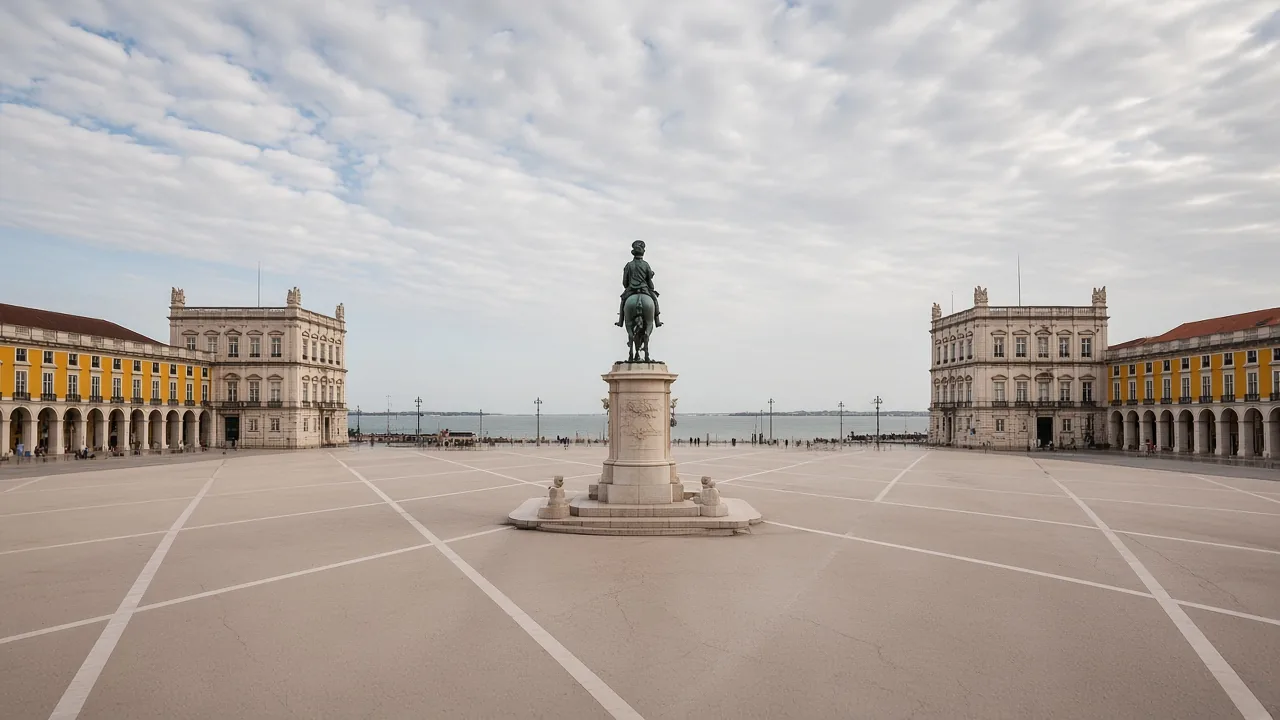
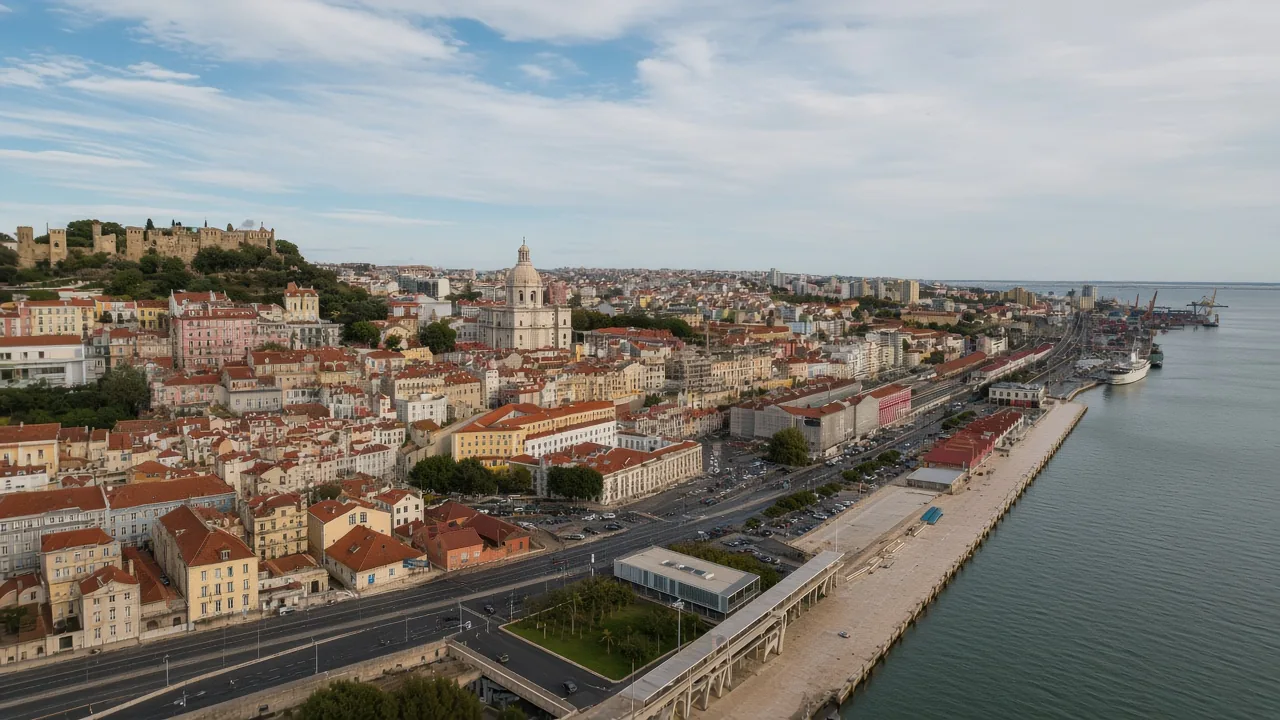
A natural first walk is into the Baixa and Praça do Comércio, the great riverside square with yellow arcaded buildings and the bronze equestrian statue of King José I. The square opens toward the Tagus, and it is an easy place to get your bearings. From here the streets of the grid lead inland, while to the east the steep lanes and viewpoints of Alfama begin to climb toward the castle. Alfama is the oldest part of the city in spirit: a tangle of houses, churches and terraces whose rooftops spill down the hillside to the river. It is best on foot, slowly, with time to get a little lost and find a view.
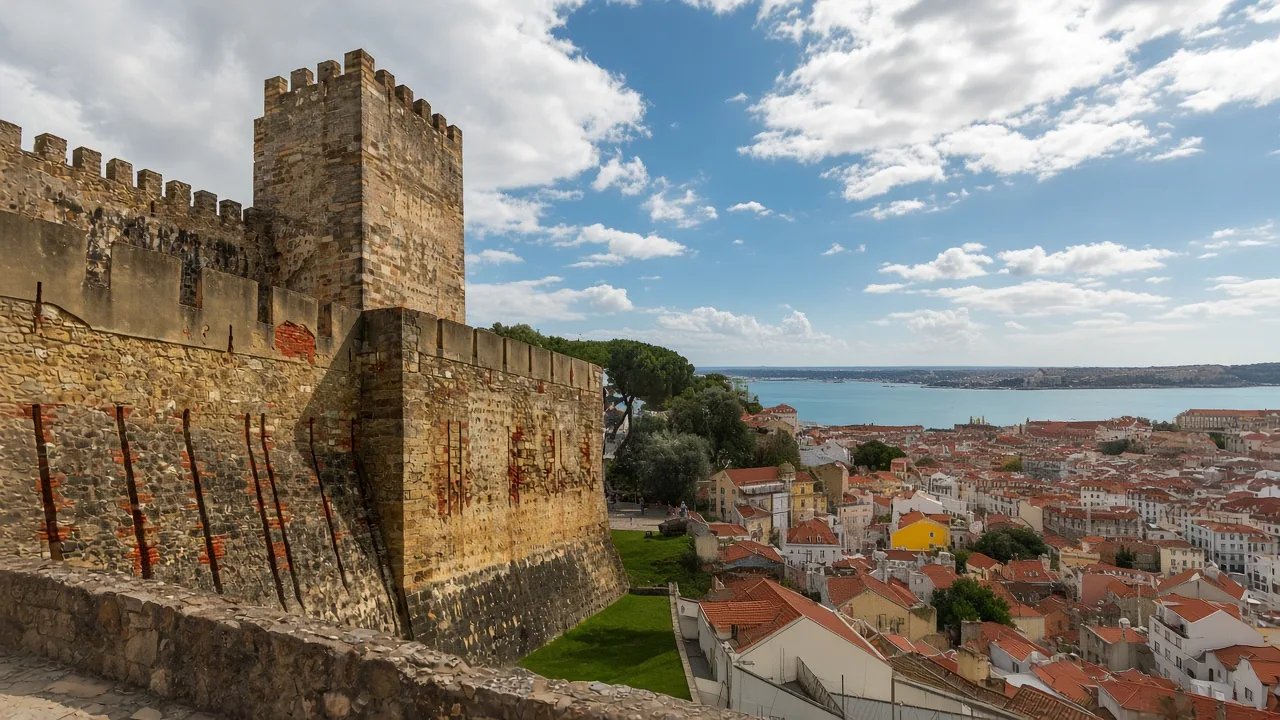
Above it all, São Jorge Castle offers the wide panorama that many visitors come for: stone walls and towers, a sweep of red roofs, and the Tagus beyond. It is a climb, or a short ride plus a walk, and it rewards a clear spell of weather. You do not have to go inside every wall to enjoy the setting; the approach and the views are already a reason to come up the hill.
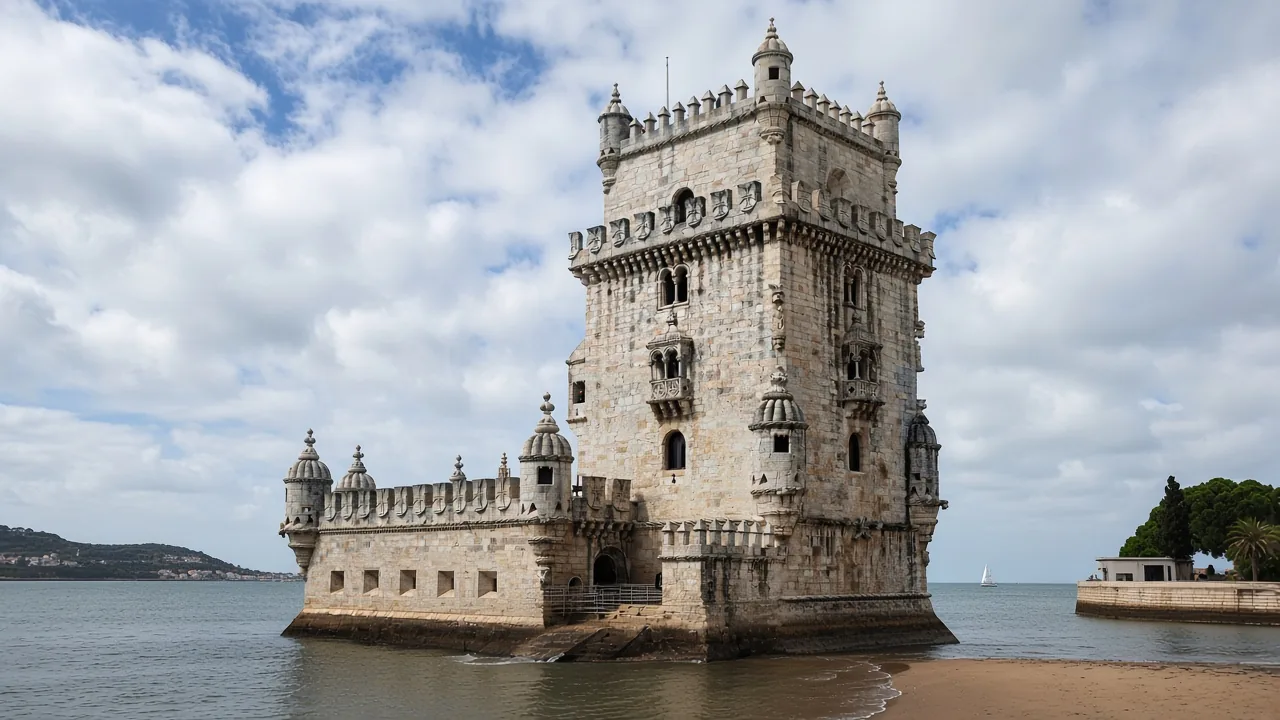
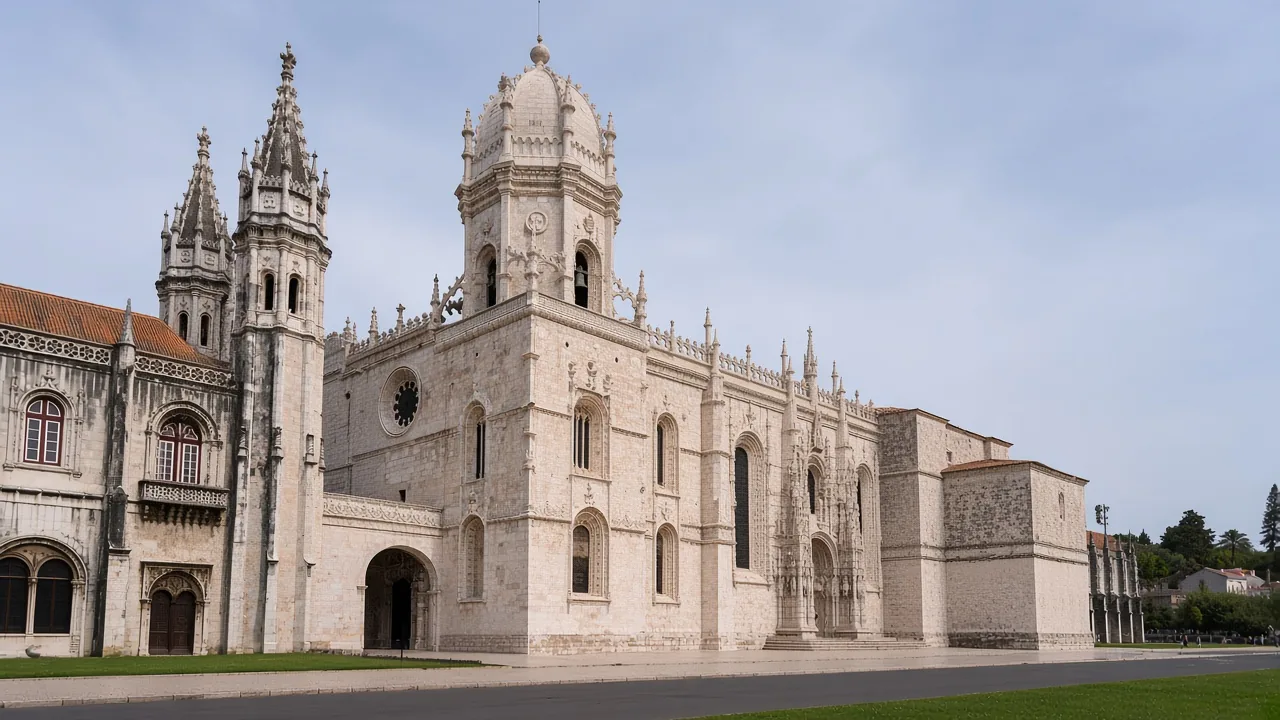
Belém, to the west, is a different outing. The Manueline limestone of Belém Tower standing in the river, and the richly carved south facade of Jerónimos Monastery, are two of the most recognisable monuments in Portugal. They are not next to the cruise dock, so you should treat Belém as a planned trip by tram, train, bus or taxi rather than a casual stroll from the ship. If you go, give it a proper block of time and check your return. On a shorter call, the castle, Alfama and the riverside square already make a full and satisfying day.
Lisbon’s public transport is good, and the historic trams are part of the city’s character, but they can be crowded. Walking is the best way to understand the hills; comfortable shoes are essential, and the patterned pavements can be slippery after rain. Portuguese is the language, English is widely spoken in the centre, card payments are normal, and the currency is the euro. The light can be strong on the river, and the weather is often milder than inland Spain, but a layer for wind on the waterfront is still wise.
For food, Lisbon is generous and informal: grilled fish, seafood rice, pastries in the morning, and plenty of small restaurants in Alfama and the Baixa. You can eat very well without going far from the river or the castle hill.
A practical plan for a first visit is to walk from the dock to Praça do Comércio, spend the morning in Alfama and at São Jorge Castle, then either stay in the centre for a late lunch or, on a longer call, continue to Belém for the tower and the monastery. Leave extra time for the return along the river. Lisbon is large enough to tempt you into one journey too many, and at its best when you let a few strong places take the day.
Port landmarks
Shore Excursions
- Arrábida, Setúbal and The Blue Coast - Private Van Tour – 8 h
- Lisbon Private Half-Day Tour With Hotel Pickup – 4 h
- Multicultural Lisbon Walk: Food Tastings, Stories & Live Music – 5 h 30 min
- Lisbon Private Tuk Tuk Tour: Chiado, Bairro Alto & Estrela (2h) – 2 h
- Small Group Lisbon Food + Wine Walking Tour – 3 h
- Sintra, Pena Palace & Cascais Private Tour From Lisbon – 8 h
- Mystic Forest: Sintra And Cascais Shared Group Tour – 8 h
- Private Day Trip or Transfer to Porto with multiple stops on the way – 9 h
- Lisbon Wine Tour: Private Food & Wine Tastings with Eating Europe – 3 h
- Private Full-Day Wine Tour from Lisbon with Tastings – 8 h
- Lisbon Food Tour: Bifana, Pastel de Nata & Ginja – 3 h 30 min
- Lisbon Viewpoints - Tuk Tuk Tour – 2 h
- Sintra Half Day Jeep Safari – 4 h
- Private Tour - Full Day – 7 h
- Fatima Full-Day Private Tour From Lisbon – 7 h
- Exclusive Food & Wine Tasting North Lisbon Hidden Gem Tour – 6 h
- Lisbon Airport One-Way Transfer to Lisbon City Hotels – 30 min
- Lisbon Shore Excursion - Lisbon, Sintra, Estoril – 8 h
- Lisbon Private Tuk Tuk Tour: City Highlights - 3 Hours – 3 h
- Private Half Day Sightseeing Tour of Lisbon and Belem – 4 h
- Algarve, Benagil Caves & Carvoeiro Private Tour From Lisbon – 10 h
- Private Nazaré Day Trip from Lisbon: Atlantic Coast & Big-Wave Surf – 6 h
- Small-Group Lisbon Food Walking and Tuk-Tuk Tour – 4 h
- Lisbon Sunset Luxury Sailing Yacht Cruise With Drinks & Portuguese Snacks – 2 h
- Atlantic Frontier: Berlenga Island Private Tour – 10 h
- Private E-Bike tour Lisbon: along the river to Belém – 3 h
- Évora Day Trip - Picta Travel – 9 h
- Private Évora Day Trip from Lisbon with Alentejo Wine Tasting – 9 h
- Lisbon Private Tuk Tuk Tour: Alfama, Old Town & Viewpoints (2h) – 2 h
- Private Tagus River Sailing Cruise with Wine & Tapas in Lisbon – 2 h
- Private Half-Day Sintra Tour from Lisbon with Pena Palace Tickets – 5 h
- Sintra Half-Day Private Experience – 4 h
- À La Carte Eco Tuk Tour - 4 Hours – 4 h
- Romantic Lisbon - Tuk Tuk Tour – 1 h
- Lisbon Half-Day Private Tuk Tuk Tour: Alfama & Belém (4h) – 4 h
- Lisbon Christmas Lights Tour in Private Eco Tuk Tuk – 1 h
- Small Group Undiscovered Lisbon Food & Wine Tour – 3 h 30 min
- Old Lisbon - Tuk Tuk Tour – 2 h
- Lisbon to Seville - Private Mercedes Transfer – 5 h
- Bachelor/Bachelorette Parties - Half Day – 3 h 30 min