Kusadasi, Turkey
Ports
Home • Ports • Asia • Turkey • Kusadasi
About Kusadasi
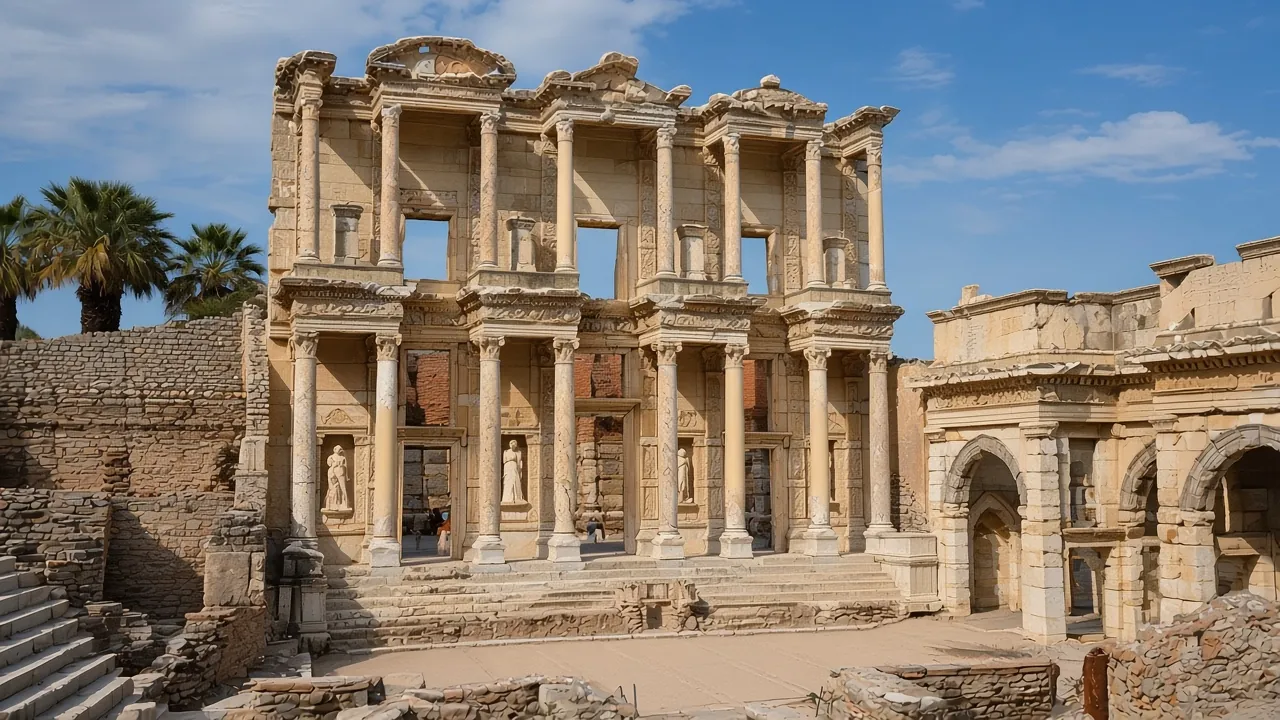
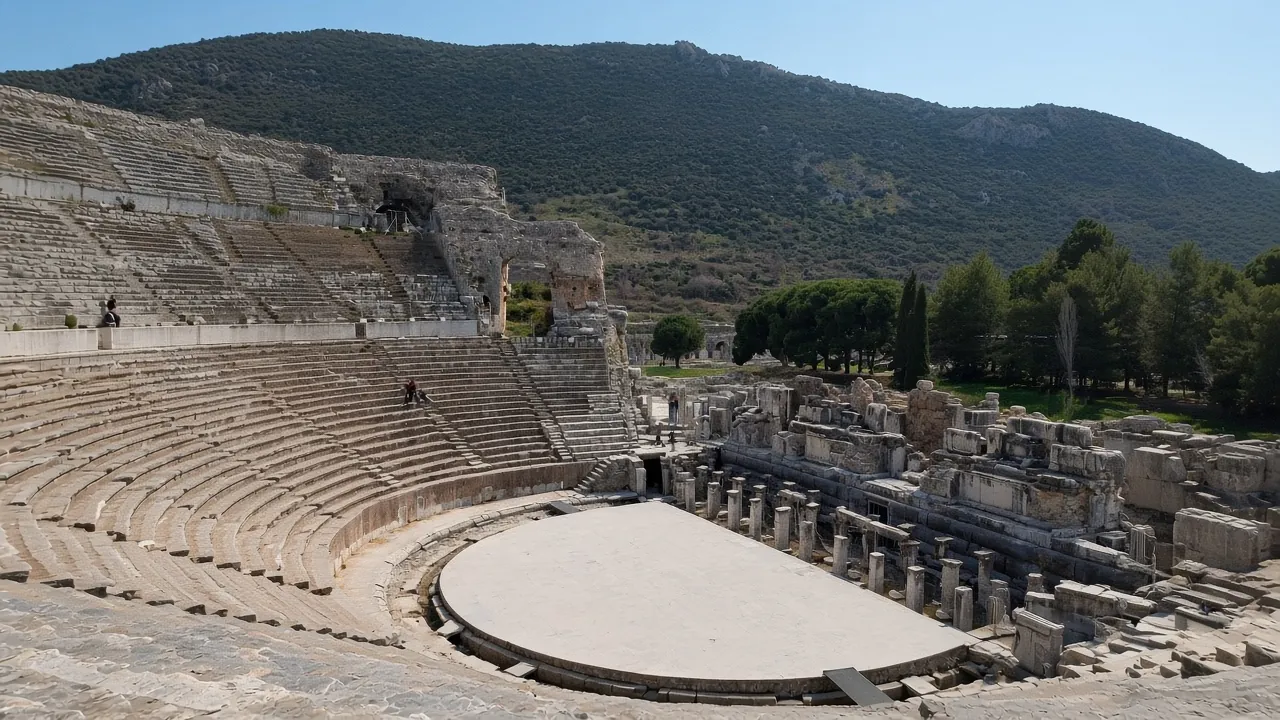
Kuşadası is a Turkish Aegean resort town, but the reason most cruise passengers leave the quay is Ephesus, the excavated Roman city a short ride inland. The Library of Celsus, the marble streets and the great theatre are a morning, not a quick photograph, and the visit is best planned backwards from all-aboard. The town itself has a waterfront and a bazaar if you prefer to stay closer. Ships berth in the harbour, so allow a conservative margin for the transfer in both directions.
Ephesus is a large archaeological site, not a quick photo stop. The marble street leads to the Library of Celsus, whose two-storey facade of columns and niches is the image most people recognise, and farther on the Great Theatre rises in a vast horseshoe against the hillside. You will want time to walk between them, to stand back from the library, and to climb at least part of the theatre. The ground is uneven, shade is limited, and midday heat on the valley floor is serious from spring through autumn. Wear shoes you can walk in for a couple of hours, carry water, and do not treat the site as something you can fold into a long shopping morning and still see properly.
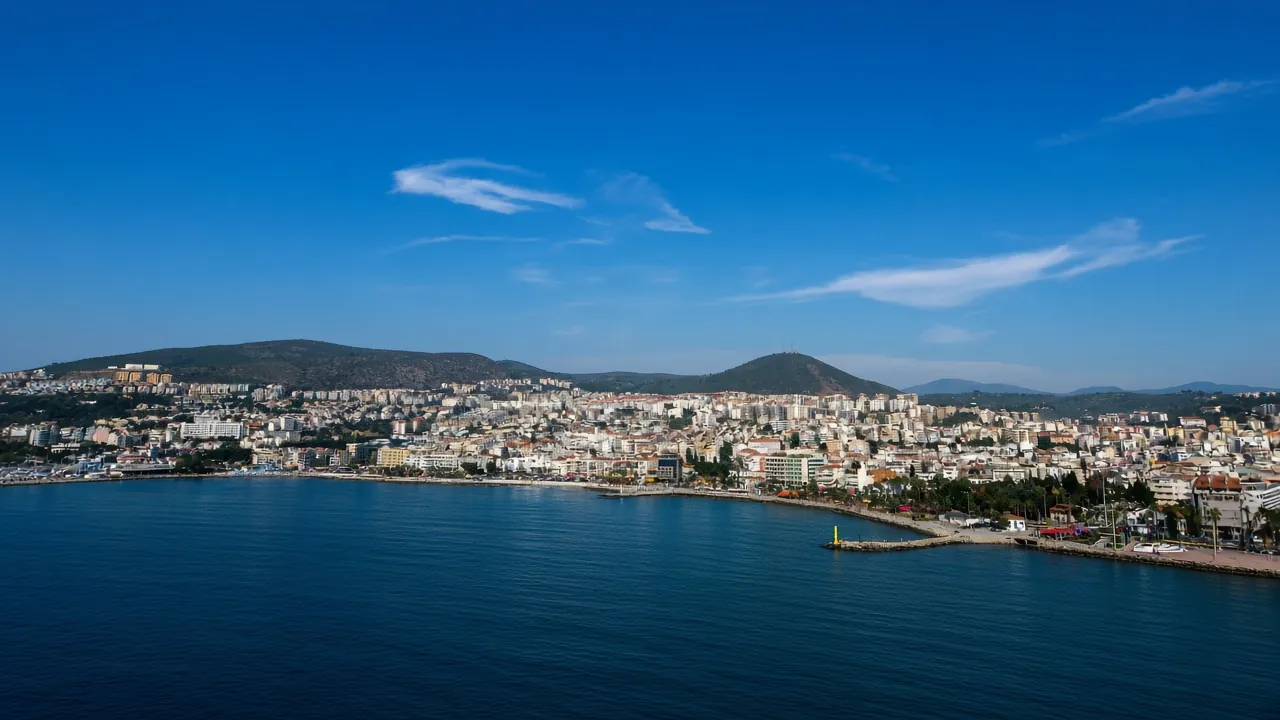
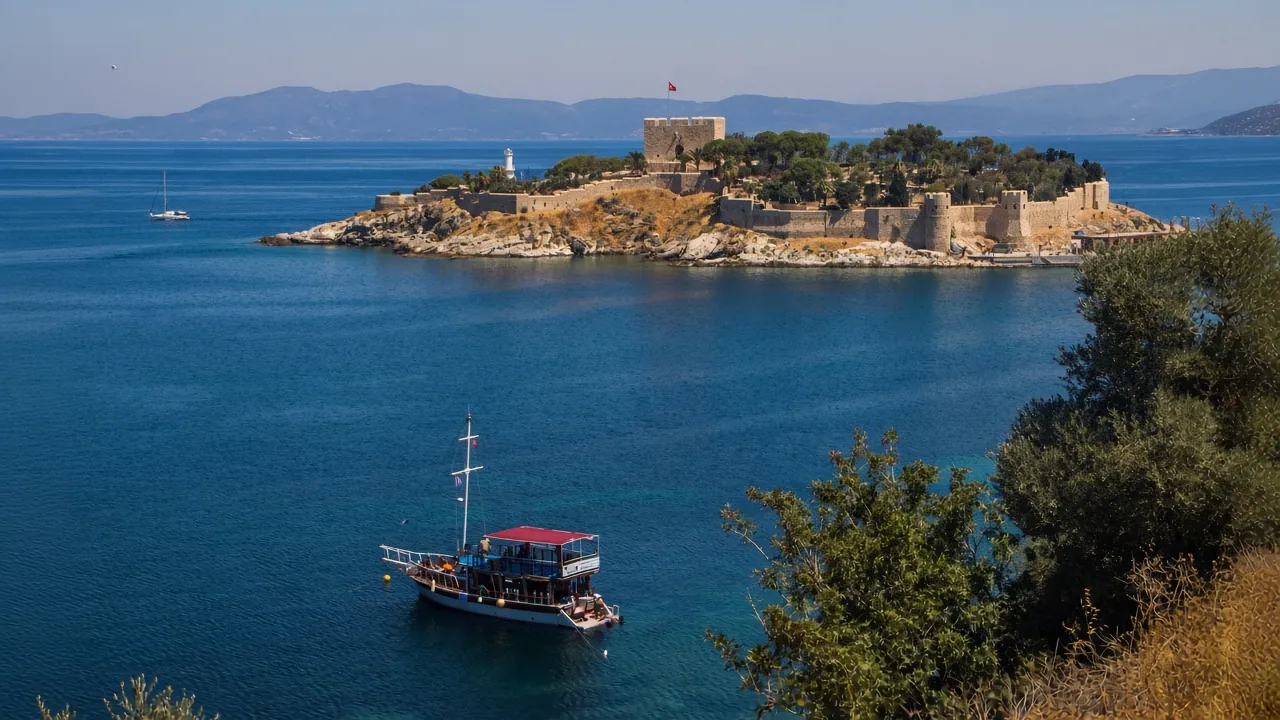
If you stay in Kuşadası, the harbour itself is the natural start. The waterfront looks toward the town and, at the end of the breakwater, to Güvercinada — Pigeon Island — a small fortified islet joined to the shore, with the castle and walls above the rocks. It is a compact, recognizable landmark and an easy walk from the cruise berth when time is short. The town behind the quay is a working resort: cafes along the front, a dense bazaar, and hills rising behind the harbour. It is pleasant for a few hours and less demanding than Ephesus, but it is not a substitute if the ruins are what you came for.
A practical first visit is either a well-timed excursion to Ephesus, with a clear plan for the return to the ship, or a slower day along the promenade and out to Pigeon Island. Trying to do a full circuit of Ephesus and a long, unhurried walk in town in a single short call is how people end up glancing at the library and running for a taxi. If you do both, keep the town portion short and leave a conservative margin for traffic on the way back.
Casual food is easy to find along the waterfront and in the streets just inland. The currency is the Turkish lira; cards are widely accepted in tourist areas, but a little cash is still useful for small purchases. English is commonly spoken around the harbour. The walk from the berth into town is straightforward, yet the heat and the crowds around ship days make an early start worthwhile if you are going to Ephesus. Watch your all-aboard time carefully: the site is close, but it is not next to the gangway, and a delayed return through the harbour roads can use up a timetable that looked comfortable on the map.
Port landmarks
Shore Excursions
- Private Ephesus Shore Excursion with Village Turkish Breakfast in Kusadasi – 5 h
- Private Kusadasi Classic Highlights Shore Excursion – 8 h
- Small Group Guided Ephesus Half Day Tour from Kusadasi – 4 h
- Private Biblical Ephesus Tour with Virgin Mary House from Kusadasi Port – 5 h
- Private Ephesus Tour From İzmir with Lunch (skip the line) – 8 h
- From Izmir: Private Biblical Ephesus Tour – 7 h
- Private Guided Ephesus Excursion (Customizable) – 5 h
- Jeep Safari Tour In Kusadası With Lunch – 8 h
- Shore Excursion Best Private Ephesus Tour From Kusadasi with Lunch – 6 h
- FOR CRUISERS: Ephesus, Mary's House, Artemis Temple (Skip-The-Line) – 4 h 30 min
- Kusadasi Walking City Tour with Local Guide from Cruise Port – 4 h
- Skip-the-Line Ephesus & Virgin Mary House Tour from Kusadasi Port – 5 h
- Ancient Ephesus Tour with Lunch – 6 h
- Small Group Ephesus Tour For Cruise Passengers – 7 h
- Private Ephesus and House of Virgin Mary Tour with Lunch from Kusadasi Port – 5 h
- From Izmir: Ephesus & Turkish Bath Tour – 7 h
- Small Group Izmir City Tour – 6 h
- Private Shore Excursion: Ephesus Ancient City & Pottery Workshop – 7 h
- Skip The Line: Half Day Ephesus Group Tour For Cruise Passengers – 7 h
- Private Ephesus And Sirince Village Tour For Cruise Passengers – 7 h
- Half-Day Small-Group Ephesus Tour For Princess & Norwegian Cruise – 5 h
- Best of Ephesus Shore Excursion with Terrace Houses and Virgin Mary House – 7 h
- Private Kusadasi - Exploring Village Life Shore Excursion – 8 h
- Private Luxury Ephesus Tour with/ Skip-the-Line – 6 h
- Half-Day Private Ephesus Tour with Terrace Houses and Skip-the-Line Option – 7 h
- Biblical Ephesus Shore Excursion with Skip-the-Line Access for Cruisers – 7 h
- Private Guided Ephesus Day Tour From Izmir or Kusadasi – 6 h 30 min
- Skip-the-Line: Ephesus, House of Mary, Artemis Tour with Lunch for Cruisers – 5 h
- Small Group Ephesus & Virgin Mary House & Temple of Tour (Includes Tickets) – 6 h
- Private Transfer to or from Izmir Airport – 30 min
- Private Wine Tasting & Local Villages Shore Excursion from Kusadasi Port – 4 h 30 min
- Small Group Full-Day Ephesus Tour with Virgin Mary House & Temple of Artemi – 6 h
- Ephesus Small Group Tour for Cruise Guests / Skip-the-Line – 6 h
- Small Group Ephesus and Virgin Mary House Tour – 6 h
- Kusadasi Walking Tour with Pigeon Island, Byzantine Castle & Carpet Demo – 4 h
- Kusadasi Walking City Tour For Cruise Passangers – 5 h
- Private Transfer: Izmir Adnan Menderes Airport (ADB) to/from Izmir Hotels – 30 min
- Day Tour to Aphrodisias & Pamukkale from Izmir – 10 h
- Scuba Diving Experience In Kusadasi With Instructor And Transfer – 5 h
- Private Biblical Ephesus Shore Excursion from Kusadasi Port – 6 h 30 min