Ketchikan, United States
Ports
Home • Ports • America • United States • Ketchikan
About Ketchikan
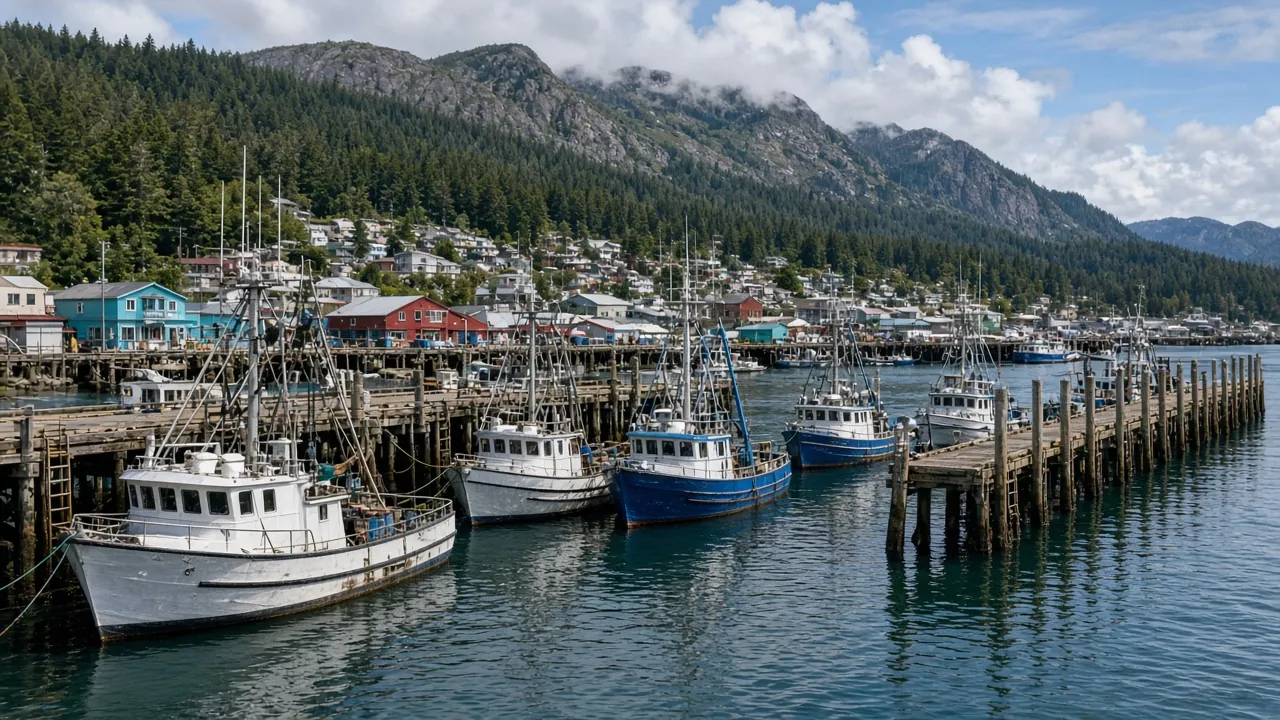
Ketchikan clings to a steep shore in Southeast Alaska, a salmon town of wooden stairs, a historic creek boardwalk and a busy harbour. Some ships berth downtown, close enough to walk into Creek Street; the largest ships often use Ward Cove, several miles north, which adds a shuttle into town. This page is Ketchikan, not Juneau. The creek, the boardwalk and a short look at the waterfront will fill a call once you know which landing applies. Leave time for the return to the dock your ship is using, especially if that dock is Ward Cove.
Ketchikan clings to a steep shore in Southeast Alaska, a salmon town of wooden stairs, a historic creek boardwalk and a busy harbour. It is one of the first American ports many northbound ships reach, a narrow settlement between the Tongass forest and the channel, and rain is part of its reputation: a shower here is ordinary, even in the cruise summer, and the boardwalks are built with that in mind.
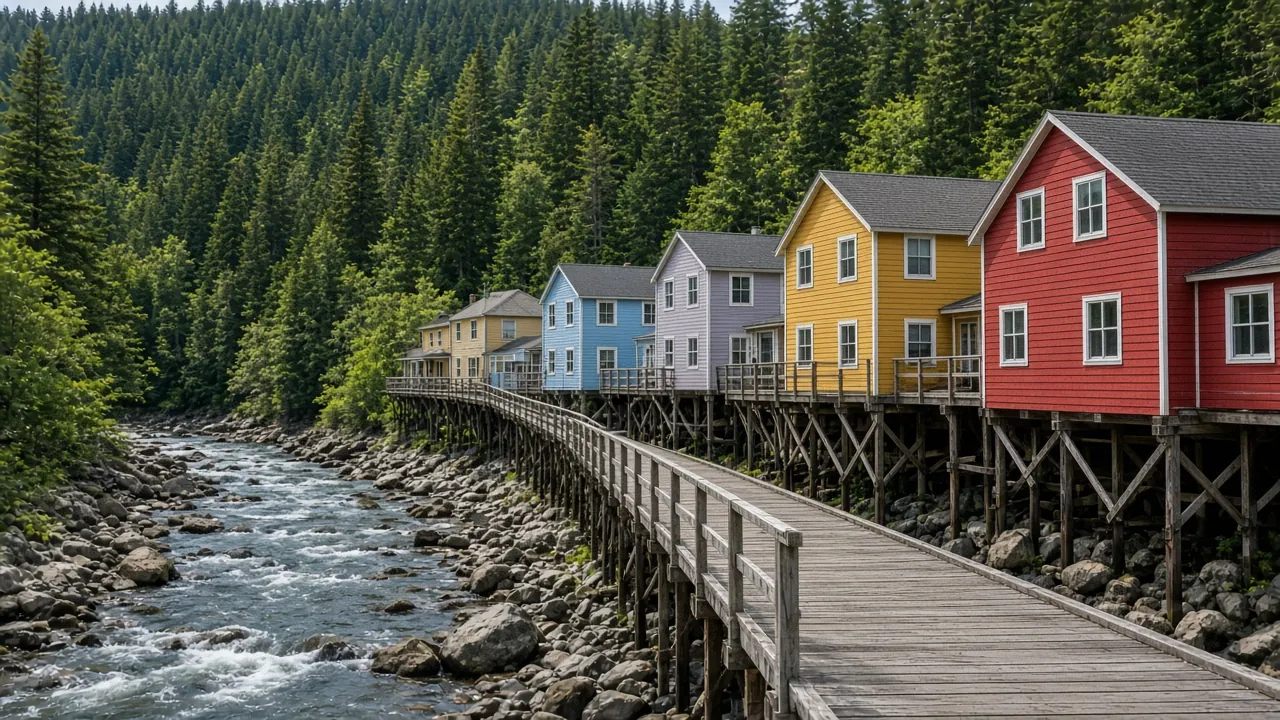
Some ships berth downtown, close enough to walk into Creek Street, the old pile-built street over Ketchikan Creek, and into the tight downtown grid. The largest ships often use Ward Cove, several miles north, which adds a shuttle into town; the cove is a later, purpose-built landing, not a second version of the downtown docks. This page is Ketchikan, not Juneau. The first question of the morning is which landing you used, because the walk from Ward Cove is not a casual substitute for the shuttle.
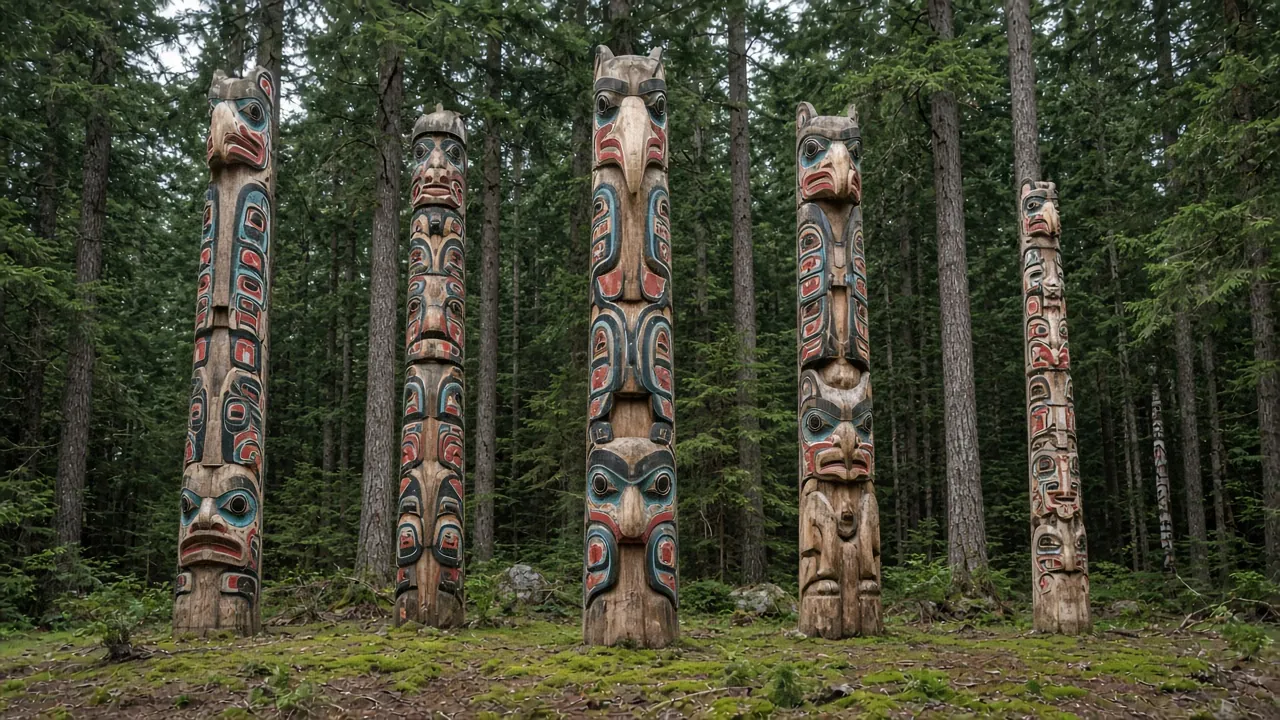
Creek Street, the salmon ladder when the fish are running, and a look at the harbour will fill a short call once you are in town. The Totem Heritage Center holds nineteenth-century poles in a quieter interior, and Saxman, a short ride south, has a totem park in a living Tlingit and Haida community; go as a guest, not as if the poles were a roadside exhibit. Deer Mountain rises immediately behind the town; the trail is a hike, not a quick viewpoint, and it will use more of the day than a first glance at the slope suggests.
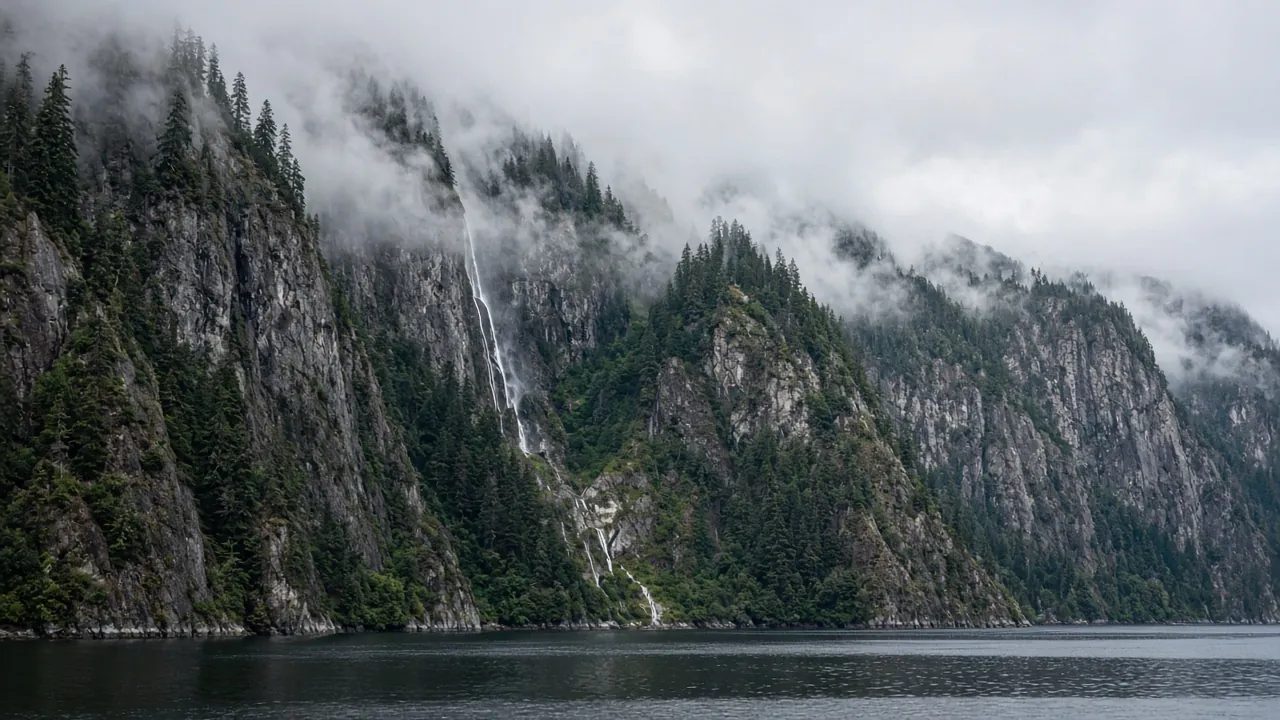
Flightseeing and boat outings into the nearer passages are offered, and each will consume a large part of a call. The downtown, when you have landed there, is compact enough that a slower hour in the streets and at the creek is not a lesser day. Leave time for the return to the dock your ship is using, especially if that dock is Ward Cove, and do not treat a downtown corner as the ship.
Ketchikan is among the wettest towns in the United States, and a light waterproof layer is more useful than optimism. The creek is a working salmon stream, and when the run is on you can watch the fish from the boardwalks without leaving the centre. Downtown docks have names of their own, and a short walk between them is ordinary when more than one ship is in; Ward Cove remains the exception, a ride away. Shops and places to eat cluster along Front and Creek streets; they are busy on a ship morning and quieter a block up the hill.
Port landmarks
Shore Excursions
- Ketchikan Mountain Lake Trek To Avalanche Chute – 3 h
- Saxman Native Village, Ketchikan Highlights & Lumberjack Show – 4 h 15 min
- Ketchikan Alaska Private Misty Fjords & Wildlife Excursion – 4 h 30 min
- Bering Sea Crab Fishermen's Tour – 3 h
- 3 Hour Alaska Rainforest Hiking Tour in Tongass National Forest – 3 h
- Adventure Kart Expedition - Ketchikan – 3 h 15 min
- Black Bear Viewing & Rainforest Sanctuary Boardwalk Tour in Ketchikan – 2 h
- Elite Ketchikan Alaska Private Half Day Fishing Excursion – 4 h
- Rainforest Wildlife Sanctuary & Totem Park - Ketchikan – 2 h 45 min
- Ketchikan Backcountry Adventure: SUV Tours in the Tongass – 2 h 15 min
- Rainforest Hike and Brew – 2 h 30 min
- Private Ketchikan Mountain Lake Extended Trek to Alpine Overlook – 4 h
- Elite Ketchikan Alaska Private Full Day Fishing Excursion – 8 h
- Rainforest Canopy & Zipline Adventure - Ketchikan – 3 h 30 min
- Saltwater Expedition – 2 h
- Alaska Bigfoot Adventures – 2 h 30 min
- Misty Fjords Expedition – 4 h 30 min
- Alaskan Cultural, Culinary & Lumberjack Show Experience – 3 h 45 min
- Ketchikan Magical Old-Growth Creek Trek – 3 h 30 min
- Island Hummer Tour - Tongass National Forest – 4 h
- Small Group Mountain Point Snorkeling Adventure – 3 h
- Ketchikan Crabbing, Whales and Wildlife Tour 2-4hrs – 4 h
- Ketchikan Duck Boat Tour – 1 h 30 min