Kailua-Kona, United States
Ports
Home • Ports • America • United States • Kailua-Kona
See all 10 tours in Kailua-Kona
About Kailua-Kona
Kailua-Kona sits on the dry western shore of Hawaii's Big Island, a compact harbour town of a seaside palace, a later waterfront and lava fields behind it. Large ships usually tender to Kailua Pier; smaller vessels may come alongside when space allows, and the day's papers confirm the landing. This page is Kailua-Kona, not Hilo on the windward side of the same island, about two hours away by road. The pier, Alii Drive and a stretch of the Kona coast will fill a first day. Leave time for the last tender or the short walk back to the pier.
Kailua-Kona sits on the dry western shore of Hawaii's Big Island, a compact harbour town of a seaside palace, a later waterfront and lava fields behind it. The light is harsher and the air drier than in Hilo, and the town is organised along Alii Drive, a low shore road of the palace, an old church, shops and a later string of places to eat, with the volcano slopes and the coffee uplands rising inland.
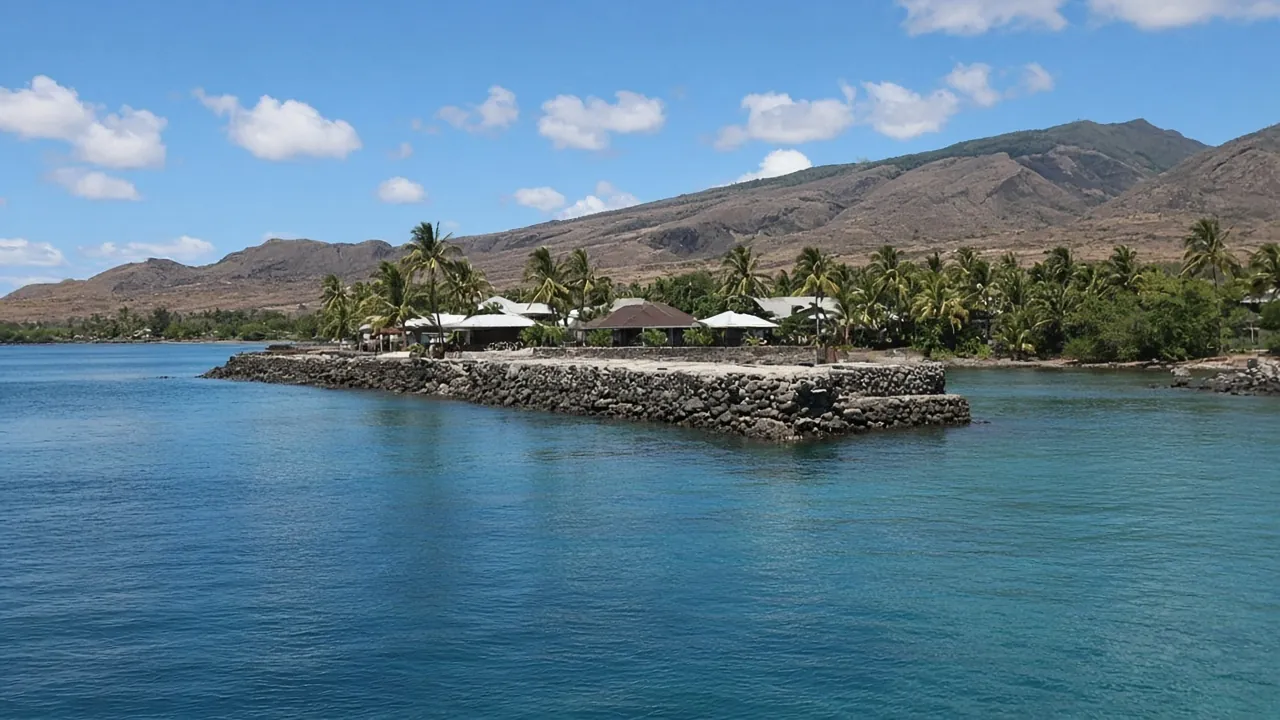
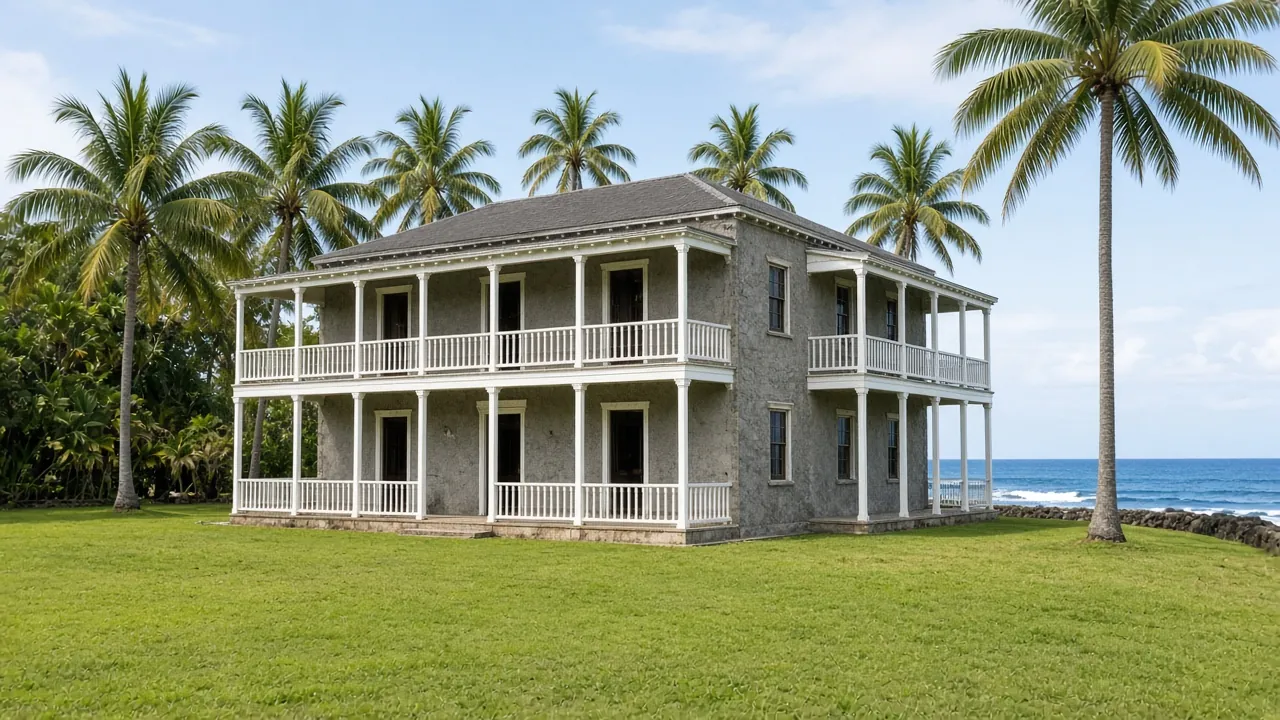
Large ships usually tender to Kailua Pier. Smaller vessels may come alongside when space allows, and the day's papers confirm the landing. The pier is the centre of the town's waterfront: Huliheʻe Palace stands a short walk away, a nineteenth-century seaside residence now a museum, and Mokuaikaua Church, the oldest Christian church in the islands, sits across the street. Ahuʻena Heiau, a reconstructed temple at the water's edge, marks the place where Kamehameha I spent his last years. This page is Kailua-Kona, not Hilo on the windward side of the same island, about two hours away by road.
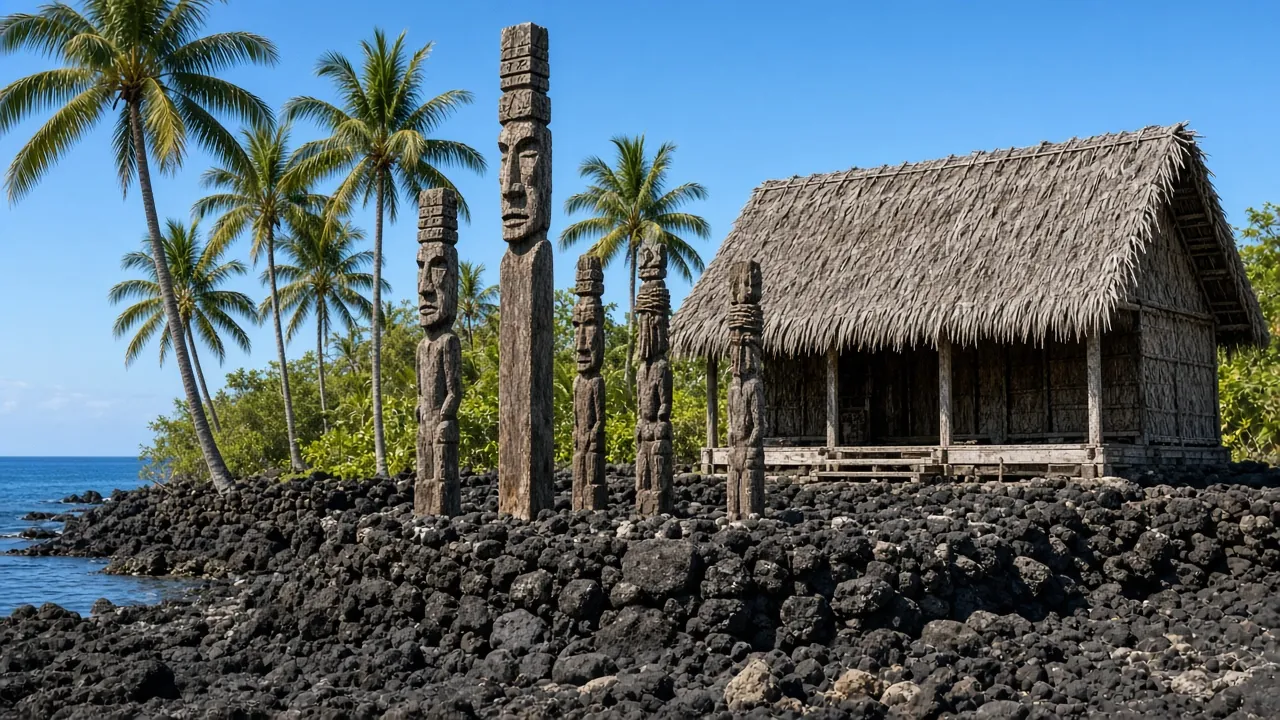
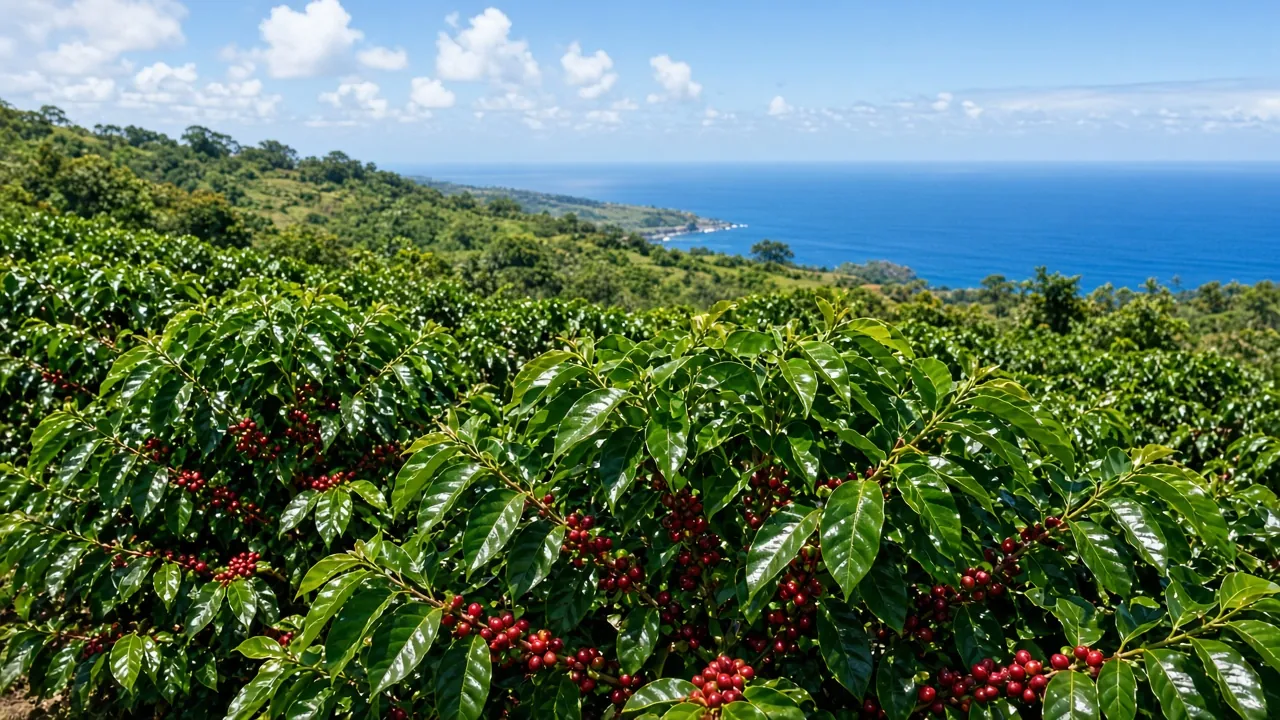
A first day can stay with the pier, the palace and a stretch of Alii Drive, or add a short ride to a swimming and snorkelling shore such as Kahaluʻu. Puʻuhonua o Hōnaunau, the Place of Refuge, is a national historical park about half an hour south, a lava shore of a reconstructed sanctuary and a serious, quiet site; it will use a large part of a call if you do it properly. The coffee uplands around Hōlualoa are a shorter inland drive and a different register from the waterfront. Sunset from the pier is part of the town's ordinary evening, but only if the ship's clock allows you to see it and still be back.
The sun is strong, shade is uneven, and the water is the reason many people are happy to stay close. A day that tries to cross the island to Hilo, and to do the Place of Refuge as well, usually underestimates the road. Leave time for the last tender or the short walk back to the pier.
Magic Sands, or Laʻaloa Beach, is a short ride south of the pier and can disappear after a strong swell, which is why the name exists; check the day's shore before you count on it. The upland coffee farms are a working landscape, and a short tasting stop is a different hour from a long snorkel. Water, a hat and a sense of the sun's strength matter more here than in Hilo. The town is used to visitors, and Alii Drive fills in the late afternoon; a quieter look at the palace and the heiau is often easier earlier in the call.
Port landmarks
Shore Excursions
- Sunset Manta Ray Snorkel – 2 h 30 min
- Kilauea Volcano Eruption Flight – 1 h 45 min
- Hawaii Volcanoes National Park Self-Guided Driving Audio Tour – Flexible · valid 24 h
- Private Boat Charter with Snorkeling – 4 h
- Cruise Excursion - Historic Kona (Cruise Passengers Only) – 3 h 30 min
- 2-Hour Dolphin Watch and Double-Reef with Snorkel in Hawaii – 2 h 30 min
- Kailua-Kona Sunset Segway Tour: History, Culture & Coastal Views – 2 h
- Big Island Hawaii Self-Guided Driving Tour – 4 h
- Private Kealakekua Bay Snorkel (Captain Cook Monument) & Dolphin Watch Tour – 3 h 30 min
- Seasonal Whale Watch – 2 h 30 min