Ibiza, Spain
Ports
Home • Ports • Europe • Spain • Ibiza
About Ibiza
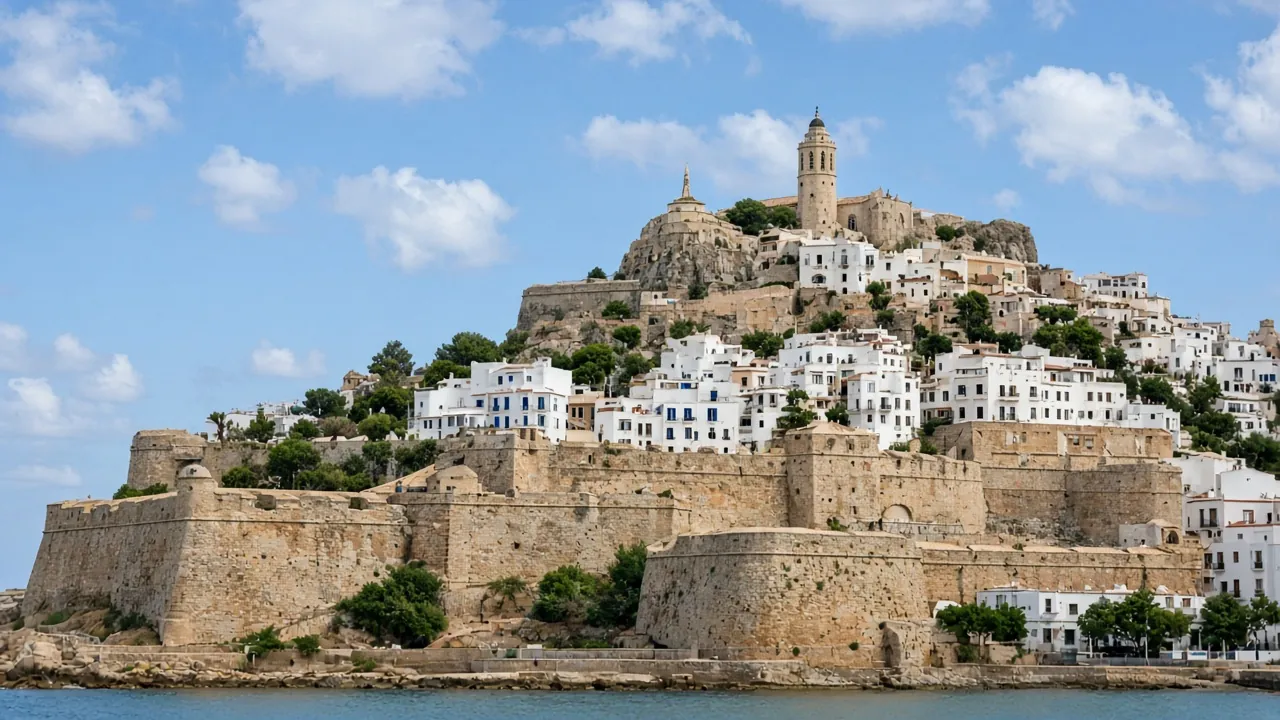
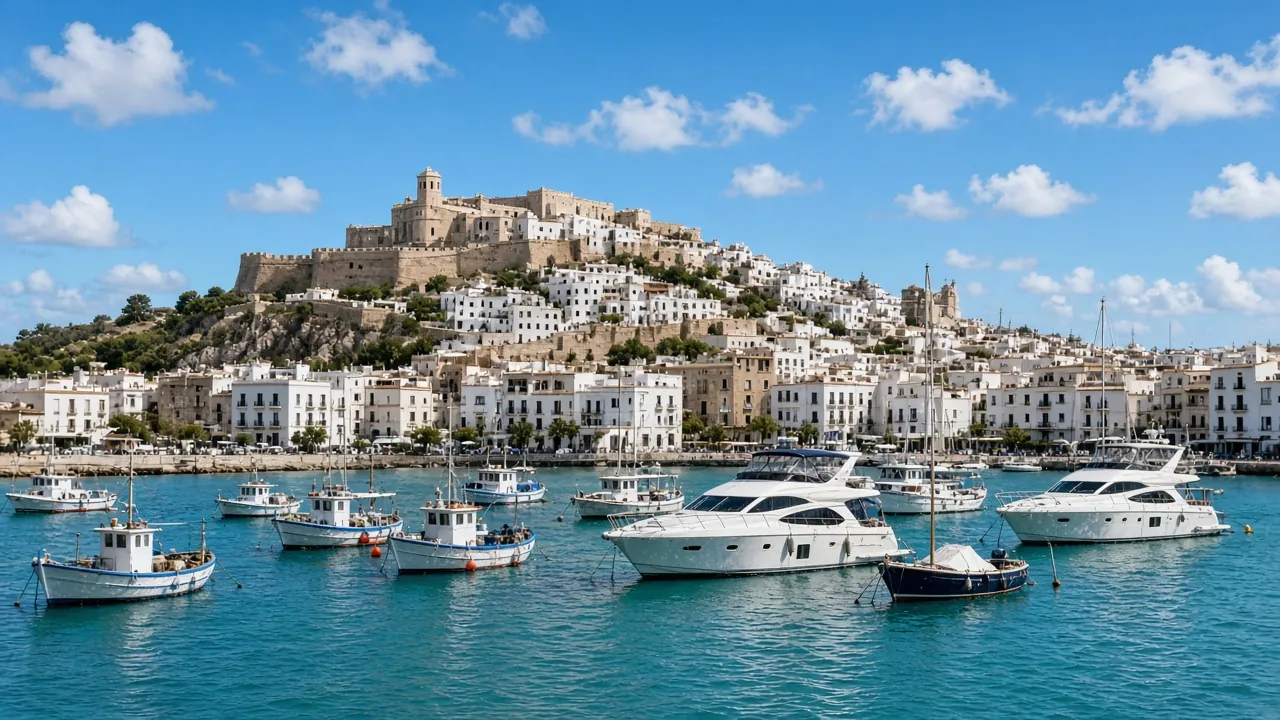
Ibiza Town, or Eivissa, gathers under the UNESCO-listed walls of Dalt Vila, on a sheltered western bay of the island. Cruise ships berth in the harbour below the ramparts, usually close enough that the marina, the lower town and the climb into the old citadel can begin on foot. This is the island's capital harbour, not San Antonio on the west and not a second Balearic city. The stone, the salt light and a table along the water will fill a first visit. Leave a margin for the walk back down to the quay, especially after a slow climb through the high town.
Ibiza Town, Eivissa in Catalan, gathers under the walls of Dalt Vila, the UNESCO-listed high town that has looked over this bay since the Phoenicians and the Moors, and later under the Crown of Aragon. The ramparts, the cathedral at the top and the tight white streets inside the walls are the civic heart of the island. Below them, the harbour and the marina curve around a sheltered western bay, with the later town spreading along the water.
Cruise ships berth in that harbour, usually close enough that the lower town, the marina walk and the climb into Dalt Vila can begin on foot. This is the island's capital landing, not San Antonio on the west coast, and not a second Balearic city. The famous late-night clubs are not the whole of the place, and a port day here is often quieter than the island's reputation suggests, especially in the morning, when the high town is at its best.
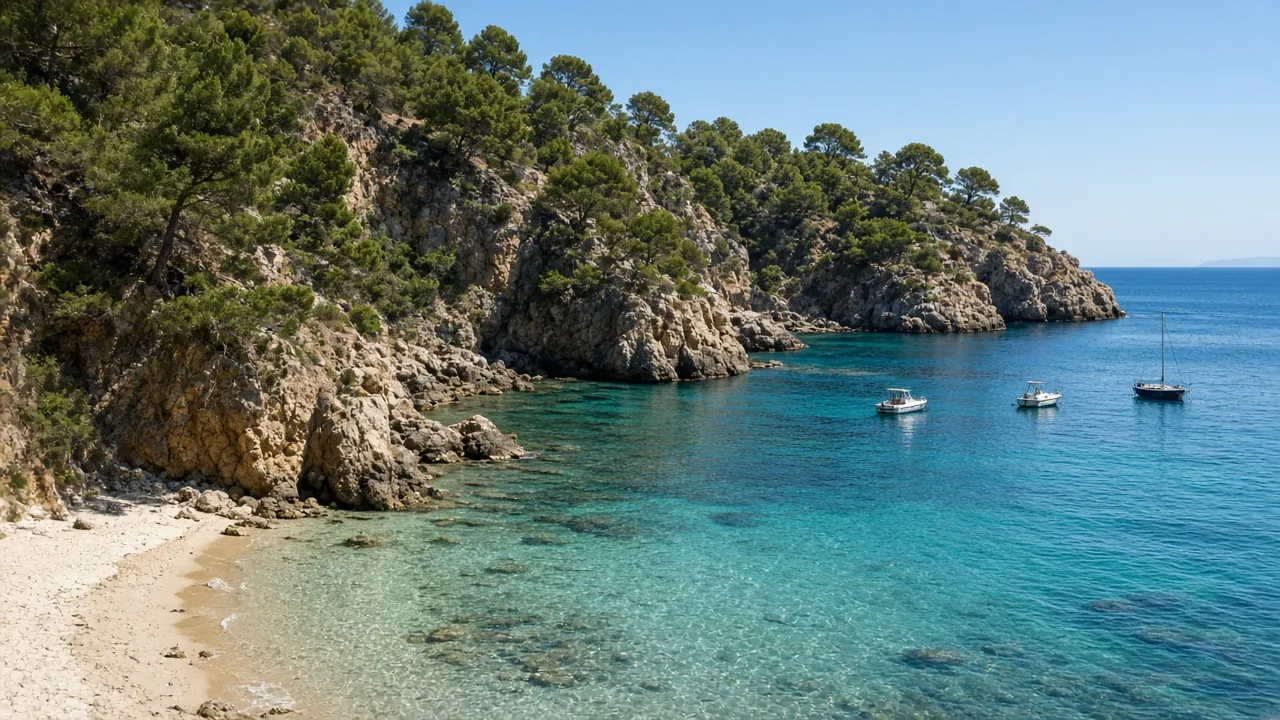
A slow climb through the portal and along the walls, a look into the cathedral and a descent to a table by the water will fill a first visit. The beaches nearest the town are a short ride if you want a swim; the farther coves of the north and west will take more of the clock and need a reliable way back. The light is white and the stone holds the heat; the shade of the high streets is part of the walk, not a detour.
Food is of the island and the sea: fish, the local arroz, and a later, livelier table along the marina as the afternoon lengthens. Catalan and Spanish are both used; English is common around the harbour. The season is long, and in midsummer the climb is better done early.
The necropolis of Puig des Molins, part of the same UNESCO listing as the walled town, lies just outside the ramparts and is a close, quieter visit if you want a second hour on this side of the harbour. Formentera is a ferry outing of its own and will take most of a day if you go; the last return has to be to this harbour, not to a beach on another island. Leave a margin for the walk back down to the quay, especially after a slow circuit of the walls. A day that holds to Dalt Vila and the harbour, with time left for the ship, will have seen the town that sits on the bay, not the whole island.
Port landmarks
Shore Excursions
- Ibiza South Side Island Shore Excursion – 4 h
- Deluxe Ibiza Shore Excursion — Beyond the Island You Think You Know – 4 h
- Ibiza Highlights: Ultimate Guided Shore Excursion with Port Pickup – 5 h
- Shore Excursion - San Miguel Town and Can Marçà Cave Private Tour – 4 h
- Ibiza to Formentera All-Inclusive Boat Trip | Swim, Food & Sunset Party – 5 h