Busan, South Korea
Ports
Home • Ports • Asia • South Korea • Busan
About Busan
Busan is South Korea's second city and its greatest port, a steep harbour city on the Korea Strait, with markets, hills and beaches spreading out from a working waterfront. Most cruise ships berth at the Busan Port International Passenger Terminal, near Busan Station, a practical landing from which Nampo, Jagalchi fish market and the old centre are a short metro or taxi ride. Gamcheon Culture Village is a little farther up the hillside, and Haeundae, the famous beach, is a longer cross-city trip. The city is large, and one neighbourhood well seen is worth more than a race across it. Immigration can take time; the last return to the terminal belongs in the same plan.
Busan is South Korea's second city and its greatest port, a steep harbour city on the Korea Strait, with markets, hills and beaches spreading out from a working waterfront. It has a different energy from Seoul: saltier, more vertical, more immediately maritime. Most cruise ships berth at the Busan Port International Passenger Terminal, near Busan Station, a practical, modern landing from which Nampo, Jagalchi fish market and the old centre are a short metro or taxi ride. Immigration can take time on a busy morning, and that wait belongs in the day's plan, not in a hopeful margin of minutes.
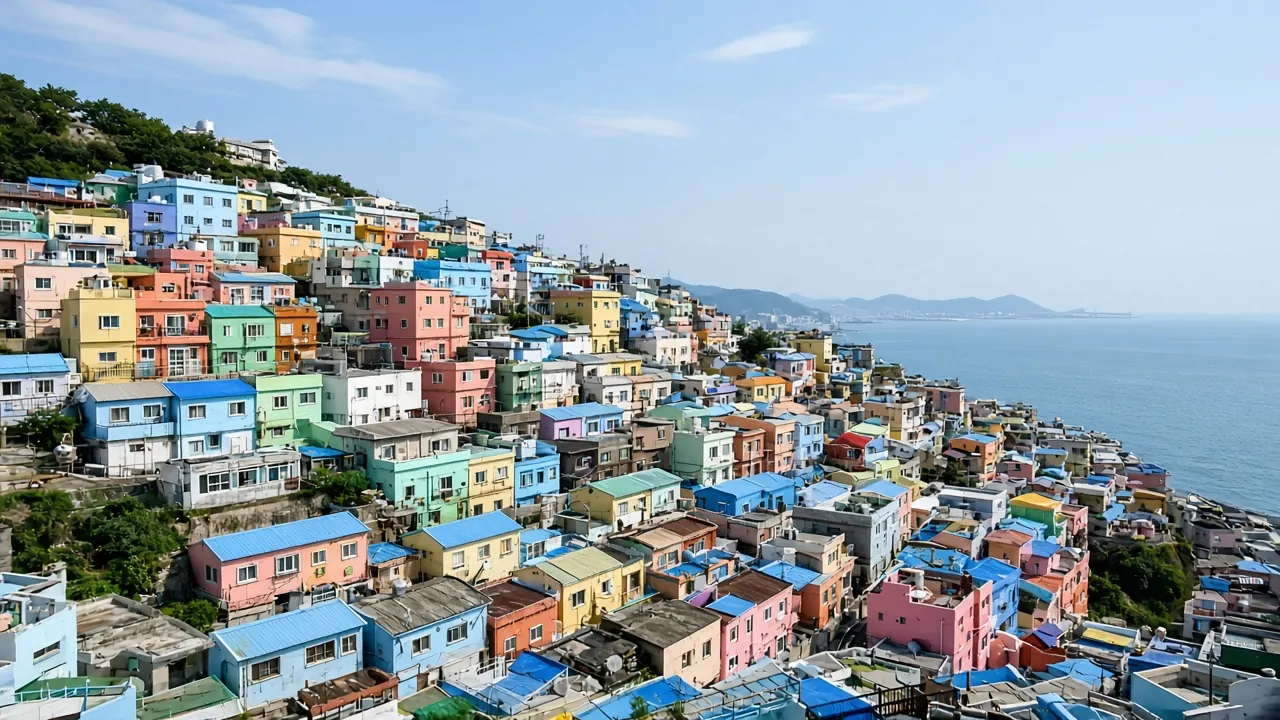
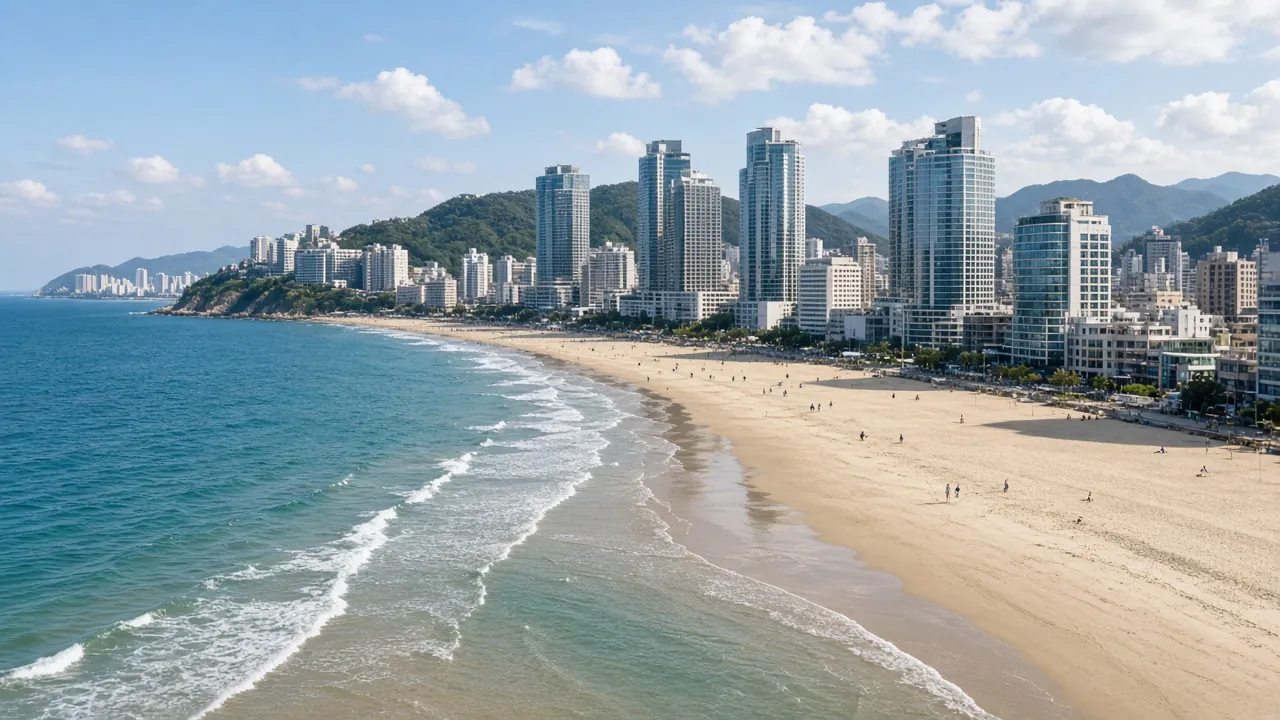
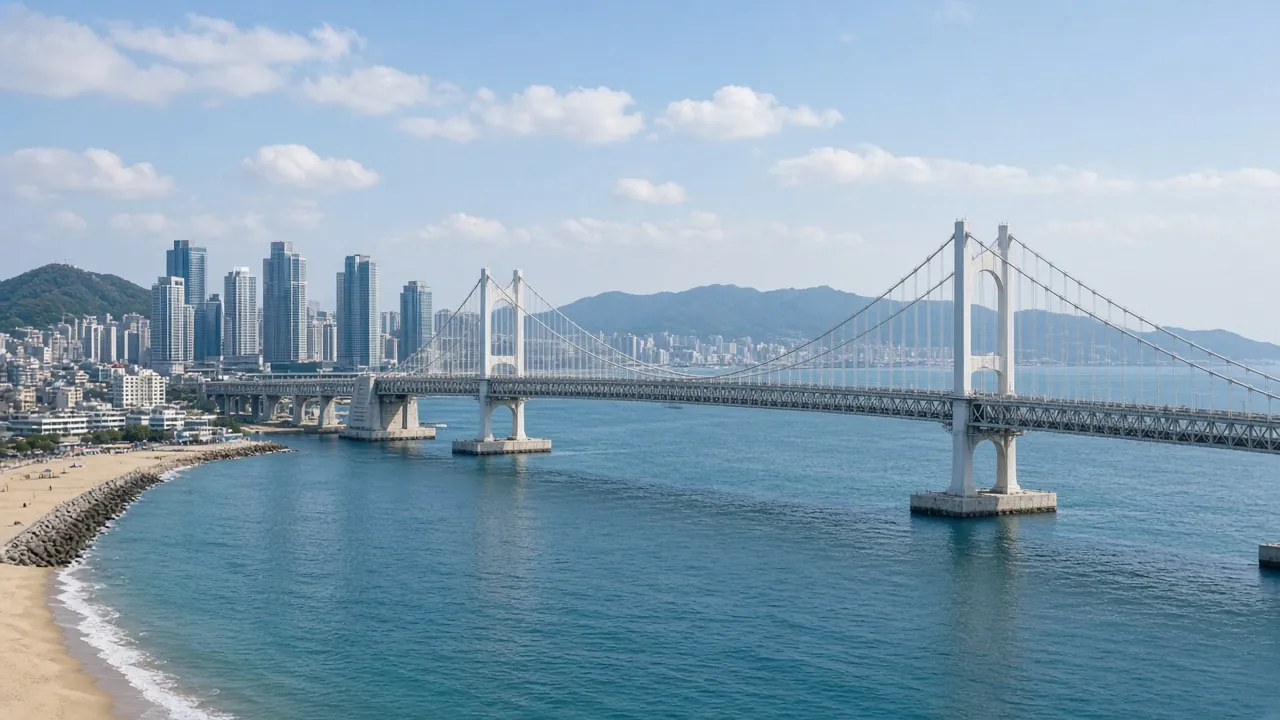
Jagalchi and the streets around Nampo are the close, classic first hours: a working fish market, tight shopping streets, and the older, denser face of the city. Gamcheon Culture Village, a hillside of painted houses, is a little farther and a little more visited, a good late morning if you like a view and a climb. Haeundae, the famous beach, and Gwangalli, with its bridge view, are a longer cross-city trip on the metro and will take a serious slice of the day if you go. The city is large, and one neighbourhood well seen is worth more than a race across it.
The last return to the terminal belongs in the same plan as the morning's ride out. Metro and taxi are both practical; traffic can slow the road, and a train is often the more predictable way back from Haeundae. The climate is maritime East Asian: hot and humid in summer, sharper in spring and autumn, with a chance of rain that the hills hold. Food is one of the reasons to be here: seafood at the market, cheap and excellent noodle and rice kitchens, and a serious café culture. Korean is the language of the city; English is used in the terminal and more thinly in the markets, where a little patience and a pointing finger go a long way.
This page is Busan, not Incheon and not Jeju, which have their own harbour pages. A day that holds to the terminal side of the city — market, old centre, perhaps Gamcheon — already has the port in depth. Leave a margin for immigration on the way back as well as on the way out, and let one district, well walked, be enough.
Jagalchi is at its best in the morning, when the market is a working floor rather than a later visitor circuit, and a breakfast of fish soup or grilled seafood there is one of the better starts to a harbour day in Korea. The hills above the harbour will still be there if you stay in the lower town, and the metro will still run if you go out to the beach. Come back through the passenger terminal with time for the same formalities you met on the way in, and the city will have shown you its proper, salty face.
Port landmarks
Shore Excursions
- Private Excursion: Gyeongju Highlights Tour from Busan – 9 h
- Private Busan Street Food Tour From Cruise Port – 9 h
- Busan Incredible Sightseeing City Tour – 8 h
- Small Group Tour: Explore Busan Cuisine & City Highlights from Cruise Port – 8 h
- Day Tour To Andong Hahoe Folk Village From Busan – 9 h
- Busan City Tour by Night – 3 h
- Private Busan City Tour From Cruise Port – 10 h
- Private Excursion: Busan's Highlights - History and Culture – 8 h