Barcelona, Spain
Ports
Home • Ports • Europe • Spain • Barcelona
About Barcelona
Barcelona is Catalonia's capital, a dense Mediterranean city of narrow Gothic streets, nineteenth-century avenues and the unfinished basilica of Antoni Gaudí. The Gothic Quarter gathers around the cathedral; a little further, the Sagrada Família organises the map of a first visit, with La Rambla running down toward the sea. Cruise ships usually berth at the terminals along Moll Adossat, close to the centre but not comfortably on foot. A shuttle, bus or taxi is the normal first step; build the transfer, and the return through terminal security, into the day.
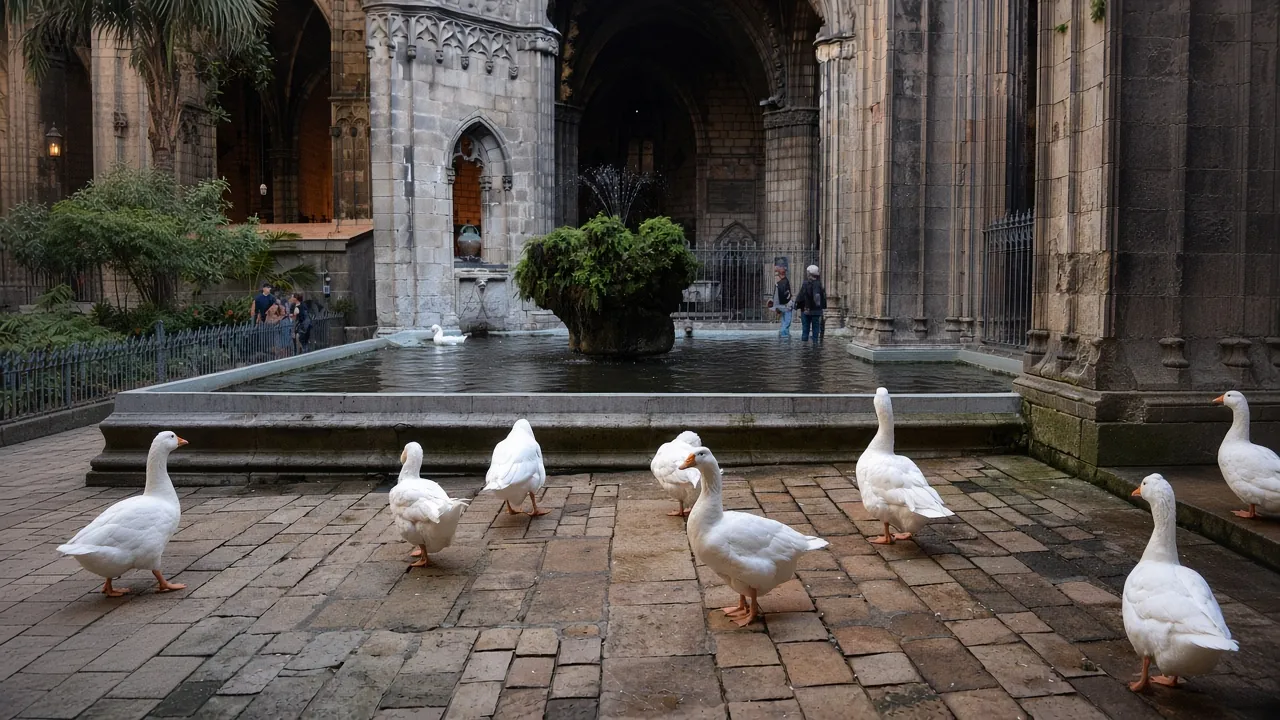
The Gothic Quarter is the closest historic district, a mesh of narrow streets around the cathedral. The cloister, with its geese in the garth and the Gothic arcades, is a calm, compact stop and a good way to begin if you want something walkable before you commit to longer moves across town. It is not a substitute for the city's best-known landmarks, but it is the one part of a first visit that does not depend on a timed ticket or a cross-town ride.
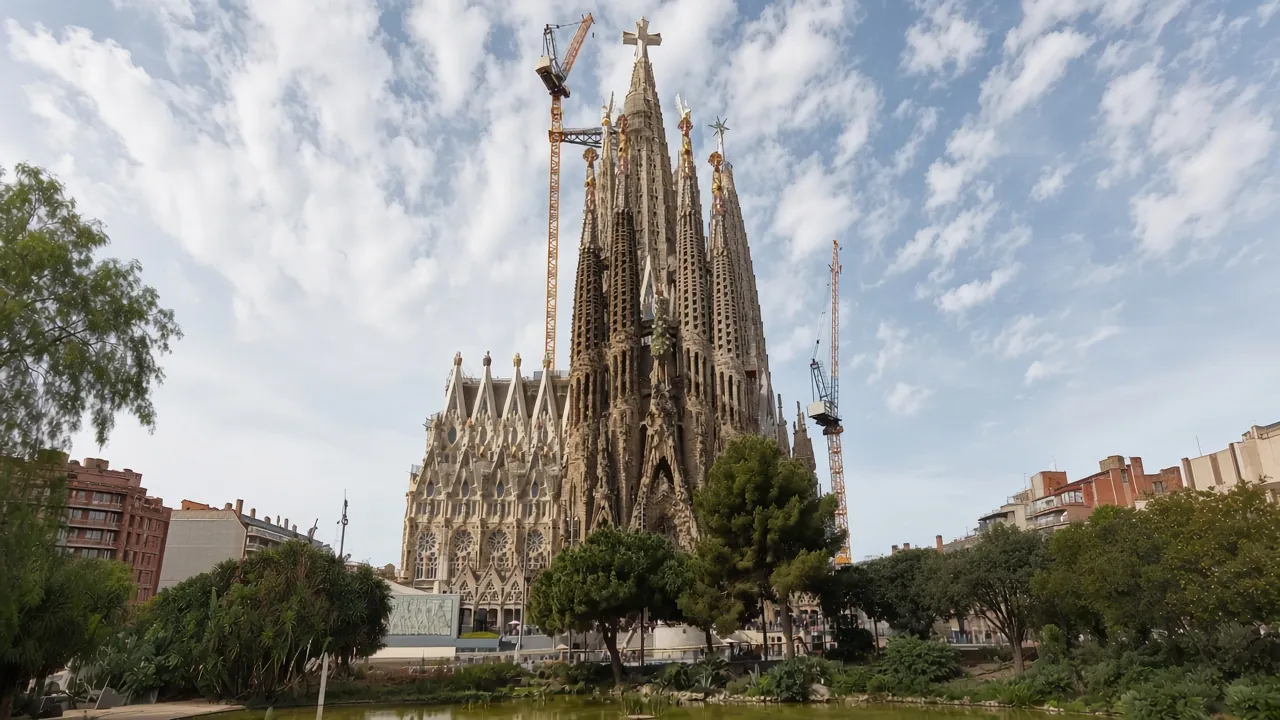
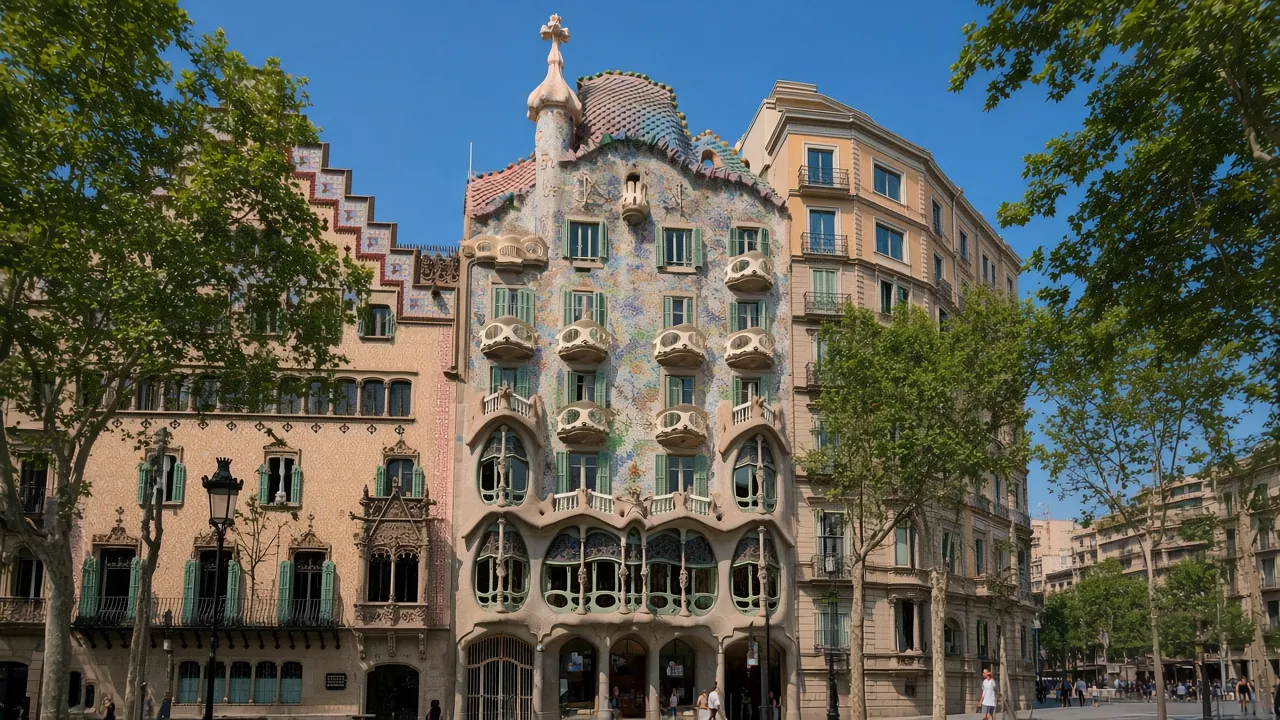
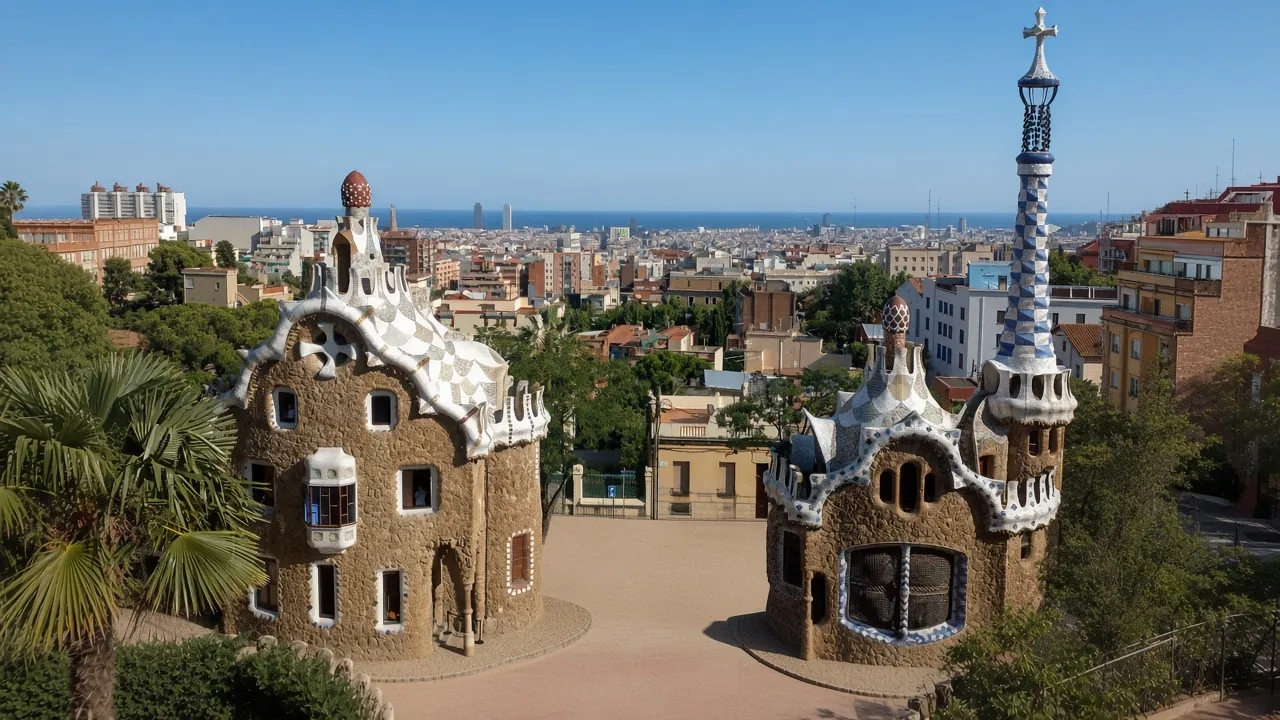
Many passengers come for the buildings of Antoni Gaudí. The Sagrada Família is the one that organises the map: the great nativity facade and the clustered spires rise above the surrounding blocks, and the pond in Plaça de Gaudí gives the classic full view of that front. Casa Batlló stands on Passeig de Gràcia, a colourful, bone-and-scale facade among the neighbouring palaces of the Eixample, and is easier to combine with a stroll in that part of the centre. Park Güell sits on the hillside above Gràcia, with the famous entrance pavilions and a broader view over the city; it is a separate trip, usually with its own timed entry, and it will eat a large share of a port day if you go.
Do not try to do the basilica, Casa Batlló, Park Güell and a slow walk in the Gothic Quarter as if they were consecutive rooms in a single museum. A practical first visit is one major Gaudí stop — most often the Sagrada Família, seen from the square if you have not reserved an interior entry — plus either Passeig de Gràcia or the Gothic Quarter, with a conservative timetable for the ride back to Moll Adossat. If Park Güell is the priority, treat it as the main outing and keep the rest short.
Casual food is easy to find in the centre and along the Eixample streets. The currency is the euro; cards are widely accepted. Tickets for the most popular interiors and for Park Güell are often sold out on the day, so a first visit that relies on walking and exterior views is more reliable than one that assumes you can walk up and go inside. Wear comfortable shoes: even a short plan in Barcelona adds up to a lot of pavement. The one thing to protect is the transfer back to the terminal; traffic and port queues can both stretch a return that looked simple when you left the ship.
Port landmarks
Shore Excursions
- Small Group Barcelona and Montserrat Tour – 8 h
- Hillside Cemetery Tour - Gothic Angels, Skeletons & Local History – 3 h 15 min
- From Barcelona: Small Group Montserrat Monastery & Scenic Mountain Hike – 6 h
- Barcelona: Curated Tapas and Drinks Tour in The Gothic Quarter & El Born – 2 h 30 min
- Private Barcelona Poble Sec Tapas & Wine Tour – 3 h 15 min
- Ghosts of Barcelona: Private Haunted City Tour – 1 h 30 min
- Barcelona Tapas Tour in Old Town – 3 h 30 min
- Private Picasso in Barcelona Tour With Picasso Museum – 3 h
- Picasso Museum and Walking Tour – 3 h
- Barcelona Urban Planning Tour - Towards A Sustainable Smart City – 3 h
- Barcelona Welcome Tour in Private Eco Tuk Tuk – 2 h
- Barcelona: Bike or E-Bike Rental – 4 h
- Teatro Flamenco Barcelona: Live the Flamenco Experience – 1 h
- Eating Barcelona: Food Tour with Tapas & Wine in El Born and Barceloneta – 3 h 30 min
- General Visit - Platinum Ticket – 1 h
- Half-Day Barcelona Panoramic City Tour by Private Vehicle – 4 h
- Private Tour from Barcelona: Montserrat Monastery & Scenic Mountain Hike – 6 h
- Girona and Costa Brava Full-Day Tour from Barcelona – 8 h
- Private Tour: Personal Travel Photographer Tour in Barcelona – 3 h
- General Visit - Blue Ticket – 1 h
- Sightseeing Tour by Bike Photo-Shooting – 3 h 30 min
- Full-Day Barcelona Panoramic City Tour by Private Vehicle – 8 h
- City Sightseeing Hop On Hop Off Bus Tour Barcelona – Flexible · valid 24 h
- Half-Day Vineyard and Wine Tasting Tour from Barcelona – 8 h
- Best of Barcelona City Electric Bike Tour – 3 h
- Best of Barcelona: Semi-Private Tour with Port/Hotel pickup – 4 h
- Private Barcelona Gothic Quarter VIP Tapas & Wine Tour – 3 h 15 min
- Proposal Photographer in Barcelona – 2 h
- Small-Group Montserrat Adventure: Walk & Horseback Ride from Barcelona – 6 h 30 min
- General Visit - Silver Ticket – 1 h
- Tablao de Carmen Star Menu: The Signature Flamenco Experience – 2 h
- Ultimate Paella Cooking Class Experience with La Boqueria Market Visit – 3 h
- Private Tour from Barcelona: Hiking and Horse Riding Trip in Montserrat – 6 h 30 min
- Private Spanish Civil War & Dictatorship Barcelona Walking Tour – 2 h 30 min
- Gaudí's Park Güell Fast-Track Small Group Tour – 2 h
- Barcelona Food Tour: Vermut & Crema Catalana – 3 h
- Private Park Güell & Gaudi House Experience – 2 h
- Small Group Barcelona and Montserrat Shore Excursion – 8 h
- Private Full Day Montserrat Monastery & Hiking Experience – 8 h
- Tablao de Carmen: Flamenco Show & Dinner Carmen – 2 h