Apia, Samoa
Ports
Home • Ports • Asia • Samoa • Apia
About Apia
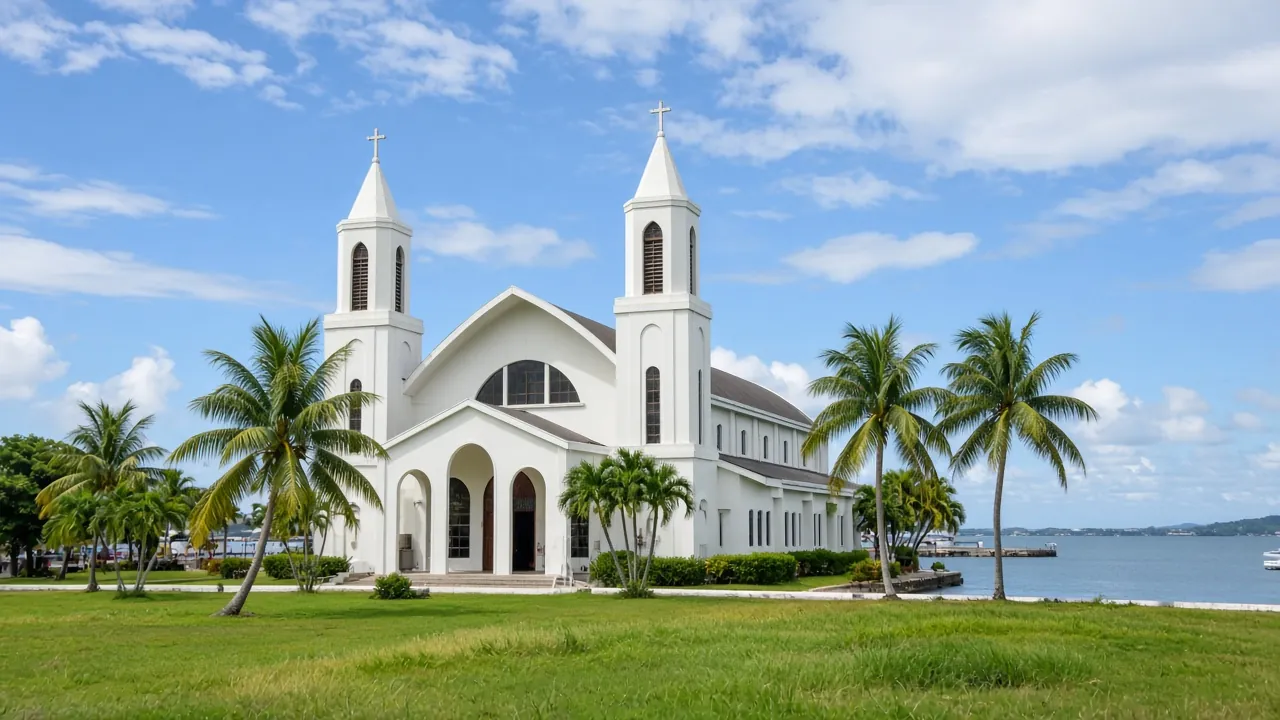
Apia is the capital of Samoa, a low waterfront town on the north coast of Upolu, with a clock tower, a cathedral at Mulivai, and a harbour that still works for ferries and visiting ships. The wharf is close to the centre; the market, the shoreline road and a lunch in town are all within an easy first walk. Vailima, the house in the hills where Robert Louis Stevenson spent his last years, is a short drive up, with a tomb higher still on Mount Vaea. Palolo Deep, a marine reserve just off the shore, is a nearer outing if you want to stay by the water. The last return to the wharf is worth leaving time for, in a town that does not hurry.
Apia is the capital of Samoa, a low waterfront town on the north coast of Upolu, with a clock tower at the civic centre, a cathedral at Mulivai, and a harbour that still works for ferries and visiting ships. The scale is modest and the pace is unhurried, which is not a failing of the place but its character. The wharf is close to the centre; the market, the shoreline road and a lunch in town are all within an easy first walk, and a morning spent on that waterfront already has the capital in view.
Vailima, the house in the hills where Robert Louis Stevenson spent his last years, is a short drive up and a different altitude, with a tomb higher still on Mount Vaea, reached by a hot, sometimes muddy path. It is the outstanding close outing if you want a story as well as a view, and it needs a little more time than a glance at a map suggests, especially for the climb to the grave. Palolo Deep, a marine reserve just off the shore, is a nearer outing if you want to stay by the water. The rest of Upolu — the south-coast beaches, the waterfalls, the villages of the interior — is a longer island day.
The last return to the wharf is worth leaving time for, in a town that does not hurry and on roads that can be slow. The climate is tropical, with humidity, sudden rain and a strong sun; the trade wind helps on the waterfront and less in the hills. Dress modestly away from the beach, as you would in any Samoan village, and treat Sunday as a quieter day, when many places close and the villages are at church.
Food is Samoan and generous: fish, taro, breadfruit, coconut, and the Sunday umu in its proper setting, which a passing harbour day may or may not catch. English is widely used, a legacy of the islands' modern history; Samoan is the language of the streets and of ceremony. The town is a real Pacific capital, not a resort strip, and it rewards a slower walk and a little courtesy.
This page is Apia, on Upolu. Savai'i, the larger island to the west, is a different crossing and not a harbour-day addition. Stay with the waterfront and one hill or reef outing, come back to the wharf with time to spare, and let the town's unhurried clock be the one you keep.
Port landmarks