Alexandria, Egypt
Ports
Home • Ports • Europe • Egypt • Alexandria
About Alexandria
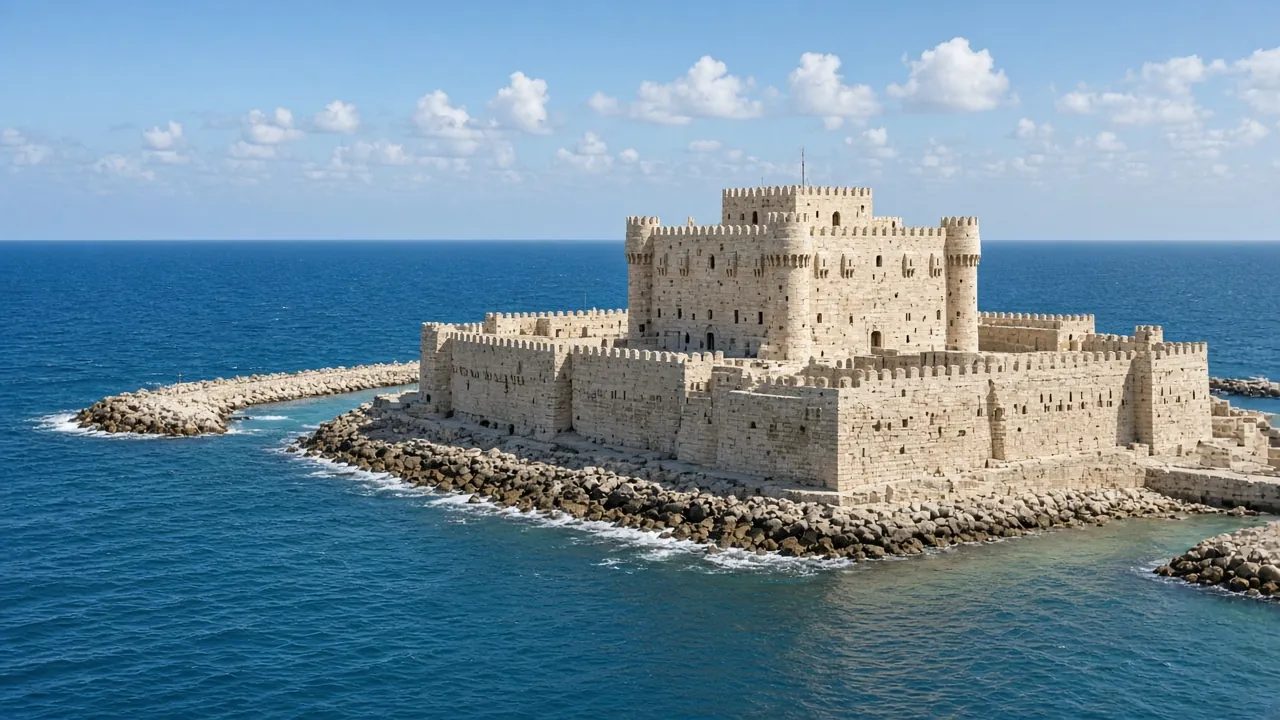
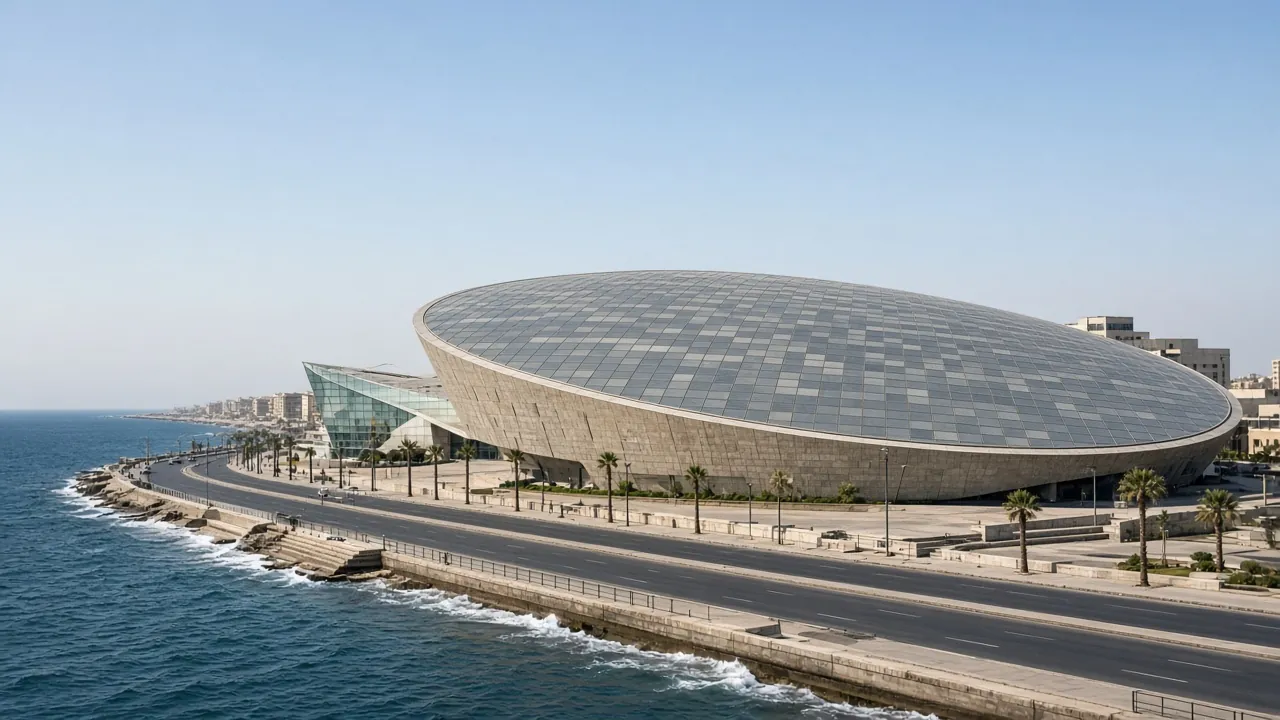
Alexandria is Egypt's great Mediterranean city, founded by Alexander and still a harbour on a long corniche, with later streets over a Greco-Roman past whose most famous monuments — the Pharos lighthouse and the ancient library — have not survived. Ships berth in the commercial port, a short ride from the waterfront and from the citadel of Qaitbay on the site of the Pharos. The Bibliotheca Alexandrina is the modern civic landmark. Cairo is a long inland journey and a different day, not a reflex after a morning on the corniche.
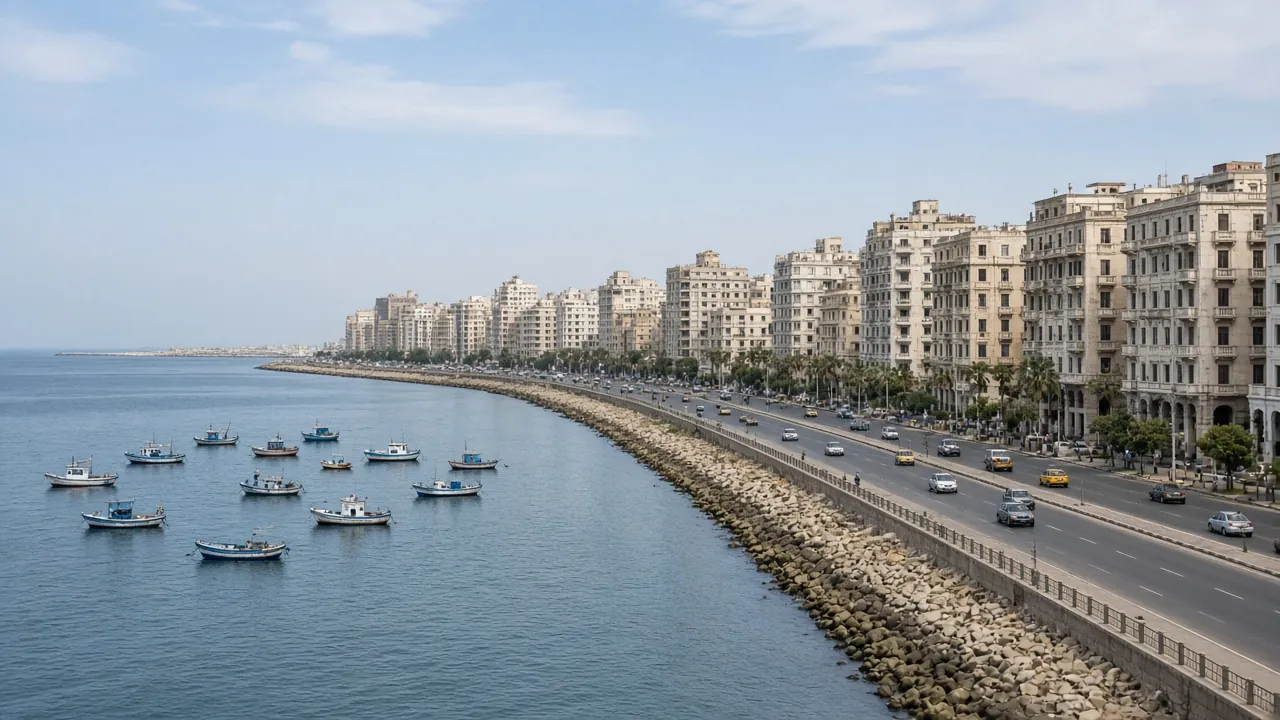
The corniche is the organising walk: a long, open waterfront, often windy, with the later city on one side and the Mediterranean on the other. At its western end, the Citadel of Qaitbay stands on the harbour mole, a fifteenth-century fortress on the site where the Pharos, one of the wonders of the ancient world, once rose. It is the right historic stop for a first visit, compact and immediately about the sea. The Bibliotheca Alexandrina, the modern library, is a serious civic building and a good indoor contrast, with exhibitions that repay a planned visit if you want more than a photograph of the disc-like facade. Between and behind the corniche, the later streets of a dense Egyptian city, a few remaining Greco-Roman traces, and the catacombs of Kom El Shoqafa offer a deeper, more demanding outing; the catacombs need a short ride and a little time underground.
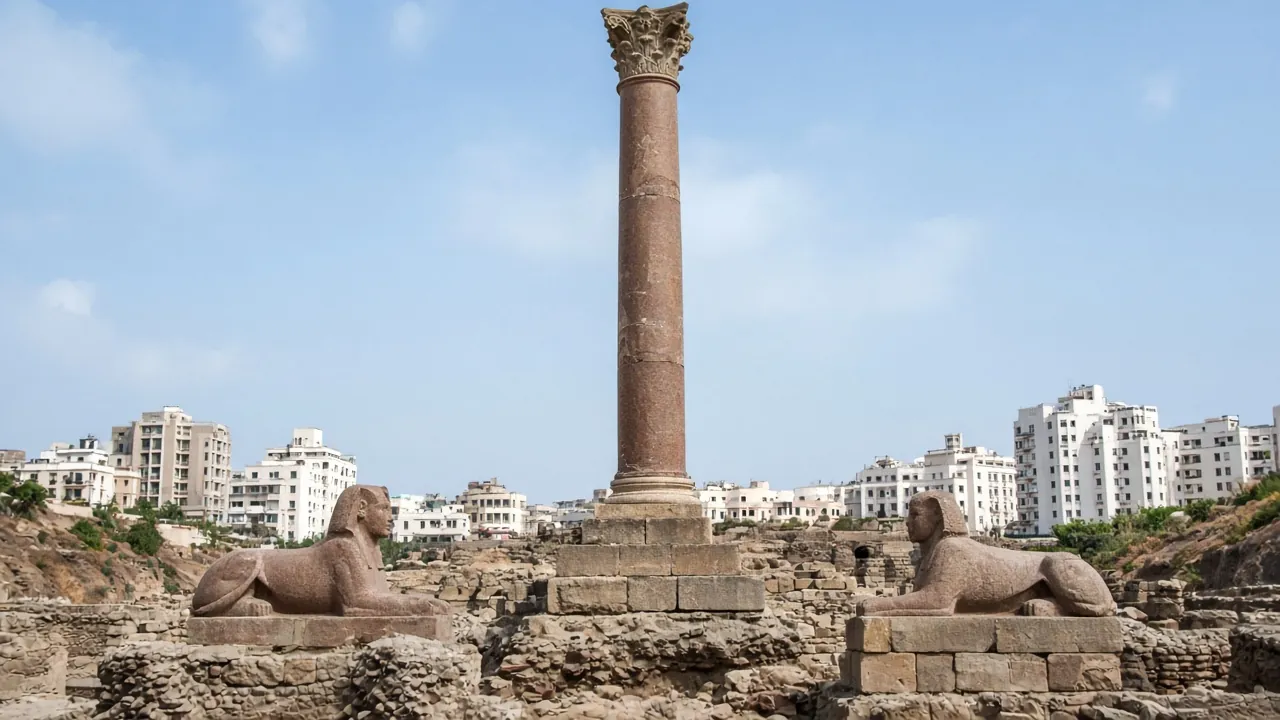
Pompey's Pillar and the nearby remains of the Serapeum are another classical stop, a little inland, and they can be combined with the catacombs if that is your interest. What you should not try, on a day that still has to return to the ship, is Cairo. The capital is a long drive, commonly around three hours each way in ordinary accounts, and a short call will be consumed by the road. Alexandria is enough: a harbour city with its own character, its own food, and a past that is felt in the water and the names as much as in standing stones.
Food is one of the pleasures of the coast: Mediterranean Egyptian cooking, fish, grilled seafood, and cafés along the water. Lunch near the corniche is the easy plan.
The commercial port is a transfer, not a stroll into the old city. Use a taxi or an organised ride at both ends, and come back with a margin for traffic and for the gate. A first day that does the citadel, the library or the catacombs, and a meal by the sea is a complete visit. A first day that sets out for the pyramids will, for most calls, be a poorer use of the hours. The wind off the Mediterranean can be sharp; bring a layer, wear shoes for uneven ground, and let this city be the one you came ashore to see. A later museum or a quieter café off the corniche is a good pause when the wind is up, and it still leaves you in the city you landed to see. Come back through the port with time for formalities. The Mediterranean light here is its own monument, and a first day that stays on this shore is already a full visit.
Port landmarks